MINNUO LPG compressors are specially engineered for LPG filling stations, widely used in cylinder filling, tanker unloading, tank transfer and residual gas recovery. Learn about product advantages, application scenarios and station selection tips of MINNUO dedicated LPG pressurization compressor.
1.LPG Compressor for Gas Station: Main Applications of LPG Filling & Pressurization Equipment
As core pressurization equipment of LPG filling stations, dedicated LPG compressors directly decide the efficiency of tank truck unloading, cylinder filling and tank-to-tank liquid transfer. Conventional air compressors cannot adapt to flammable liquefied petroleum gas, so customized explosion-proof LPG compressors become standard configuration for newly-built and renovated LPG gas stations. With rich experience in compressor R&D and production, MINNUO develops tailor-made LPG compressors to fit fixed filling stations and skid-mounted mini LPG refueling stations globally.
2. Key Application Scenarios of Gas Station Dedicated LPG Compressor
2.1 LPG Steel Cylinder Filling Pressurization
Slow filling speed and insufficient filling volume are common troubles caused by insufficient natural pressure inside storage tanks. MINNUO LPG compressor extracts gas phase from the storage tank to raise tank internal pressure, pushing liquid LPG into domestic gas cylinders and vehicle-mounted LPG tanks under stable pressure difference. This device can be matched with automatic filling scale and filling production line, greatly improving daily filling capacity and reducing waiting time for gas station operation.
2.2 LPG Tank Truck Unloading Operation
Pressure imbalance between incoming tank trucks and station storage tanks often blocks liquid unloading progress. The LPG compressor adopts gas-phase displacement technology: it compresses low-pressure gas from station tanks and feeds high-pressure gas into tank trucks to lift truck inner pressure, realizing fast liquid LPG delivery from tanker to ground storage tank. It works stably under low ambient temperature and is the mainstream unloading equipment for medium & small-sized LPG stations.
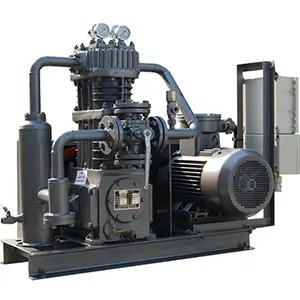
2.3 Storage Tank Transfer & Residual LPG Recovery
Gas stations need regular tank switching and maintenance, where LPG compressors finish liquid transfer among different storage tanks. Besides, the compressor can recycle low-pressure residual tail gas remaining at the top of tanks, compress and liquefy waste LPG. It cuts fuel loss for gas stations, reduces operating cost and meets international environmental protection & safety emission standards.
2.4 Supporting Equipment for Skid-mounted LPG Filling Station
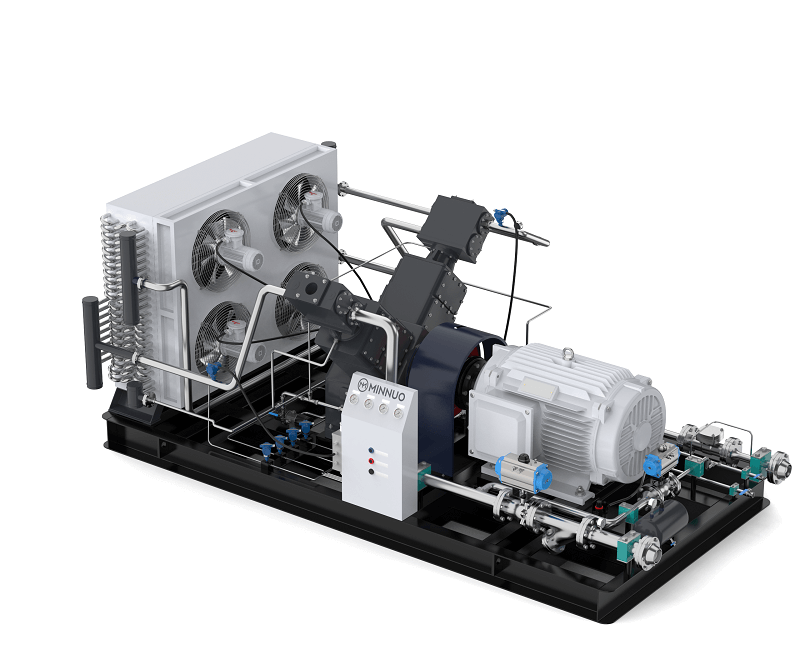
Skid-mounted compact LPG stations gain growing popularity for remote and urban small-scale gas supply projects. MINNUO compact skid-mounted LPG compressor integrates explosion-proof motor, oil separation assembly, safety valve and cooling system into one unit. It covers small floor area, realizes quick installation and overall matching with complete skid station set.
3. Core Advantages of MINNUO Gas Station LPG Compressor
3.1 Complete explosion-proof certification: Equipped with flameproof motor and explosion-proof electric control box, fully compliant with safety standards for flammable LPG working environment and global hazardous area inspection requirements.
3.2 Wide medium compatibility: Suitable for compression of LPG, propane, butane and mixed liquefied hydrocarbon gas, one unit meets multi-gas filling demands of a single gas station.
3.3 Excellent adaptability for intermittent start-stop: Optimized piston structure to fit frequent start & stop working mode of gas stations, stable startup in cold weather and less overheating during continuous high-load filling in hot summer.
3.4 Low-leakage sealing design: Adopts combined packing seal structure to minimize LPG leakage risk, improving overall site operation safety.
3.5 Diversified specification options: From small low-power units for mini filling outlets to heavy-duty horizontal compressors for large standard gas stations, MINNUO supports customized fixed type and skid-mounted integrated models.
4. Practical Guide for Gas Station LPG Compressor Selection
- Select small vertical LPG compressors for stations with daily filling capacity below 5 tons; choose high-power horizontal piston compressors for sites with daily output over 10 tons.
- Install preheating accessories for models working in frigid northern regions, and enhanced water cooling configuration for high-temperature tropical areas.
- Prioritize manufacturers with complete explosion-proof and pressure vessel certificates like MINNUO to avoid safety acceptance issues after equipment procurement.
5. Daily Maintenance Suggestions to Extend Compressor Service Life
5.1 Check lubricant level regularly and replace special compressor oil according to actual operation frequency.
5.2 Inspect safety valves, pressure gauges and pipeline sealing rings daily, replace aged spare parts to prevent gas leakage.
5.3 Keep compressor room well ventilated and electric cabinet away from dampness; drain residual LPG inside cylinder before long-term shutdown.
Conclusion
Special LPG pressurization compressor is an indispensable core facility for standardized LPG filling station construction. Supported by mature manufacturing technology, MINNUO supplies customized compressor solution including site survey, equipment matching and installation guidance for new station construction and old station upgrading projects worldwide.
FAQ
Q1: Why can’t ordinary air compressors be used for LPG stations?
A1: LPG is flammable and explosive. Ordinary air compressors have no explosion-proof structure and professional sealing design, which will bring serious safety hazards. Only dedicated explosion-proof LPG compressors can meet the safety requirements of gas stations.
Q2: What kinds of gases can MINNUO LPG compressors handle?
A2: It is compatible with liquefied petroleum gas, propane, butane and mixed liquefied hydrocarbon gases. A single unit can satisfy various gas filling needs of one gas station.
Q3: How to choose between vertical and horizontal LPG compressors?
A3: Small vertical compressors are recommended for gas stations with daily filling capacity under 5 tons. For stations with daily output above 10 tons, heavy-duty horizontal piston compressors are the better choice.
Q4: Does the equipment work normally in extreme high or low temperature environments?
A4: Yes. We can equip preheating accessories for cold northern areas and enhanced water cooling systems for high-temperature regions. The compressor maintains stable performance under harsh temperature conditions.
 Email
Email sales:+86 15366749631