The rotors inside a dry oil free screw compressor represent a significant portion of the machine’s total value. Their precision-machined profiles and engineered surface coatings enable oil free compression without metal-to-metal contact. When that coating degrades prematurely, the compressor loses efficiency, discharge temperature rises, and eventually the rotors require recoating or replacement—a six-figure expense for larger machines. Understanding how to prevent rotor coating damage is the most effective way to protect this asset and extend service intervals to the full 40,000 to 60,000 hour design life.
I. The Purpose of Rotor Coatings in Dry Oil Free Compressors
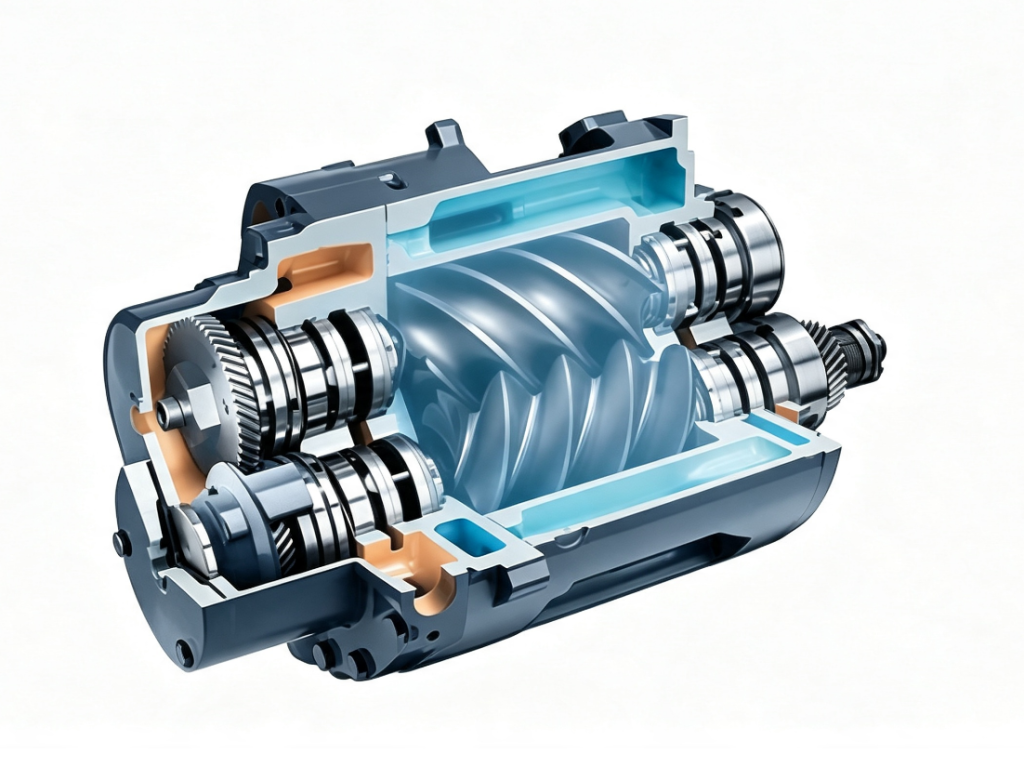
Dry screw compressors achieve oil free operation by maintaining precise clearance between male and female rotors. Timing gears synchronize rotation so the rotors never touch. The coating applied to rotor surfaces serves three critical functions.
1. Friction Reduction During Incidental Contact
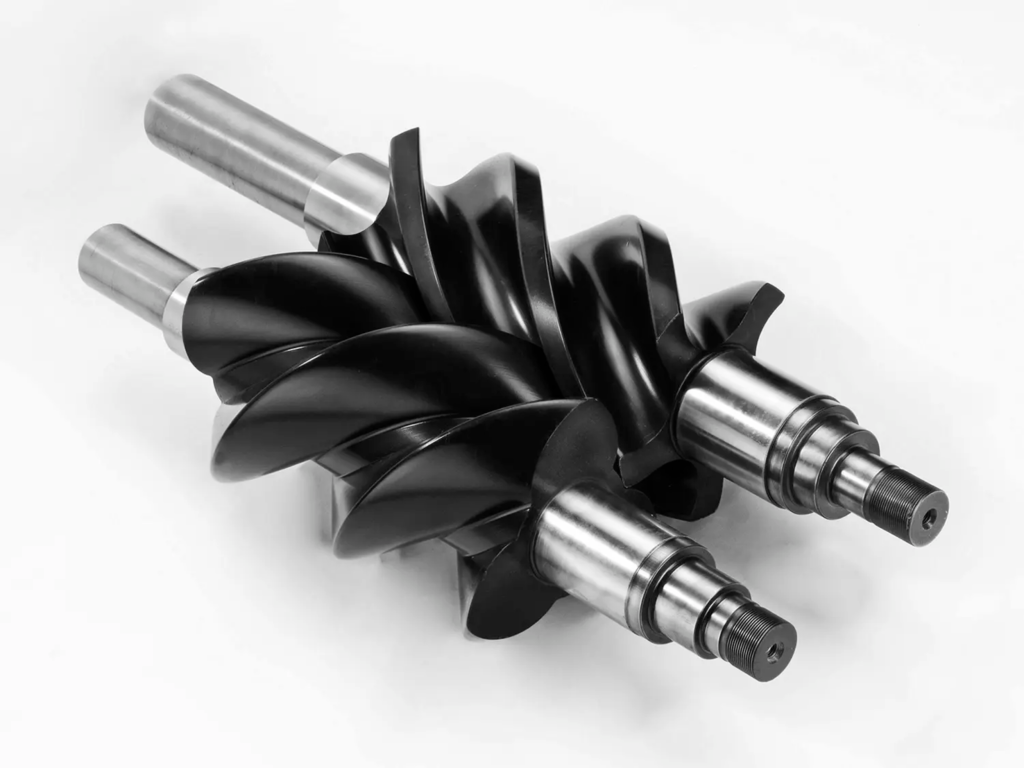
Despite timing gear synchronization, momentary contact can occur during start-up, shutdown, or process upsets. Rotor coatings—typically PTFE, PEEK, tungsten carbide, or ceramic formulations—provide a low-friction surface that tolerates brief contact without galling or seizing.
2. Corrosion Protection
Compressed air contains water vapor and often trace acidic compounds. Bare steel or ductile iron rotors would corrode rapidly, altering clearances and surface finish. The coating acts as a barrier preventing moisture and acid attack on the base metal.
3. Clearance Maintenance
Coatings are applied to precise thickness, typically 0.001 to 0.003 inches. This thickness is factored into rotor profile design. As coatings wear, clearance increases, allowing internal leakage that reduces volumetric efficiency and raises discharge temperature.
II. Five Root Causes of Rotor Coating Damage
Effective prevention begins with understanding what actually damages rotor coatings in service.
1. Particulate Erosion from Inadequate Intake Filtration
Airborne dust, cement fines, carbon black, and other abrasive particulates enter the compressor if intake filtration is undersized or poorly maintained. These particles impact rotor surfaces at velocities exceeding 200 feet per second, eroding coating material much like sandblasting. Erosion appears as uniform dulling of the coating surface, often concentrated on rotor tips where velocity is highest.
2. Corrosive Gas Attack
Ambient air contaminated with sulfur compounds, chlorine, ammonia, or volatile organic compounds introduces corrosive chemistry into the compression chamber. PTFE-based coatings offer excellent chemical resistance, but the bond layer between coating and substrate remains vulnerable. Acidic condensate penetrates microscopic coating defects and attacks the substrate, causing blistering and delamination.
3. Thermal Cycling Fatigue
Dry screw compressors operate with discharge temperatures between 350°F and 450°F. Each start-up and shutdown cycle subjects the coating and substrate to thermal expansion and contraction. Different thermal expansion coefficients between coating and base metal create stress at the interface. Over thousands of cycles, this stress initiates cracks that propagate and eventually cause coating spallation.
4. Bearing or Timing Gear Degradation
Timing gears maintain rotor synchronization. When gear backlash increases due to wear or bearing clearances open, rotor-to-rotor contact becomes possible. Even light contact rapidly destroys the coating. This failure mode typically produces localized damage rather than uniform wear and demands immediate investigation of gear and bearing condition.
5. Liquid Slug Ingestion
Water slugs from flooded intercoolers, condensate backflow, or cleaning operations entering the compressor inlet cause hydraulic shock. The incompressible liquid momentarily forces rotors into contact, mechanically damaging the coating. Even a single significant liquid ingestion event can compromise coating integrity.
III. Proven Practices to Prevent Rotor Coating Damage
Implement these measures to maximize rotor coating service life.
1. Specify and Maintain High-Efficiency Intake Filtration
Intake filtration is the single most important defense against coating erosion. Install filtration rated for the operating environment:
- Clean indoor environments: F9 grade (95% efficiency at 1 micron)
- Urban or light industrial: F9 grade with extended surface area
- Heavy industrial, dusty, or mining applications: HEPA-grade filtration (99.97% at 0.3 micron) with cyclone pre-separation
Monitor filter differential pressure continuously. Replace elements when pressure drop reaches manufacturer limits, not based on calendar intervals. A single torn filter element or poorly seated gasket admits unfiltered air that accelerates erosion measurably within weeks.
2. Control the Intake Air Environment
Position compressor intakes away from contamination sources. Avoid locating intakes near cooling tower drift, vehicle exhaust, chemical vents, or dust-generating processes. In corrosive environments, consider activated carbon filtration upstream of particulate filters to adsorb acid gases and hydrocarbons before they enter the compressor.
3. Manage Shutdown and Start-Up Procedures
Thermal shock accelerates coating fatigue. Implement controlled cool-down procedures for planned shutdowns rather than abrupt stops. Allow the compressor to run unloaded for 5 to 10 minutes before shutdown to equalize temperatures. Similarly, avoid immediate full-load start-up from cold conditions. These practices reduce thermal stress magnitude and extend coating life.
4. Prevent Condensate Accumulation and Backflow
Condensate pooling in intercoolers, aftercoolers, or discharge piping can migrate back toward the compressor during shutdown. Install automatic condensate drains with fail-open design on all coolers and low-point drip legs. Verify drain function during routine maintenance. Slope piping away from the compressor and install check valves where backflow potential exists.
5. Monitor Vibration and Performance Trends
Coating damage often announces itself through subtle changes before catastrophic failure. Trending these parameters provides early warning:
- Specific power (kW/100 CFM): Gradual increase indicates efficiency loss from internal leakage
- Discharge temperature: Rising trend at constant operating conditions suggests increased recirculation
- Vibration signature: Changes in high-frequency vibration components may indicate rotor contact
- Oil analysis for timing gear case: Metallic wear particles signal gear or bearing deterioration that threatens synchronization
6. Conduct Borescope Inspections at Planned Intervals
Direct visual inspection of rotor coatings provides the most definitive assessment. Schedule borescope inspection through access ports every 8,000 to 12,000 operating hours. Document coating appearance with photographs for trend comparison. Look for dulling of surface gloss, localized discoloration, or any visible substrate exposure.
IV. Early Warning Signs of Coating Degradation
Recognize these indicators before coating failure progresses to rotor damage.
| Symptom | Possible Coating-Related Cause |
| Gradual capacity loss at constant conditions | Increased internal leakage from clearance growth |
| Rising discharge temperature trend | Recirculation of hot discharge gas |
| Increased specific power consumption | Reduced volumetric efficiency |
| Metallic debris in oil analysis | Timing gear wear threatening synchronization |
| Audible pitch change during operation | Potential intermittent rotor contact |
V. Repair Options When Coating Damage Occurs
Despite best preventive practices, rotor coatings eventually reach end of life. Understanding repair options informs economic decisions.
1. Rotor Recoating
Specialized service centers strip remaining coating, inspect substrate for corrosion or dimensional changes, and apply new coating to original specifications. Recoating costs typically range from 30% to 50% of new rotor pricing. Not all rotor designs support recoating—confirm with the manufacturer before committing.
2. Rotor Replacement
When substrate damage exists, when rotors have been recoated previously, or when dimensional tolerances cannot be restored, rotor replacement is required. New rotors restore original performance and carry full warranty. Replacement also provides opportunity to upgrade to current coating formulations that may offer improved durability.
3. The Recoating vs. Replacement Decision
Consider these factors:
- Rotor age and operating hours: First recoating at 40,000-50,000 hours is often economical
- Substrate condition: Corrosion pitting or dimensional changes favor replacement
- Availability and lead time: Recoating may take 4-8 weeks; new rotors may have longer lead times
- Future operating plans: Facilities planning retirement within 5 years may choose recoating
FAQ
Q1: What is the typical service life of rotor coatings in dry oil free compressors?
A1: Under proper operating conditions with clean intake air and no corrosive contaminants, rotor coatings routinely achieve 40,000 to 60,000 hours before requiring recoating or replacement. Harsh environments—cement plants, foundries, chemical facilities—may reduce life to 25,000-35,000 hours. Water injected oil free compressors avoid this wear mechanism entirely.
Q2: Can a compressor operate with partially damaged rotor coating?
A2: Limited operation with minor coating damage is possible but not recommended long-term. Damaged coating exposes substrate to corrosion, accelerates further coating loss, and increases energy consumption. Once damage is confirmed, schedule repair during the next planned outage rather than running to failure.
Q3: What is the difference between PTFE, PEEK, and ceramic rotor coatings?
A3: PTFE coatings offer the lowest friction and good chemical resistance at moderate cost, suitable for most industrial applications. PEEK provides higher temperature capability and abrasion resistance at increased cost. Ceramic and tungsten carbide coatings deliver maximum durability in severe environments but carry premium pricing and may require specialized application processes.
Q4: How can I tell if my intake filtration is adequate for coating protection?
A4: Inspect the clean side of the filter housing for dust accumulation. Any visible dust indicates filtration bypass. Perform annual air quality testing per ISO 8573-1 for particle concentration. Consistently achieving Class 1 particle levels suggests adequate filtration. Borescope inspection showing uniform coating gloss confirms protection.
Q5: Does ambient humidity affect rotor coating life?
A5: High humidity alone does not damage coatings. However, humidity combined with airborne contaminants—chlorides from coastal locations, sulfur compounds from industrial emissions—creates acidic condensate that attacks coating bonds. Facilities in coastal or industrial areas benefit from activated carbon intake filtration even with oil free compressors.
Q6: What documentation should I maintain for rotor coating condition?
A6: Maintain borescope inspection reports with photographs, trending data for discharge temperature and specific power, intake filter change records with pressure drop readings, and any air quality test results. This documentation supports warranty claims and informs recoating versus replacement decisions when coating degradation occurs.
Conclusion
Preventing rotor coating damage in dry oil free screw compressors centers on three pillars: clean intake air achieved through properly specified and maintained filtration, controlled operating practices that minimize thermal and mechanical stress, and routine monitoring that detects degradation before it progresses to substrate damage. A disciplined approach to these fundamentals routinely extends rotor service life to the full 40,000-60,000 hour design envelope and avoids the unplanned downtime and capital expense of premature rotor replacement.
At MINNUO, our dry oil free screw compressors incorporate advanced rotor coating technologies and are supported by application engineering guidance on intake filtration, installation best practices, and condition monitoring programs. When recoating or rotor replacement becomes necessary, our service network provides factory-authorized repair with original coating specifications and full warranty coverage.
 Email
Email sales:+86 15312799623