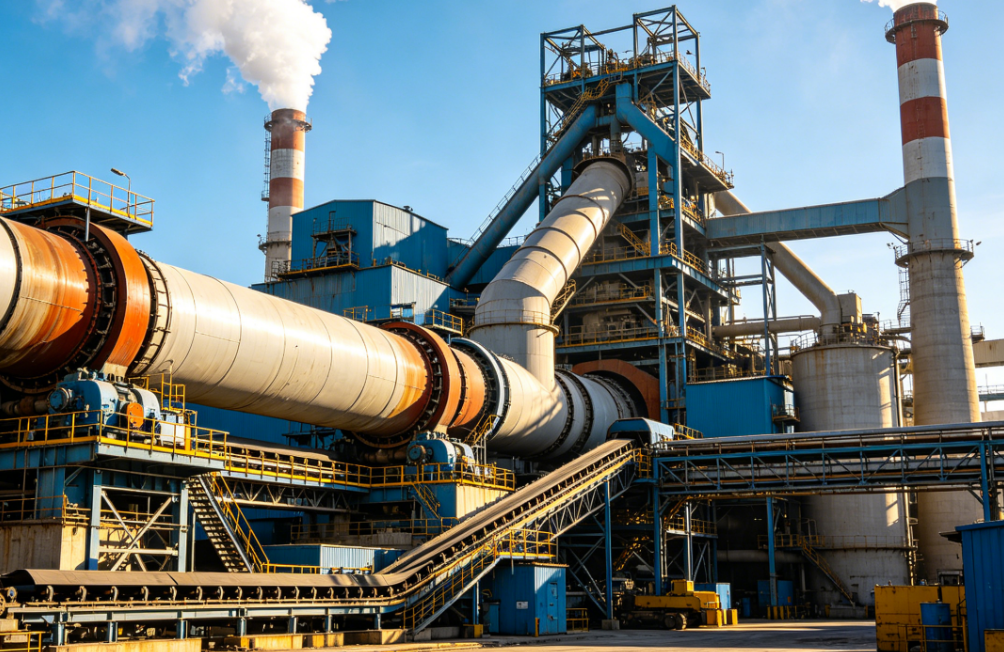
As a major industrial energy consumer, the cement industry relies heavily on core power equipment for the production of every ton of clinker. As the “power heart” throughout the entire process of raw material grinding, clinker calcination, and finished product transportation, the performance of cement compressors directly determines an enterprise’s energy consumption costs and environmental compliance capabilities. In 2026, with the market scale of cement bulk equipment approaching 9.2 billion yuan, the continuous tightening of environmental standards, and the in-depth advancement of energy-saving renovation policies, cement compressors are facing a dual boom of technological iteration and market reshuffling, becoming a key breakthrough for cement enterprises to reduce costs, increase efficiency, and achieve green transformation.
Boom Emerges! Cement Compressors Embrace Three Major Transformation Opportunities in 2026
According to data from the China Building Materials Machinery Industry Association, the market scale of China’s cement bulk equipment reached 8.75 billion yuan in 2025, a year-on-year increase of 6.3%. Among them, silo bottom bulk equipment closely related to compressors accounted for 45%, becoming the mainstream product in the industry. At the same time, industry concentration continues to increase, with CR5 rising from 32% in 2020 to 41% in 2025. Leading enterprises seize the market with technological advantages, and the upgrading of cement compressors has become the core focus of enterprise competition, with three major transformation opportunities already apparent.
Opportunity 1: Energy-Saving Renovation Forces Equipment Upgrading, Permanent Magnet Frequency Conversion Becomes Mainstream
In cement production, the energy consumption of compressors accounts for more than 30%, making it a key area for energy-saving renovation. According to the “National Industrial Energy-Saving Technology Application Guide and Cases”, energy-saving renovation of compressors can achieve an energy consumption reduction of 15%-25%, among which the application effect of permanent magnet frequency conversion technology is the most significant. In the renovation project of Jianhua Building Materials (Hubei) Co., Ltd., replacing the original equipment with permanent magnet frequency conversion two-stage compressors achieved an energy-saving rate of 21%, saving 341 tons of standard coal and reducing carbon dioxide emissions by 945.4 tons per year, highlighting dual economic and environmental benefits.
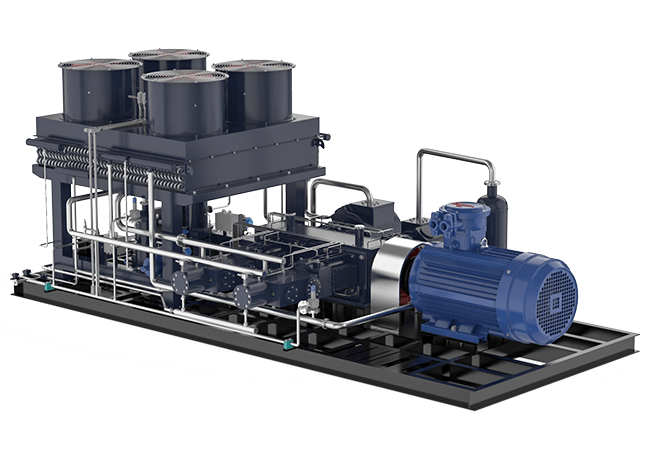
Compared with traditional fixed-frequency compressors, permanent magnet frequency conversion cement compressors can automatically adjust the speed according to the load fluctuations in cement production, avoiding energy waste caused by no-load operation. They are particularly suitable for scenarios with large load fluctuations in cement production, such as raw material grinding and clinker cooling. Currently, the market share of energy-saving equipment has exceeded 65%. It is expected that in 2026, with the release of 15% upgrading demand for existing equipment, permanent magnet frequency conversion compressors will experience explosive growth.
Opportunity 2: Accelerated Intelligent Penetration, “Unmanned Operation” Becomes a New Trend
With the advancement of industrial intelligence, the cement industry is gradually transforming towards “intelligent manufacturing”, and the intelligent upgrading of cement compressors has become an inevitable trend. Data shows that the penetration rate of intelligent bulk equipment increased from 12% in 2020 to 38% in 2025. Intelligent compressors, with advantages such as remote monitoring, fault early warning, and automatic regulation, greatly reduce manual operation and maintenance costs and improve equipment operation stability.
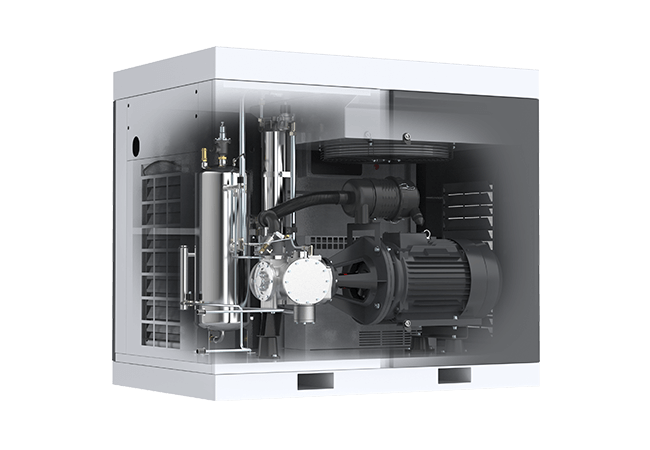
The new generation of intelligent cement compressors is equipped with IoT modules, which can real-time collect core parameters such as discharge pressure, flow rate, and temperature. Through big data analysis, they realize adaptive working condition adjustment, predict equipment faults in advance, and avoid production losses caused by shutdowns. For example, after adopting intelligent compressors, a large cement enterprise reduced equipment failure rate by 40%, reduced operation and maintenance personnel by 30%, and saved nearly one million yuan in operation and maintenance costs per production line annually, becoming a “sharp tool” for cement enterprises to reduce costs and increase efficiency.
Opportunity 3: Expansion of Export Market, “Belt and Road” Drives Demand Growth
In 2025, China’s export volume of cement bulk equipment reached 320 million US dollars, a year-on-year increase of 8.7%, mainly sold to countries along the “Belt and Road”. As a core supporting equipment, the export demand for cement compressors is also rising simultaneously. With the advancement of infrastructure construction in countries along the route, the demand for cement production capacity continues to increase, which in turn drives the growth of cement compressor exports.
Compared with international similar products, China’s cement compressors have advantages such as high cost performance, strong adaptability, and significant energy-saving effects, especially suitable for the working conditions of cement production in developing countries. Leading enterprises have gradually laid out the overseas market, integrating core technologies such as permanent magnet frequency conversion and intelligent control into export products, promoting the transformation of China’s cement compressors from “Made in China” to “Intelligent Made in China”.
Pitfall Avoidance Guide: 3 Key Points for Cement Compressor Selection, Don’t Step on These “High-Consumption Landmines”
Although the technological iteration of cement compressors brings many opportunities, many enterprises still have many misunderstandings in the selection and use process, leading to high energy consumption and frequent equipment failures. Combining industry practical experience, we summarize three key selection points to help enterprises avoid “high-consumption landmines”.
Key Point 1: Adapt to Working Conditions, Reject “Overcapacity” or “Insufficient Capacity”
Different links in cement production (raw material grinding, clinker calcination, finished product transportation) have great differences in pressure and flow rate requirements for compressors. Selection must be accurately matched with specific working conditions. For example, the raw material grinding link requires high-pressure and large-flow compressors, while the finished product transportation link has lower pressure requirements. Improper selection will either cause energy waste or lead to long-term full-load operation of equipment, shortening its service life. Referring to the application case of CITIC Heavy Industry roller press final grinding technology, after accurate matching of working conditions, not only can the unit power consumption be reduced by 5kWh/t, but also the production capacity can be improved. After renovation, a cement enterprise can save 11 million yuan in electricity costs alone every year.
Key Point 2: Prioritize Energy-Saving Equipment, Consider Long-Term Benefits
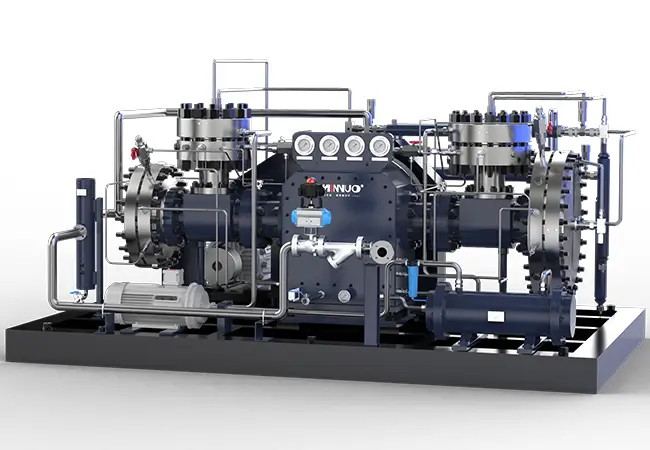
To save initial investment, some enterprises choose low-cost, high-energy-consuming traditional compressors. Although this seems to reduce the initial cost, the long-term energy consumption cost remains high. It is recommended to prioritize energy-saving compressors such as permanent magnet frequency conversion and two-stage compression. Although the initial investment is slightly higher, the cost can usually be recovered through energy-saving benefits within 3 years. At the same time, pay attention to the specific power index of the equipment; the lower the specific power, the lower the energy consumption. Prioritize products that meet the national first-level energy efficiency standard.
Key Point 3: Attach Importance to Post-Treatment, Avoid Equipment Damage by Impurities
The cement production environment has high dust and humidity. If the compressor post-treatment equipment is not perfect, impurities such as dust and moisture will enter the equipment, leading to component wear, frequent failures, and affecting the quality of compressed air, which in turn affects the quality of cement products. Therefore, during selection, it is necessary to simultaneously match post-treatment equipment such as precision filters and dryers, filter dust to ≤0.1μm, and control the air dew point below -20℃ to avoid equipment damage by impurities and extend service life.
Future Outlook: In-Depth Integration of Energy Conservation and Intelligence, Opening a New Era of Cement Compressors
With the continuous tightening of environmental policies and the in-depth green transformation of the cement industry, cement compressors will develop towards the direction of “more energy-saving, more intelligent, and more reliable”. On the one hand, energy-saving technologies such as permanent magnet frequency conversion and magnetic levitation will be further popularized, and energy consumption levels will continue to decline, helping cement enterprises achieve the “dual carbon” goal; on the other hand, intelligent technologies will be deeply integrated with compressors, realizing full-process unmanned operation, accurate fault early warning, and real-time energy consumption monitoring, further improving equipment operation efficiency and reducing operation and maintenance costs.
At the same time, with the continuous expansion of the export market and the improvement of industry concentration, leading enterprises with core technological advantages will further seize market share, eliminate backward high-consumption equipment, and promote the high-quality development of the cement compressor industry. For cement enterprises, seizing the opportunity of compressor technological iteration, making accurate selection, and conducting scientific operation and maintenance are the keys to seizing the initiative in reducing costs, increasing efficiency, and achieving green transformation, so as to realize sustainable development.
 Email
Email sales:+86 15366749631