The airend is the most expensive replaceable component in a rotary screw compressor. When it seizes—rotors suddenly locking together or against the housing—the repair bill typically reaches 40-60% of a complete compressor replacement. Worse, airend seizure rarely gives obvious warning. By the time operators notice something wrong, internal damage is already severe. Understanding what causes seizure, recognizing the subtle early indicators, and implementing proven prevention measures protects this critical asset and avoids catastrophic failure.
I. What Happens When an Airend Seizes
Unlike gradual wear that degrades performance over months, seizure is a sudden, complete loss of rotor rotation. The physical mechanisms behind it determine both the warning signs and the prevention approach.
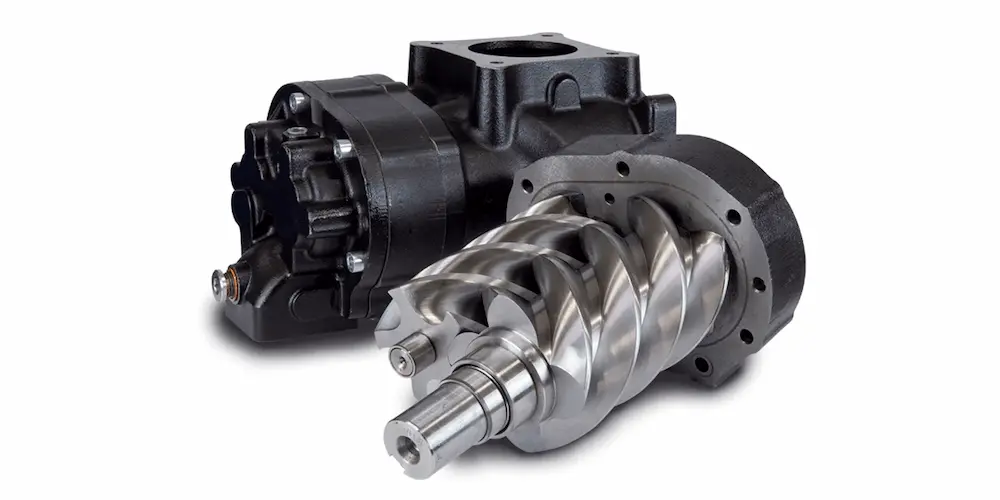
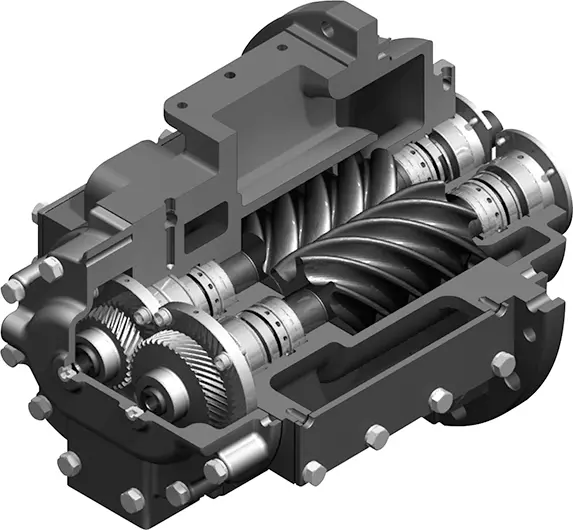
At its core, seizure occurs when the microscopic clearances between male and female rotors—and between rotors and housing—are breached. Under normal operation, these clearances of 0.001 to 0.005 inches are maintained by the oil film in flooded compressors or by timing gears in dry machines. When something disrupts this separation, metal contacts metal. The resulting friction generates intense localized heat, causing thermal expansion that further reduces clearances. This runaway cycle progresses from initial contact to complete lock-up in seconds to minutes.
The most common immediate triggers include lubrication failure—either complete loss of oil flow from a failed pump or blockage, or oil so degraded that it can no longer maintain a protective film between rotor surfaces. Contamination is equally destructive: a broken valve fragment, a piece of desiccant from a failed dryer, or accumulated sludge entering the airend becomes trapped between meshing rotors. Liquid slugging is another common culprit—a slug of condensate or liquid oil entering the airend cannot compress, so it momentarily forces rotors apart and then into destructive contact.
II. The Root Causes: Why Airends Fail
Every seizure has an underlying cause, and most are preventable through proper system design and maintenance.
Lubrication failure is the leading cause. The consequences unfold within seconds of oil flow interruption. A failed oil pump, a plugged oil filter that hasn’t been changed for thousands of hours beyond its service interval, or a collapsed oil inlet hose can all stop oil delivery instantly. Equally dangerous is the wrong oil—using general-purpose motor oil instead of compressor-specific lubricant often leads to foaming at high temperatures, and foam doesn’t lubricate.
High temperature operation degrades airend components through several mechanisms. Oil loses viscosity as temperature rises, and above approximately 220°F, even quality compressor oil begins thinning to the point where the protective film between rotors becomes dangerously thin. At sustained temperatures above 250°F, rotor thermal expansion progressively closes internal clearances until contact occurs. The root cause of high temperature is often simple: a clogged oil cooler with fins packed with dust, a thermostatic valve stuck in the closed position preventing oil flow to the cooler, or a compressor room with inadequate ventilation.
Contaminant ingestion is particularly insidious because a single event can cause progressive damage that culminates in seizure weeks or months later. Inlet filter neglect is the most common pathway. A filter element that has degraded or been improperly seated allows unfiltered air to bypass entirely. Cement dust, sand, and metal particles enter the airend and embed in the softer rotor surface, then act as cutting tools against the opposing rotor. Liquid water ingestion is equally destructive. When a drain fails on an aftercooler or air receiver, accumulated condensate can surge into the airend inlet. Because water is incompressible, the rotors momentarily separate and then collide.
Bearing failure often precedes seizure. Screw compressor rotors are supported by bearings that maintain precise radial and axial positioning. When a bearing wears or fails, the rotor it supports shifts position, closing clearances and eventually making contact. The root cause is frequently inadequate lubrication of the bearings themselves, or excessive loading from operating at discharge pressures above the airend rating.
For dry oil-free screw compressors specifically, timing gear failure or coating delamination serves the same destructive role. If a timing gear tooth fractures or bearing clearance opens, rotor synchronization is lost and the rotors contact. Coating delamination occurs when the PTFE or PEEK coating separates from the rotor substrate, usually due to corrosion attacking the bond layer, thermal cycling fatigue, or particle erosion wearing through the coating.
III. Early Warning Signs Before Seizure Occurs
Airends rarely fail without sending signals. The key is recognizing them in time.
The most immediate and actionable warning comes from the sound of the compressor. An airend in normal condition produces a smooth, consistent whine or hum. When internal clearances begin changing, the sound shifts. A metallic scraping or squealing that wasn’t there before indicates rotor contact. A rhythmic knocking or rumbling suggests bearing degradation. The return side of the airend runs hotter than normal when internal leakage increases because of clearance growth.
Performance data provides quantifiable warning. A gradual increase in motor current draw for the same output pressure and flow indicates the compressor is working harder to overcome increasing internal friction. Oil analysis is perhaps the most valuable predictive tool—a rising trend of iron or aluminum in oil samples signals rotor or housing wear long before performance degrades noticeably. The presence of larger metallic particles visible in an oil sample immediately before a failure is often the final warning sign.
IV. The Prevention Framework
Preventing airend seizure centers on three pillars: maintaining lubricant quality and flow, controlling operating temperature, and protecting the airend from contamination.
For lubrication, using the correct oil cannot be overemphasized. Compressor-specific oils contain anti-foam additives, oxidation inhibitors, and viscosity profiles designed for the high-temperature, high-shear conditions inside an airend. Oil and filter changes must follow the manufacturer’s recommended intervals—not extended beyond them. A quarterly oil analysis program provides early detection of contamination, degradation, or wear metals. The oil level should be checked weekly, and consumption trends that might indicate internal leakage or seal failure should be investigated promptly.
Temperature control requires attention to cooling system cleanliness. Air-cooled heat exchangers in dusty or dirty environments may need cleaning every 500-1,000 hours, and differential pressure or temperature monitoring across the cooler provides objective indication of when cleaning is needed. The thermostatic valve that controls oil flow to the cooler should be verified functional at least annually. For water-cooled compressors, cooling water quality, flow rate, and temperature must be maintained within specification. Compressor room ventilation is equally critical—intake and exhaust openings must remain unobstructed, and room temperature should not exceed the compressor manufacturer’s maximum ambient rating, typically 104-115°F.
Contamination prevention starts with the inlet filter. Elements must be replaced when the restriction indicator shows design maximum differential pressure, and the filter housing seal must be inspected at every element change. The intake location should be positioned away from sources of dust, chemical fumes, and moisture. Downstream of the compressor, condensate drains must function reliably to prevent liquid accumulation upstream of the airend. A failed drain on a wet air receiver can send a slug of water backward into the compressor during shutdown if pressure equalizes through the airend.
V. What to Do If You Suspect Impending Seizure
If warning signs suggest an airend problem, immediate action can prevent complete failure.
The compressor should be taken offline for investigation as soon as production allows. Continuing to run a compressor with audible metallic noise from the airend or rapidly rising bearing temperatures risks seizure at any moment. If the noise is severe or temperature rising rapidly, the compressor should be shut down immediately.
Inspection should begin externally. The oil filter element can be cut open and examined for metallic debris. An oil sample should be taken for laboratory analysis if trending data is not current. Manual rotation of the compressor by hand, if accessible, can reveal rough spots, binding, or unusual resistance to turning. A borescope inspection through available ports in the airend housing allows direct visual examination of rotor surfaces and the inlet region.
The decision to repair or replace depends on what inspection reveals. If bearing failure is the issue and rotors are undamaged, bearing replacement and reassembly with correct clearances may restore the airend to service. If rotors have contacted and show scoring, pitting, or material transfer, full airend replacement is typically required. Modern screw compressor rotors have precision profiles that cannot be repaired by grinding or machining without destroying efficiency.
VI. The Cost Case for Prevention
The economics of prevention versus failure make a compelling case for disciplined maintenance.
An airend replacement for a 75 HP compressor typically costs between twelve and twenty thousand dollars, including the airend assembly, gaskets, seals, oil, filters, and approximately two days of labor. If the compressor is rented to maintain production during repair, an additional two to four thousand dollars per week applies. By contrast, a comprehensive prevention program—oil analysis at two hundred dollars per year, timely filter changes at a few hundred dollars annually, and routine cooling system maintenance—costs a small fraction of a single failure. The additional benefit of extended airend life and sustained efficiency adds to the economic case for prevention.
FAQ
Q1: Can a seized airend be repaired?
If seizure resulted from bearing failure and the rotors have not contacted, bearing replacement and reassembly with correct clearances may restore the airend. If rotors show scoring, pitting, or material transfer from contact, replacement is required. Rotor profiles cannot be machined or ground without destroying the precision clearances that determine compressor efficiency.
Q2: How long should a screw compressor airend last?
Under proper operating conditions with correct maintenance, a flooded screw airend typically operates 40,000 to 60,000 hours before clearance wear justifies replacement—not from seizure, but from gradual efficiency loss. Many airends exceed 80,000 hours. Dry oil-free screw airends have similar overall life, limited by rotor coating wear rather than metal loss.
Q3: Does frequent start-stop cycling increase seizure risk?
Yes. Each start-up is a moment of vulnerability before the oil film fully establishes. Frequent cycling increases wear on bearings and rotor surfaces. Compressors that start more than 6-8 times per hour should have start-stop limits reviewed and consider a larger storage receiver or VSD control to reduce cycling.
Q4: What oil analysis results indicate impending airend problems?
A sustained upward trend in iron or aluminum indicates rotor or housing wear. A sudden increase suggests an active problem. Silicon above 20 parts per million indicates dirt bypassing inlet filtration and entering the airend. Copper or tin from bearing cage material signals bearing degradation that could ultimately lead to seizure.
Q5: Is an oil-flooded or oil-free compressor more susceptible to airend seizure?
Oil-flooded compressors are more sensitive to lubrication failure since oil maintains rotor clearances. However, they benefit from continuous flushing that removes minor debris. Oil-free machines depend on timing gears and coatings for clearance maintenance—gear failure or coating loss can cause contact. Neither type is inherently more seizure-prone when properly maintained.
Q6: Does compressor oversizing contribute to seizure risk?
Yes, indirectly. An oversized compressor cycles on and off more frequently, increasing start-up wear. If the compressor runs continuously at very low load, oil temperature may not reach normal operating range, preventing moisture evaporation from the oil. This moisture degrades lubrication and can contribute to corrosion-related failure.
Conclusion
Airend seizure is almost always the final consequence of a preventable condition—inadequate lubrication, excessive temperature, or contaminant ingress. The warning signs are detectable through acoustic changes, temperature and power trends, and oil analysis data if someone is looking for them. Prevention costs a fraction of a single failure, and the prevention measures are straightforward: correct oil, timely filter changes, clean coolers, and functioning drains. Recognizing early warning signs and acting on them protects the most valuable component in the compressed air system.
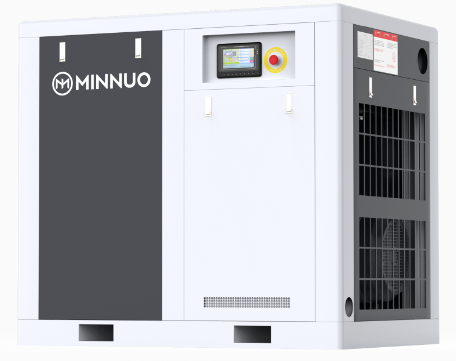
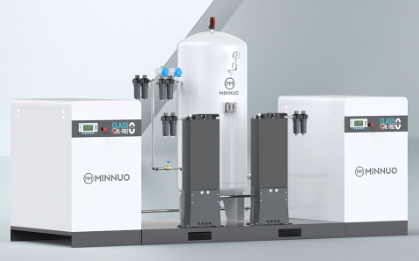
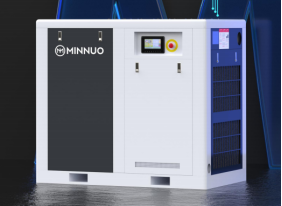
At MINNUO, our screw compressors are engineered with robust airend designs and supported by comprehensive maintenance guidance. We provide genuine oil, filters, and replacement parts matched to your specific compressor model, plus oil analysis programs that track wear trends and provide early warning of developing problems. If you observe any warning signs of airend distress, our engineering team can assist with remote diagnosis and recommend whether continued operation is safe or immediate service is required. Every MINNUO compressor includes warranty coverage and access to our technical service network for airend maintenance and replacement support.
 Email
Email sales:+86 15312799623