Wellhead natural gas presents unique compression challenges. Inlet pressure declines as the well ages. The gas stream carries entrained liquids, abrasive particles, and often corrosive compounds like hydrogen sulfide and carbon dioxide. The compressor must operate reliably in remote locations with limited utility infrastructure and minimal maintenance support. Selecting the right natural gas compressor for wellhead applications requires systematic evaluation of these variables to ensure production targets are met without excessive downtime or operating cost.
I. Characterizing Wellhead Inlet Conditions
The first step in compressor selection is understanding the gas stream entering the compressor suction.
1. Inlet Pressure Profile
Wellhead gas typically arrives at low to moderate pressure—anywhere from atmospheric to 150 PSIG —and requires boosting to pipeline pressure, commonly 250 to 1,200 PSIG. Unlike process applications with stable inlet conditions, wellhead pressure declines over the production life. A compressor sized for initial conditions may be mismatched to conditions three years later. Select equipment with flexibility to accommodate declining suction pressure through cylinder reconfiguration, speed adjustment, or staging changes.
2. Flow Rate Expectations
Initial production rates often exceed long-term stabilized rates. Size the compressor for expected plateau production, not peak initial flow. Over-sizing wastes capital and forces the compressor to operate in recycle or at reduced capacity, decreasing efficiency. Where flow uncertainty is high, consider multiple smaller units that can be staged or redeployed rather than a single large machine.
3. Ambient Site Conditions
Wellhead compressors operate in diverse environments—arid deserts, arctic tundra, tropical jungles, and offshore platforms. Ambient temperature affects engine cooling, gas density, and material selection. High altitude reduces naturally aspirated engine power and compressor throughput. Remote locations with limited grid power favor gas engine drivers over electric motors.
4. Production Life Expectancy
A well with a 20-year production profile justifies capital investment in high-efficiency, durable equipment with lower lifecycle cost. A well expected to deplete in 3-5 years favors lower initial cost, potentially redeployable packaged solutions. Match equipment quality and features to the expected operating horizon.
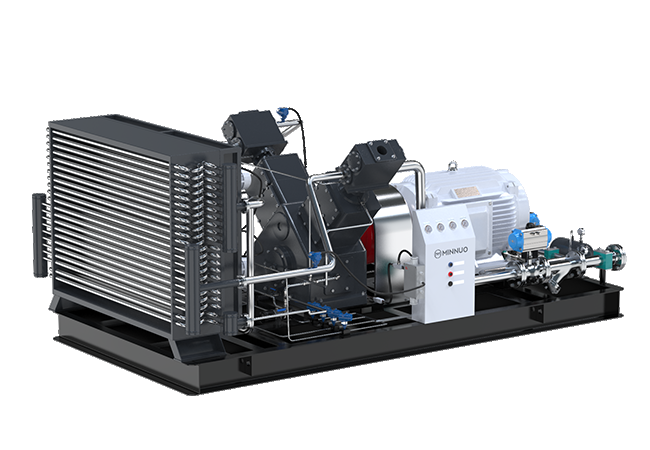
II. Gas Composition: The Critical Variable
Gas composition determines material selection, equipment configuration, and safety requirements.
1. Hydrogen Sulfide Content
H₂S is toxic, corrosive, and subject to stringent safety regulations. Gas containing any measurable H₂S is classified as sour gas. NACE MR0175/ISO 15156 governs material requirements for sour service, including hardness limits on carbon steels and restrictions on certain alloys. Sour gas compressors require:
- NACE-compliant materials for all wetted components
- Stainless steel or corrosion-resistant alloy trim for valves and seats
- Double mechanical seals with barrier fluid systems
- Gas detection and emergency shutdown systems
- Vapor recovery or flare systems for vented gas
2. Carbon Dioxide Content
CO₂ in the presence of water forms carbonic acid, which corrodes carbon steel. Dry CO₂ is relatively inert, but wellhead gas frequently contains water vapor. CO₂ partial pressure determines corrosion severity. Mitigation options include:
- Upgrading to 316L stainless steel or duplex stainless for wetted parts
- Corrosion inhibitor injection upstream of the compressor
- Dehydration upstream of compression
3. Water Vapor and Liquid Carryover
Wellhead gas is typically saturated with water vapor. Compression increases the dew point, potentially causing condensation in intercoolers and discharge piping. Entrained liquid slugs damage compressor valves and can cause cylinder hydraulic lock in reciprocating machines. Specify:
- Suction scrubber with high-efficiency mist elimination
- Automatic drain systems on all intercoolers and aftercoolers
- Heated crankcase or oil sump for wet gas service
- Material upgrades for components exposed to condensed water
4. Heavy Hydrocarbons and NGLs
Natural gas liquids—ethane, propane, butanes, and natural gasoline—may condense during compression and cooling. Liquid dropout dilutes lubricating oil and causes cylinder wash in reciprocating compressors. Solutions include:
- Minimum cylinder wall temperature maintained above hydrocarbon dew point
- Synthetic lubricants with good water and hydrocarbon tolerance
- Gas cooling with condensate separation between stages
III. Compressor Type Selection for Wellhead Service
Three compressor types dominate wellhead applications. Each offers distinct advantages and limitations.
1. Reciprocating Compressors
Reciprocating compressors are the most common choice for wellhead service, particularly for lower flow rates and higher pressure ratios.
Advantages:
- High efficiency across wide operating range
- Capable of high pressure ratios in a single machine
- Flexible cylinder configuration adapts to changing conditions
- Handles varying gas composition effectively
- Proven reliability in remote field service
Limitations:
- Higher pulsation and vibration requiring foundation and piping design
- More frequent maintenance—valves, rings, packing require periodic replacement
- Sensitive to liquid carryover
Best fit: Flows up to 10-15 MMSCFD, pressure ratios above 3:1 per stage, remote locations with access to mechanical maintenance.
2. Rotary Screw Compressors
Oil-flooded and oil-free rotary screw compressors are gaining acceptance in wellhead gathering applications.
Advantages:
- Compact footprint and lower installed cost
- Lower vibration, simpler foundation requirements
- Tolerates liquid carryover better than reciprocating machines
- Extended service intervals compared to reciprocating compressors
Limitations:
- Limited pressure ratio per casing—typically 4:1 to 7:1
- Oil-flooded machines require oil-gas separation and oil cooling
- Efficiency lower than reciprocating at high pressure ratios
- Requires gas for seal and bearing purge in oil-free designs
Best fit: Low to moderate pressure ratios, flows from 1 to 20+ MMSCFD, applications prioritizing compact footprint and reduced maintenance.
3. Centrifugal Compressors
Centrifugal compressors serve high-volume wellhead and gathering applications.
Advantages:
- Highest flow capacity in compact package
- Oil-free compression without seal oil systems (dry gas seals)
- Low maintenance, long continuous run times
- Smooth, pulsation-free discharge
Limitations:
- Narrow stable operating range—sensitive to flow and pressure changes
- High capital cost for smaller flow rates
- Requires specialized service for overhauls
- Surging risk during low-flow operation
Best fit: Flows above 10-15 MMSCFD, relatively stable inlet conditions, applications benefiting from oil-free gas delivery.
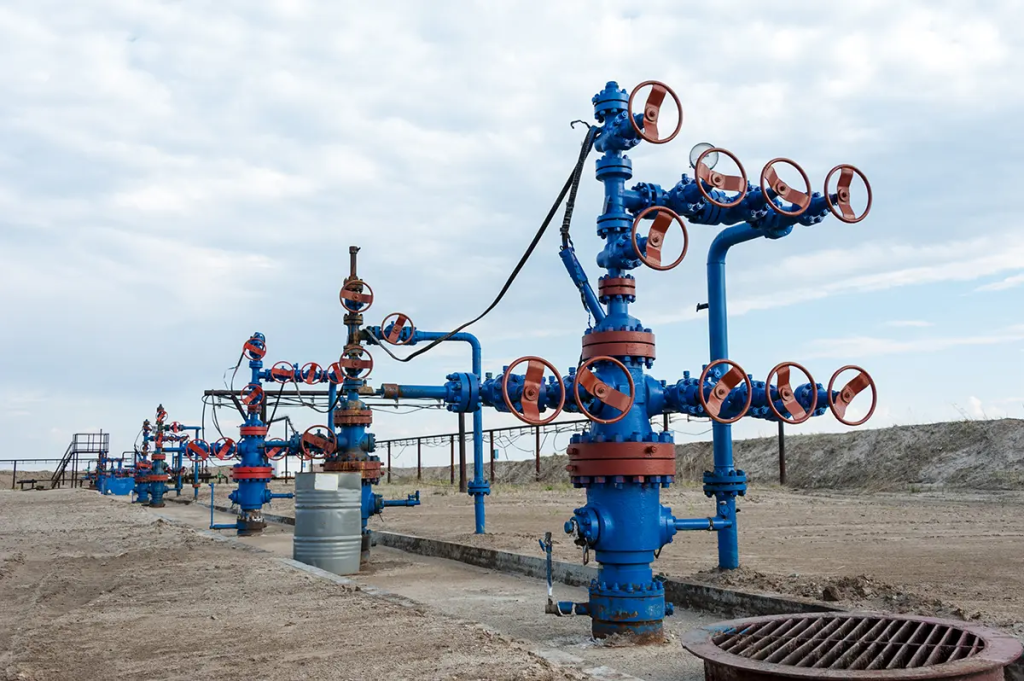
IV. Driver Selection: Gas Engine vs. Electric Motor
Wellhead compressor driver choice balances site utility availability against operating cost and emissions considerations.
1. Gas Engine Drivers
Natural gas-fueled engines are the traditional wellhead driver.
Advantages:
- Operates on available fuel gas, eliminating electric infrastructure cost
- Variable speed capability matches compressor output to well production
- Independent of grid reliability and power pricing
Limitations:
- Higher maintenance than electric motors—oil changes, spark plugs, coolant management
- Emissions compliance—EPA regulations require catalytic converters or rich-burn controls
- Lower overall efficiency than electric drive
- Requires fuel gas conditioning to remove liquids and particulates
2. Electric Motor Drivers
Grid-connected or generator-powered electric motors are increasingly specified for wellhead compression.
Advantages:
- Lowest maintenance and highest reliability
- Zero on-site emissions
- Higher efficiency than gas engines
- VFD compatibility enables speed control for production matching
Limitations:
- Requires grid power or on-site generation
- Site electrical infrastructure adds capital cost
- Fixed-speed motors without VFD lack production flexibility
Selection guidance: Choose gas engine drivers when fuel gas is abundant and grid power is unavailable or unreliable. Choose electric drivers when emissions regulations are stringent, grid power is accessible, or maintenance access is severely limited.
V. Packaging and Auxiliary System Design
Wellhead compressors are typically supplied as packaged skids integrating all required auxiliary systems.
1. Gas Pre-Treatment
A properly designed inlet system protects the compressor from liquids and solids. Minimum configuration includes:
- Suction scrubber: Removes free liquids and particles larger than 10 microns
- Coalescing filter: Required for screw compressors or when liquid aerosols are present
- Pulsation bottles: Dampen reciprocating compressor pulsations to reduce piping vibration
2. Cooling System
Compression heat must be rejected through air-cooled or water-cooled heat exchangers. Air-cooled systems dominate wellhead applications due to water scarcity and freezing concerns. Specify oversized coolers for high ambient temperature locations and finned-tube coatings for corrosive atmospheres.
3. Control and Safety Systems
Modern wellhead compressor packages include PLC-based controls with remote monitoring capability. Essential functions:
- Suction pressure control to maintain minimum inlet pressure
- Discharge temperature monitoring with alarm and shutdown
- Vibration monitoring on reciprocating machine frames and cylinders
- Gas detection with automatic shutdown and isolation
- Remote telemetry for unmanned operation
4. Containment and Emissions Management
EPA regulations require methane emissions control from compressor seals and vents. For reciprocating compressors, rod packing vents may require vapor recovery or flaring. Screw compressors with wet seals require seal oil degassing. Confirm package design complies with NSPS OOOOa or applicable state requirements.
VI. Regulatory Compliance and Standards
Wellhead compressor packages must comply with multiple industry standards.
| Standard | Application |
| API 618 | Reciprocating compressors for petroleum and gas industry |
| API 619 | Rotary screw compressors for petroleum and gas industry |
| API 617 | Centrifugal compressors for petroleum and gas industry |
| NACE MR0175 | Materials for sour gas service |
| ASME B31.3 | Process piping design |
| NFPA 70/NEC | Electrical classification and wiring methods |
| EPA 40 CFR 60 | Emissions standards for engines and fugitive methane |
FAQ
Q1: Can I use the same compressor for sweet gas and later convert it for sour gas service?
A1: Conversion from sweet to sour gas service is rarely practical. Sour gas requires NACE-compliant materials throughout the wetted flow path—cylinder bodies, valves, piping, and heat exchangers. A sweet gas compressor lacks these material certifications and would require extensive component replacement. Specify sour gas capability upfront if H₂S is anticipated.
Q2: How do I size a compressor when well production will decline over time?
A2: Consider specifying a compressor with variable capacity capability. Reciprocating compressors accommodate declining flow through speed reduction, cylinder end deactivation, clearance pocket adjustment, or suction valve unloaders. Screw compressors use slide valve capacity control or VFD speed adjustment. Size the compressor for the production plateau and ensure the capacity control method covers the expected decline range.
Q3: What is the minimum inlet pressure a wellhead compressor can handle?
A3: Reciprocating compressors can operate with suction pressure slightly above atmospheric, provided the cylinder is configured for low-ratio compression. Screw compressors typically require 5-15 PSIG minimum suction pressure to maintain oil circulation and seal integrity. For wells approaching atmospheric pressure, a blower or booster upstream of the main compressor may be required.
Q4: How often does a wellhead reciprocating compressor require maintenance?
A4: Typical maintenance intervals:
- Valves: Inspection every 4,000-8,000 hours, replacement at 8,000-16,000 hours
- Piston rings and rider bands: Replacement every 16,000-24,000 hours
- Rod packing: Replacement every 8,000-16,000 hours
- Engine oil and filter: Change every 500-1,000 hours
Actual intervals depend on gas cleanliness, operating conditions, and lubricant quality.
Q5: Is a gas engine or electric motor driver more cost-effective over the well life?
A5: Lifecycle cost comparison depends on local conditions. At $3/MMBtu gas and $0.10/kWh electricity, electric drive typically offers lower operating cost. However, the capital cost of electrical infrastructure often offsets this advantage for remote wells. For wells within 0.5 miles of existing three-phase power, electric drive with VFD is frequently the economic choice.
Q6: What is the difference between a wellhead compressor and a gathering compressor?
A6: A wellhead compressor serves a single well or small pad, boosting pressure to enter gathering lines. A gathering compressor aggregates flow from multiple wells and boosts pressure for transmission to processing facilities. Wellhead machines are smaller, more numerous, and experience wider inlet condition variations than gathering compressors.
Conclusion
Selecting a natural gas compressor for wellhead applications requires integrating knowledge of reservoir behavior, gas chemistry, mechanical engineering, and regulatory compliance. The optimal solution balances initial capital cost against operating flexibility and lifecycle maintenance expense. Reciprocating compressors remain the workhorse for most wellhead applications, while screw and centrifugal machines serve specific high-flow or low-ratio niches. Properly specified gas pre-treatment, materials compatible with the gas composition, and robust control systems ensure reliable operation in demanding field environments.
At MINNUO, we supply natural gas compressor packages configured for wellhead and gathering applications across diverse operating environments. Our systems are engineered to handle challenging gas compositions—including sour gas with H₂S and wet gas with entrained liquids—while complying with API, NACE, and customer-specific requirements. Every MINNUO compressor package includes warranty coverage and access to our engineering team for installation support, commissioning, and ongoing field service.
 Email
Email sales:+86 15366749631