At -45°C, the rules of machinery operation change. Rubber O-rings become brittle and lose their seal. Electrical connections contract and loosen. But the most insidious change happens to the oil. Synthetic compressor oil that flows freely at room temperature thickens to the consistency of honey at -20°C, then to grease at -30°C, and finally to a wax-like solid as the temperature approaches -45°C. The oil that is supposed to lubricate bearings, seal rotor clearances, and carry away heat has become a barrier to rotation. The compressor motor strains against the viscous drag. If the motor manages to turn the rotors, the oil may be too thick to flow through the oil cooler and filter, starving the bearings and the airend of lubrication. A cold start at extreme temperatures can destroy a compressor in minutes. Preventing that destruction requires understanding what happens to oil in the cold, and what equipment and procedures are needed to start safely.
I. What Happens to Oil at Extreme Low Temperatures
Compressor oil does not have a single freezing point like water. It is a complex mixture of hydrocarbon molecules, each with different low-temperature behavior. Three distinct temperatures describe what happens as oil cools.
The pour point is the lowest temperature at which the oil will still flow under its own weight. For a typical PAO-based synthetic compressor oil, the pour point is around -40°C to -50°C. At the pour point, the oil has become a semi-solid gel. It will not flow through oil galleries, it will not drain back to the sump, and it will not pass through the oil filter. The pour point is a laboratory measurement, not a guarantee. Oil that has been in service and contains dissolved water, oxidation products, or wear particles may have a higher effective pour point than fresh oil from the drum.
The cloud point is the temperature at which dissolved waxes and other high-molecular-weight compounds begin to crystallize out of solution. The oil becomes hazy, then opaque. The wax crystals are small enough to pass through clearances but large enough to plug filter elements designed to capture particles measured in microns. An oil filter that would last 2,000 hours at normal operating temperature can plug in minutes when fed cold oil loaded with wax crystals.
Viscosity increase is the most immediate practical problem. Compressor oil viscosity increases exponentially as temperature decreases. An ISO VG 46 oil with a viscosity of 46 centistokes at 40°C may have a viscosity of 2,000 centistokes at -10°C, and 20,000 centistokes or more at -30°C. At these viscosities, the oil pump cannot generate sufficient flow, the pressure relief valve opens against the backpressure, and the oil that does reach the bearings is too thick to form an effective hydrodynamic film. The compressor starts with metal-to-metal contact at the bearings and the rotors, inflicting wear that accumulates with each cold start.

II. The Crankcase Heater: First Line of Defense
The crankcase heater is the single most important piece of cold-weather equipment on a rotary screw compressor. Its function is straightforward: maintain the oil temperature above a safe minimum during shutdown so that the compressor can start without the oil viscosity being at ambient temperature.
The heater is an electric resistance element immersed in the compressor oil sump. It is thermostatically controlled to maintain the oil at a setpoint temperature, typically 10°C to 30°C depending on the compressor model and the ambient conditions. The heater operates whenever the compressor is shut down and the oil temperature drops below the setpoint. In extreme cold, the heater may operate continuously during shutdown periods, consuming a few hundred watts of electricity to protect a machine worth tens of thousands of dollars.
The heater’s power rating must be matched to the application. Too small a heater will not maintain the required oil temperature against the heat loss from the compressor housing to the ambient air. Too large a heater can overheat the oil locally, causing thermal degradation and coking on the heater element surface. The compressor manufacturer specifies the correct heater wattage for the expected ambient temperature range. For extreme cold applications below -40°C, a higher-wattage heater or multiple heaters may be specified to maintain oil temperature against the increased heat loss.
Heater operation must be verified before the compressor starts. A crankcase heater that has failed, tripped its circuit breaker, or been disconnected leaves the compressor unprotected for a cold start. The heater circuit should be monitored, either through a current sensor that confirms the heater is drawing power, or through an oil temperature sensor that confirms the oil is above the minimum start temperature. The compressor control system should inhibit starting if the oil temperature is below the safe threshold.
III. Beyond the Oil Sump: Other Cold-Weather Vulnerabilities
The oil sump heater protects the oil reservoir, but extreme cold attacks the compressor through other pathways that require specific countermeasures.
The oil cooler is vulnerable because it contains a large volume of oil with substantial surface area for heat loss to ambient air. Even with the sump heater maintaining sump temperature, oil in the cooler can be significantly colder. On air-cooled compressors, the cooler is exposed to ambient air and may be the coldest part of the oil circuit. Some cold-weather packages include an electric heat tracing on the oil cooler to prevent cold spots. On water-cooled compressors, the cooling water must be drained or circulated with antifreeze to prevent freezing that can rupture the cooler.
The inlet valve and control air system use compressed air for actuation. Any moisture in the control air will freeze, jamming valves in position and preventing the compressor from loading or unloading correctly. An instrument air dryer dedicated to the control air system, or heat tracing on control air lines, prevents this failure.
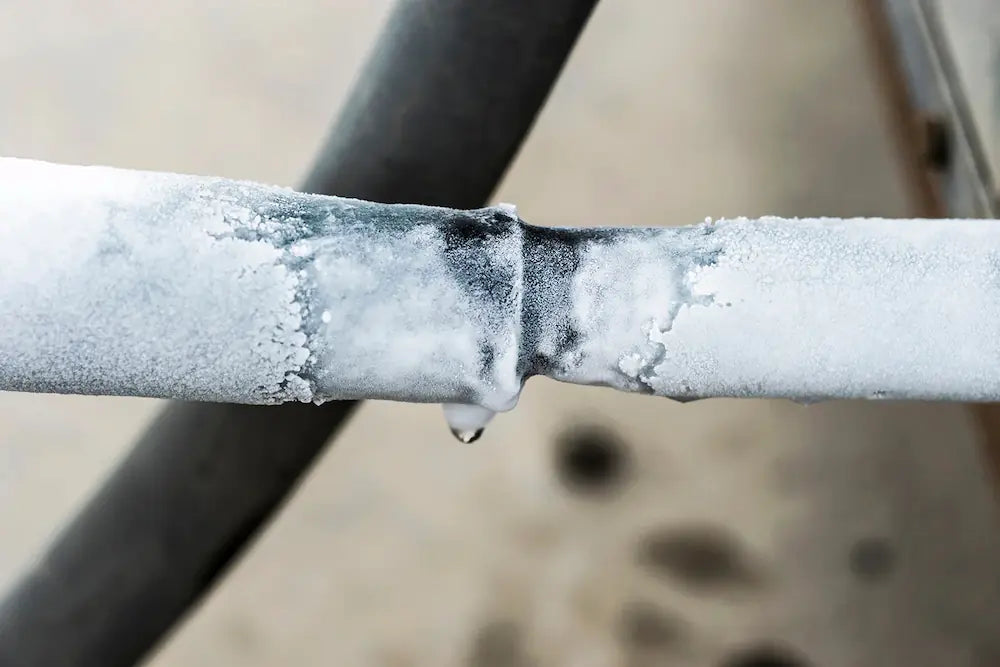
Condensate drains throughout the system—on the aftercooler, the air receiver, the dryer, and the filters—are at risk of freezing. A frozen drain cannot discharge condensate, and the accumulated water can back up into the air stream, enter the compressor, or freeze in piping and create blockages. Heat-traced and insulated drains, or drains located in heated enclosures, are standard cold-weather provisions.
The compressor intake may draw in snow or ice crystals that can damage the airend. An intake hood or snow screen prevents snow ingestion. The intake should be positioned to avoid drifting snow and should be elevated above the expected maximum snow depth.
IV. Selecting Oil for Extreme Cold Service
Oil selection for extreme cold operation involves balancing low-temperature flow with high-temperature protection. The oil must flow at the coldest expected ambient temperature while maintaining adequate viscosity at normal operating temperature.
PAO-based synthetic oils are the standard choice for cold-weather compressor operation. They have inherently lower pour points than mineral oils and better viscosity-temperature characteristics. A PAO synthetic ISO VG 32 oil with a pour point below -50°C can serve in applications where a mineral oil of the same viscosity grade would be unusable below -20°C. The synthetic oil also oxidizes more slowly at high temperature, extending oil life in the severe temperature cycling that characterizes cold-weather operation.
Ester-based synthetics, including diester and polyol ester formulations, offer some of the lowest pour points available, below -55°C in some products. They also have excellent solvency that helps keep the compressor internals clean. The trade-off is higher cost and, for some ester formulations, greater sensitivity to water. If the compressor operates intermittently and the oil never reaches normal operating temperature, water accumulation in the oil becomes a concern, and the oil’s hydrolytic stability must be considered.
PAG-based synthetics are less common in compressor service but offer extremely low pour points and excellent lubricity. Their primary limitation is incompatibility with some seal materials and with mineral oil residues in the system. Converting to PAG oil typically requires a complete system flush to remove all traces of the previous oil.
Oil viscosity grade selection for cold climates may favor a lower viscosity grade than standard recommendations. An ISO VG 32 oil, rather than the typical ISO VG 46, may be specified for extreme cold to improve low-temperature flow. The compressor manufacturer must confirm that the lower-viscosity oil provides adequate protection at normal operating temperature. The trade-off is that lower viscosity oil provides a thinner lubricating film at high temperature, which may increase wear under heavy load conditions.
V. The Cold-Start Procedure
A proper cold-start procedure is as important as the cold-weather equipment. The procedure ensures that the compressor starts with adequate lubrication and reaches stable operating conditions before being loaded.
The pre-start check verifies that the crankcase heater has been energized for a sufficient period—typically a minimum of four hours, and preferably continuously during cold weather. The oil temperature is measured at the sump and must be above the minimum start temperature specified by the manufacturer. The oil level is checked. Condensate drains are verified clear. The intake is inspected for snow or ice blockage.
The compressor is started unloaded, with the inlet valve closed or the capacity control set to minimum. The motor accelerates the rotors against the viscous drag of the cold oil. The unloaded start reduces the mechanical load on the bearings during the first critical seconds of operation, when oil flow is just beginning to establish.
A warm-up period of 5 to 15 minutes follows, with the compressor running unloaded. The oil circulates, warms from compression heat and internal friction, and gradually reaches a temperature where it flows freely through the cooler and filter. The oil temperature is monitored during this period. The compressor should not be loaded until the oil temperature has reached at least 10°C to 20°C, depending on the manufacturer’s specification.
Loading is applied gradually. If the compressor has capacity control, it is loaded in steps or modulated to full load over a period of minutes. The discharge temperature and oil temperature are monitored as the compressor comes up to operating conditions. The thermostatic valve should be observed to verify that it opens to the oil cooler when the oil reaches its normal operating temperature, indicating that the entire oil circuit is functioning.
The first hour of operation after a cold start is the highest-risk period. The operator should remain with the compressor, or monitor it closely, during this time. Unusual noise, vibration, or temperature readings indicate a problem that may require immediate shutdown.
VI. Cold-Weather Package Options
Compressor manufacturers offer cold-weather packages that integrate the required protection into a factory-engineered system. For extreme cold applications, these packages should be specified at the time of compressor purchase.
A comprehensive extreme cold package typically includes a crankcase heater with thermostatic control, heat tracing on the oil cooler and control air lines, an insulated and heated condensate drain system, an intake snow hood or weather enclosure, low-temperature seals and O-rings throughout the compressor, synthetic oil fill with documented low-temperature performance, an oil temperature sensor with low-temperature start inhibit, and a weatherproof enclosure with insulation and, for the most severe conditions, an internal space heater.
For compressors installed outdoors or in unheated enclosures, the enclosure itself becomes part of the cold-weather protection. An insulated, heated enclosure maintains the entire compressor package at a temperature above the minimum start requirement, eliminating the need for individual component heat tracing. The enclosure heater must be sized for the heat loss through the enclosure walls at the design minimum ambient temperature.
Frequently Asked Questions
Q1: Can I use an engine block heater instead of the manufacturer’s crankcase heater?
An engine block heater is not designed for the oil volume, geometry, or temperature requirements of a compressor sump. It may overheat the oil locally or fail to maintain the required temperature. Use the heater specified by the compressor manufacturer for the specific model and the expected ambient conditions.
Q2: How much electricity does a crankcase heater consume?
A typical crankcase heater for a 50 to 100 HP compressor draws 200 to 500 watts. Over a 12-hour overnight shutdown during cold weather, the energy consumption is 2.4 to 6.0 kilowatt-hours. At $0.10 per kilowatt-hour, the overnight cost is $0.24 to $0.60. This is negligible compared to the cost of repairing bearing damage or replacing an airend damaged by a single cold start without adequate preheating.
Q3: At what temperature do I need to start worrying about cold-weather operation?
Cold-weather precautions should be implemented when ambient temperatures drop below 0°C, and become critical below -10°C. The specific thresholds depend on the compressor model, the oil type, and whether the compressor is installed in a heated space. Compressors installed outdoors or in unheated enclosures require the full complement of cold-weather protection in any climate where temperatures consistently drop below freezing.
Q4: Can frequent starts and stops in cold weather damage the compressor?
Yes. Each cold start subjects the compressor to a thermal cycle and a period of reduced lubrication. If the compressor cycles on and off frequently in cold weather, the oil never reaches full operating temperature and the water that condenses during compression never evaporates from the oil. The accumulated water degrades lubrication and promotes corrosion. Cold-weather operation should minimize start-stop cycles, either through larger storage receivers that reduce cycling or through continuous operation at reduced load.
Q5: What happens if the crankcase heater fails and I need to start the compressor?
If the heater has failed and the oil is below the minimum start temperature, the compressor should not be started. Options include using portable heaters to warm the compressor housing and oil sump, placing the compressor in a heated enclosure if available, or waiting for ambient temperature to rise. Starting a compressor with oil below the safe temperature risks immediate bearing damage. The cost of waiting or providing temporary heat is far less than the cost of repairing a cold-start failure.
Q6: Is synthetic oil enough for extreme cold, or do I still need heaters?
Synthetic oil with a low pour point is necessary but not sufficient for extreme cold operation. The oil’s pour point indicates the temperature at which it will still flow under ideal laboratory conditions, not the temperature at which it will provide adequate lubrication at startup. Crankcase heaters remain essential regardless of the oil type. The oil and the heater work together—the synthetic oil flows at lower temperatures, and the heater ensures the oil is warm enough to lubricate effectively from the moment the compressor starts.
Conclusion
Extreme cold does not make rotary screw compressor operation impossible, but it does make it unforgiving. The margin for error in oil selection, heater function, and starting procedure narrows as the temperature drops. A compressor that starts and runs reliably at -20°C with standard equipment may fail catastrophically at -45°C if the same procedures are followed. The difference between a successful cold-weather installation and a costly failure is preparation: the right oil for the temperature, a properly sized and verified crankcase heater, a disciplined cold-start procedure, and the cold-weather package components that address the multiple pathways through which cold attacks the machine. The investment in cold-weather protection is measured in hundreds or thousands of dollars. The cost of replacing an airend destroyed by a single cold start is measured in tens of thousands—plus the downtime that no operator can afford during the season when compressed air is needed most.
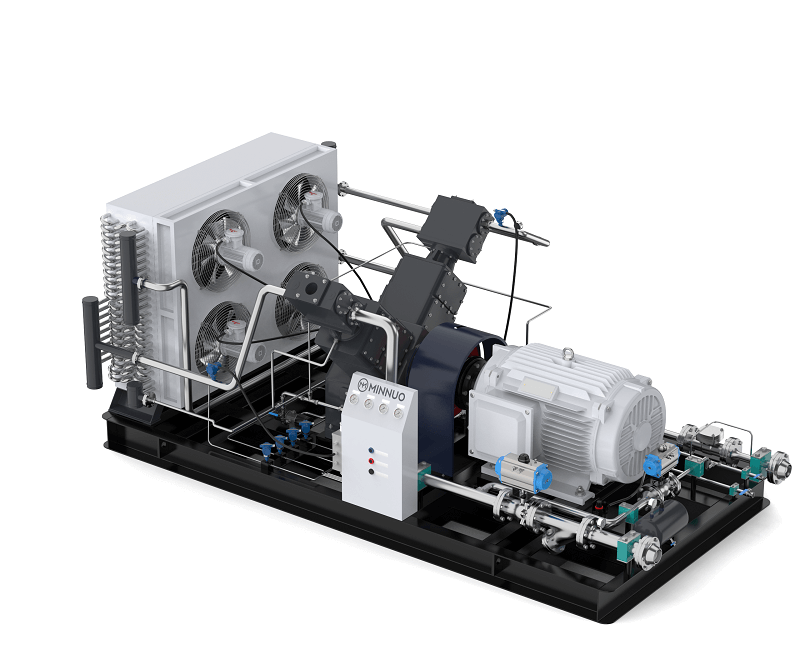
At MINNUO, our rotary screw compressors are available with factory-engineered extreme cold packages designed for reliable operation at ambient temperatures down to -45°C and below. From crankcase heaters and heat-traced components to insulated enclosures and low-temperature synthetic oil fills, our cold-weather packages are specified, installed, and tested as an integrated system. Whether you are operating in the Canadian oil sands, a Siberian mining operation, or a Nordic winter construction site, MINNUO provides the equipment and technical support to keep your compressed air supply running when the temperature plummets. Every MINNUO cold-weather package includes commissioning support, cold-start procedure documentation, and training for your operating personnel.
 Email
Email sales:+86 15366749631