If you’re considering investing in a compressed natural gas (CNG) filling station, the first question on your mind is almost certainly: how much is this going to cost? It’s a fair question—and the answer isn’t as simple as a single number. A CNG station is a significant capital investment, with costs ranging from $500,000 for a basic private depot station to over $1.5 million for a public fast-fill station . The final price tag depends on station type, equipment choices, site conditions, and regional requirements. This guide breaks down every component of CNG station costs, giving you a realistic picture of what to budget and what returns to expect.
I. The Big Picture: Typical Cost Ranges by Station Type
Before diving into line items, it helps to understand the ballpark figures for different types of CNG stations.
| Station Type | Typical Cost Range | Best For |
| Time-Fill (Private/Depot) | $400,000 – $800,000 | Fleets that park overnight (buses, delivery trucks, municipal vehicles) |
| Fast-Fill (Public Station) | $1,000,000 – $1,800,000 | High-traffic retail locations, taxis, commercial vehicles |
| Mother Station | $2,500,000 – $5,000,000+ | Supplying multiple daughter stations via tube trailers |
| Daughter Station | $600,000 – $1,200,000 | Sites without direct pipeline access, receiving gas by trailer |
II. Breaking Down the Costs: Where Does the Money Go?
Understanding the cost components helps you make informed decisions and avoid surprises.
1. Core Equipment (50-60% of Total Investment)
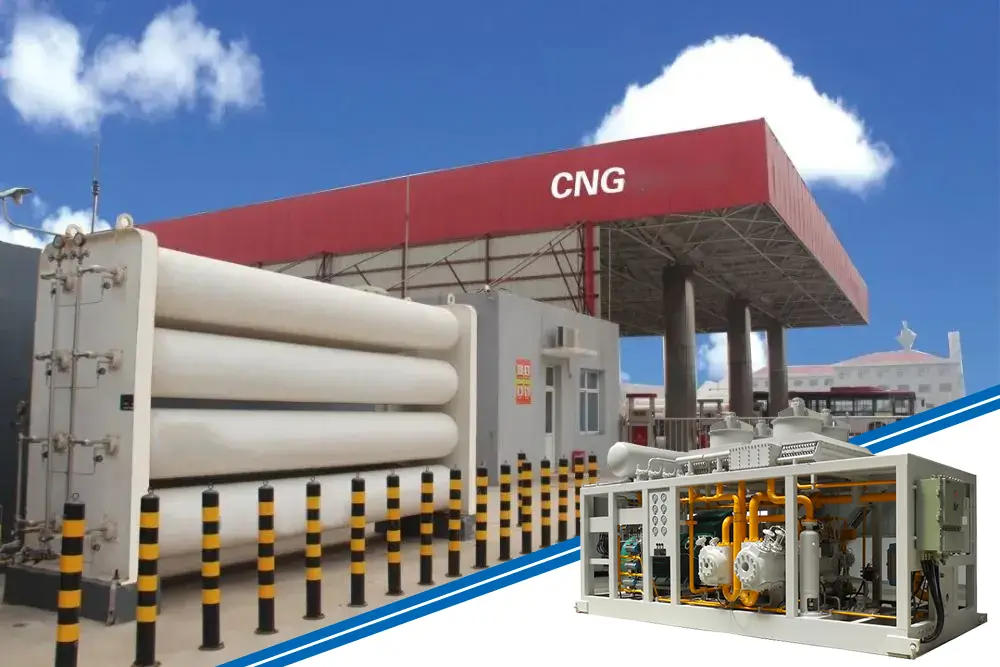
The heart of your station is the equipment package. For a standard station, equipment accounts for roughly 50-60% of total costs .
| Equipment | Cost Range | Notes |
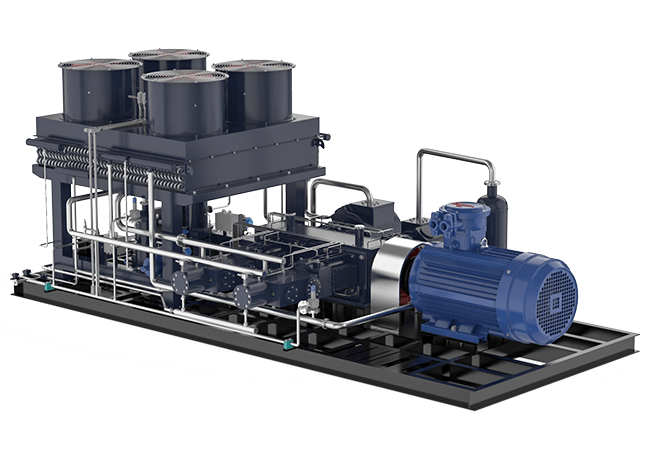
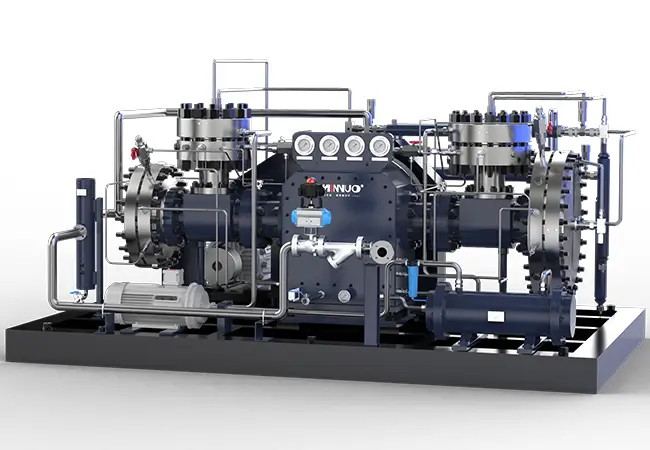
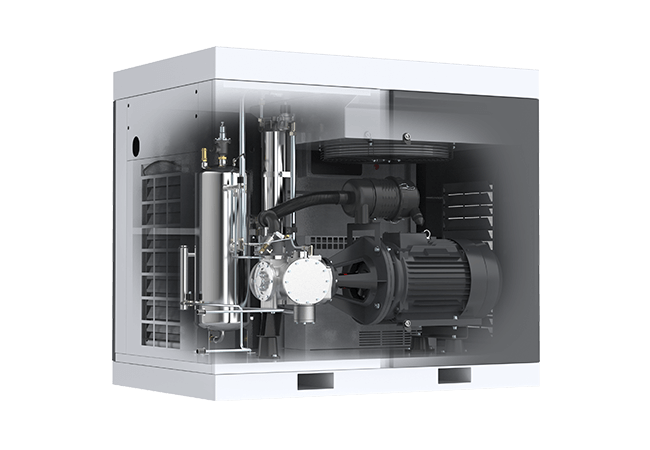
| CNG Compressor | $150,000 – $500,000 | The most critical component. Price depends on horsepower, flow rate, and whether it’s single-stage or multi-stage. A typical public station compressor might cost $200,000-$350,000. |
| Storage Cascades | $50,000 – $150,000 | High-pressure vessels (typically 3-6 tanks) that store CNG for fast-fill applications. |
| Dispensers (CNG Pumps) | $30,000 – $60,000 each | Dual-hose dispensers with temperature compensation. Most stations install 2-4 dispensers. |
| Dryer/Dehydration System | $20,000 – $50,000 | Essential for removing moisture to prevent valve icing and corrosion. |
| Priority Panel & Controls | $15,000 – $40,000 | Automatically manages flow between compressor, storage, and dispensers. |
| Safety Systems | $10,000 – $30,000 | Gas detection, emergency shutdown (ESD), fire suppression. |
Cost-saving tip: Skid-mounted packages (pre-assembled units) can reduce installation costs compared to piecemeal equipment sourcing .
2. Site Development & Civil Works (20-30%)
Before equipment arrives, your site needs to be ready. This includes :
- Land acquisition or leasing: Highly variable by location.
- Grading and paving: $50,000 – $200,000 depending on site condition.
- Electrical service upgrades: CNG compressors require significant power—often a dedicated transformer and 480V three-phase service. This can cost $50,000 – $150,000 if the site lacks adequate power.
- Utility connections: Water for cooling (if water-cooled compressor), gas line tie-in.
- Explosion-proof walls and safety barriers: Required by codes like NFPA 52 .
- Canopy and lighting: $50,000 – $150,000.
3. Permitting, Engineering, and Compliance (10-15%)
CNG stations are heavily regulated. Budget for :
- Feasibility study and business plan: $5,000 – $20,000 (some suppliers offer this free as part of their service) .
- Engineering design and permitting: $20,000 – $60,000.
- Environmental review: $5,000 – $25,000 if required.
- Inspection and commissioning: $5,000 – $15,000.
Critical: Using equipment that meets ISO 11439, NFPA 52, and ASME standards can significantly shorten approval times and reduce insurance premiums by over 15% .
4. Project Contingency (10%)
Always budget 10% for unexpected costs—rock excavation, utility delays, price fluctuations.
III. Operational Costs: The Ongoing Expenses
The investment doesn’t stop at construction. Operating a CNG station costs money every day.
1. Electricity (The Biggest Operational Cost)
CNG compression is energy-intensive. A typical station’s electricity bill can range from $2,000 to $10,000+ per month, depending on throughput. Using Variable Frequency Drive (VFD) compressors can reduce energy consumption by up to 20% .
2. Maintenance and Labor
- Maintenance: Budget $15,000 – $40,000 annually for compressor servicing, filter changes, valve inspections, and calibration .
- Staffing: A public station may need 2-4 attendants. Labor costs are typically the second-largest operating expense after electricity .
3. Insurance and Property Taxes
Insurance for a CNG station is higher than for a standard business due to the flammable nature of the product. Expect $10,000 – $30,000 annually.
4. Gas Supply Cost
You’ll pay for the natural gas itself, either at wholesale pipeline rates (for mother/standard stations) or delivered via tube trailer (for daughter stations). This is a variable cost that scales with sales.
IV. Revenue and ROI: When Will You Break Even?
Investors want to know: is a CNG filling station profitable?
1. Revenue Sources
- Fuel sales margin: The difference between your wholesale gas cost and retail selling price. Typical margin is $0.50 – $1.00 per gasoline gallon equivalent (GGE).
- Volume is key: A station needs sufficient throughput to cover fixed costs. Many stations require 40-50% of rated capacity utilization to achieve profitability.
2. Real-World ROI Examples
- United States: A public fast-fill station serving a mix of retail and fleet customers typically sees payback in 5-8 years, depending on location and volume .
- China: In major industrial cities, CNG stations serving municipal bus fleets and logistics companies often achieve ROI in 6-10 years, with government subsidies improving returns.
- Southeast Asia (Indonesia, Thailand): With diesel prices high and government support for natural gas vehicles, stations can reach profitability in 3-5 years .
- East Africa (Tanzania, Kenya): Emerging markets with rapidly growing CNG adoption for transportation and industry can see payback periods of 4-7 years, though equipment import costs may be higher .
3. The “Anchor Tenant” Advantage
The most profitable stations have long-term supply agreements with anchor customers—bus systems, logistics companies, or municipal fleets . This guarantees base volume and significantly improves ROI.
V. Factors That Can Drastically Change Your Cost
1. Pipeline Access
If you’re building a mother station or standard station, you need a high-pressure natural gas pipeline connection. The cost to extend a pipeline to your site can range from $50,000 to $500,000+ depending on distance.
2. Daughter Station Premium
If you’re building a daughter station (no pipeline access), you avoid pipeline costs but incur ongoing tube trailer transport fees—typically $0.50 – $1.50 per GGE additional cost.
3. “H2-Ready” Future-Proofing
Some investors are now requesting “H2-Ready” stations that can be converted to handle hydrogen blending in the future. This adds 10-20% to initial equipment costs but may qualify for green financing.
4. Geographic Region
Costs vary dramatically by region:
- United States: $500k – $1.5M for standard stations .
- China: $1.7M – $4.2M depending on scale and location .
- Europe: Generally higher due to stricter safety and environmental regulations.
- Africa/Southeast Asia: Lower labor costs but potentially higher equipment import duties and logistics expenses.
VI. Money-Saving Strategies
1. Start with a Feasibility Study
Before breaking ground, invest in a comprehensive feasibility study that includes:
- Gas source pressure testing (determines compressor selection)
- Traffic counts and demand forecasting
- Site-specific cost estimates
2. Choose the Right Compressor Technology
- VFD compressors save 20% on energy.
- Skid-mounted packages reduce installation labor.
3. Consider a Phased Approach
Start with a smaller station and expand as demand grows. Some equipment is modular and can be added to later.
4. Leverage Incentives
Many regions offer grants, tax incentives, or low-interest loans for alternative fuel infrastructure. In markets like the United States, federal and state programs can cover 30-50% of station costs . In parts of Africa and Asia, import duty waivers on CNG equipment are available.
FAQ: CNG Filling Station Costs
Q1: What is the cheapest type of CNG station to build?
A1: A private time-fill station for a fleet is typically the most economical, ranging from $400,000 to $800,000. These stations have simpler equipment (no high-pressure storage cascades) and fewer dispensers .
Q2: How much does a CNG compressor alone cost?
A2: A commercial-grade CNG compressor typically costs $150,000 to $500,000, depending on flow rate (horsepower) and whether it’s single-stage or multi-stage. This is the single most expensive component.
Q3: Can I build a CNG station without a gas pipeline?
A3: Yes—this is called a daughter station. You’ll need to purchase a tube trailer (or contract with a supplier) to transport CNG from a mother station to your site. Daughter stations are typically $600,000 – $1,200,000 to build.
Q4: How long does it take to build a CNG station?
A4: Typical construction time is 6 to 12 months from breaking ground to opening . Permitting can add another 3-6 months, so factor that into your timeline.
Q5: Is a CNG station a good investment in 2026?
A5: It depends on your market. In regions with strong government support, high diesel/petrol prices, and anchor fleet customers, CNG stations can be very profitable. The key is securing volume commitments before you build. ROI typically ranges from 3 to 10 years depending on scale and utilization.
Q6: What ongoing costs should I budget for?
A6: Plan for:
- Electricity: $2,000 – $10,000+ monthly
- Maintenance: $15,000 – $40,000 annually
- Labor: $50,000 – $150,000 annually (depending on staffing)
- Insurance: $10,000 – $30,000 annually
- Gas supply: Variable based on sales
Conclusion
Building a CNG filling station is a significant investment—typically $500,000 to $1.5 million or more—but it can also be a rewarding one with the right strategy. The key to success lies in thorough upfront planning: understanding your site’s gas and electrical capacity, securing anchor customers, choosing the right equipment (with VFD technology for energy savings), and budgeting realistically for both construction and ongoing operations.
For investors ready to move forward, the formula is simple: secure contracts first, use compliant equipment, and implement smart operations . At MINNUO, we provide comprehensive CNG station solutions—from feasibility assessment and equipment supply to installation support—helping you navigate the complexity and build a station that delivers reliable returns for years to come.
 Email
Email sales:+86 15366749631