The rotary screw air compressor is the workhorse of modern industry, powering everything from small workshops to massive manufacturing plants. Renowned for their reliability, continuous duty capability, and energy efficiency, screw compressors have largely replaced older reciprocating (piston) models in many applications. But what exactly makes them tick, and how do you choose and care for the right one? This comprehensive guide delves into the working principle, main types, diverse applications, and essential maintenance practices for screw air compressors.
I. Working Principle: How a Screw Air Compressor Operates
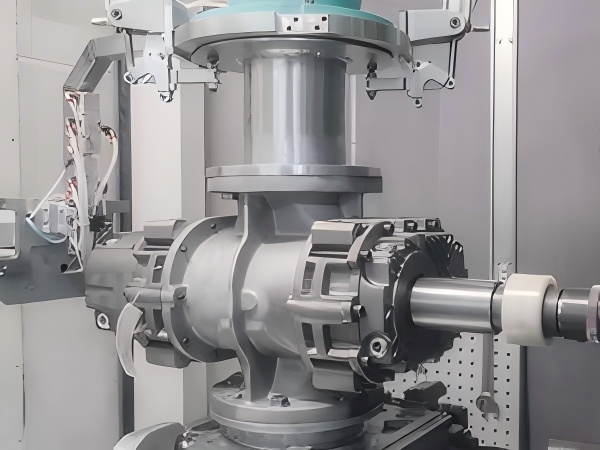
Unlike piston compressors that use a reciprocating motion, screw compressors utilize a rotary positive displacement mechanism. The core of the machine is a pair of intermeshing helical screws (rotors) housed within a precisely machined chamber.
1. The Compression Process in Four Stages
- Suction: As the male and female rotors turn, air is drawn into the cavity created between the rotor lobes and the compressor housing.
- Trapping & Transport: The inlet port closes, trapping a specific volume of air. The continued rotation of the rotors reduces the volume of the trapped air pocket as it moves along the length of the screws from the suction to the discharge end.
- Compression: This continuous reduction in volume progressively increases the air pressure. In oil-injected models, oil is injected into the compression chamber to seal internal clearances, cool the air, and lubricate the rotors.
- Discharge: The compressed air-oil mixture (if injected) is expelled through the discharge port into a separation system. The entire process is continuous and pulsation-free, providing a smooth airflow.
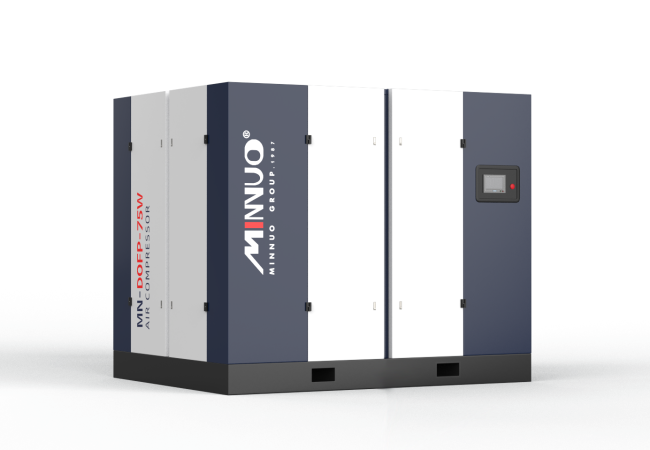
II. Main Types of Screw Air Compressors
Screw compressors are primarily categorized by their lubrication and cooling method, which defines their purity and application.
1. Oil-Injected Screw Compressors
This is the most common and cost-effective type for general industrial use.
- Working Principle: Oil is continuously injected into the compression chamber. It serves three critical functions: sealing the rotors, removing the heat of compression, and lubricating the bearings.
- Output Air: The air exiting the compressor element is a mixture of compressed air and oil aerosol. It must pass through a highly efficient oil separation system (a multi-stage separator and filter) to remove the bulk of the oil before delivery. Typical output air purity is Class 1-3 oil content (ISO 8573-1).
- Best For: General manufacturing, workshops, automotive, construction, and any application where trace oil in the air is not detrimental.
2. Oil-Free Screw Compressors
These are required for industries where air purity is critical, classified as Class 0 (ISO 8573-1).
- Working Principle: The compression chamber is completely oil-free. The timing gears, located outside the compression area, synchronize the rotors, preventing contact. Cooling is achieved either by air (for smaller units) or water jackets. Some advanced designs use specialized, non-stick coated rotors (e.g., Teflon) or water injection for sealing and cooling.
- Output Air: 100% oil-free compressed air, suitable for sensitive applications.
- Best For: Food & beverage, pharmaceuticals, electronics, medical air, chemical processing, and paint spraying where oil contamination is unacceptable.
Both oil-injected and oil-free screw compressors are available with Variable Speed Drive (VSD) technology, which is ideal for workshops with fluctuating air demand to maximize energy savings.
III. Key Industrial Applications
The versatility of screw compressors makes them suitable for a vast range of sectors:
- General Manufacturing: Powering pneumatic tools, assembly lines, material handling, and packaging equipment.
- Food & Beverage: Oil-free compressors are used for packaging, bottling, fermentation air, and food product handling (e.g., air knives for drying).
- Pharmaceuticals & Medical: Providing critical process air for drug manufacturing, instrument actuation, and breathable medical air (with appropriate treatment).
- Wastewater Treatment: Aerating tanks to promote biological digestion of waste.
- Mining & Construction: Powering heavy drilling rigs, pneumatic hammers, and ventilation systems.
- CNC Machining & Laser Cutting: Providing clean, stable air for spindle cooling, tool changers, and assist gas (requires oil-free or highly filtered air).
IV. Essential Maintenance Guide for Longevity
A proactive maintenance schedule is crucial for maximizing uptime, efficiency, and service life.
1. Daily/Weekly Checks
- Check and record operating pressure and temperature.
- Drain condensate from the air receiver tank, aftercooler, and dryers.
- Visually inspect for air or oil leaks.
- Check the condition of the air intake filter (for clogging) and ensure the VSD control panel displays no error codes (if equipped).
2. Routine Preventive Maintenance (Every 2,000 – 8,000 Hours)
The most critical maintenance activities involve replacing consumable components:
- Air Intake Filter: Replace when clogged to prevent pressure drop and energy waste.
- Oil Filter & Lubricant: Change both simultaneously. The oil degrades over time, losing its cooling and lubricating properties.
- Oil Separator Element: This is the most critical filter, separating oil from compressed air. A clogged separator causes high pressure drop and potential oil carryover.
- Cooling System: Clean cooler fins (air-cooled) or check heat exchanger (water-cooled) for scaling and fouling.
3. Major Overhaul (Every 40,000 – 80,000 Hours)
This involves a teardown and inspection by a qualified technician:
- Bearing and Seal Replacement: Worn bearings increase rotor clearance and reduce efficiency.
- Rotor Inspection: Check for wear, corrosion, or coating damage (on oil-free units).
- Valve and Sensor Calibration: Ensure all control elements (minimum pressure valve, thermostats, sensors) are functioning correctly.
FAQ: Screw Air Compressors
Q1: What are the main advantages of a screw compressor over a piston compressor?
A1: Key advantages include: Continuous, pulsation-free airflow; Lower vibration and noise levels; Higher energy efficiency, especially at partial load with VSD; Compact footprint for the delivered airflow; and Lower maintenance costs over the long term due to fewer moving parts and less wear.
Q2: How does a Variable Speed Drive (VSD) screw compressor save energy?
A2: A VSD compressor directly controls the motor speed to match the exact air demand. Unlike fixed-speed units that load and unload (wasting energy during unload cycles), a VSD unit reduces speed and power consumption when demand drops, often saving 30-50% in energy costs in applications with variable airflow.
Q3: How do I choose between oil-injected and oil-free?
A3: The choice is driven by your air purity requirement. If your process or tools can tolerate traces of oil (e.g., general pneumatic tools, non-critical blowing), an oil-injected model is more economical. If oil contamination would ruin your product (food, pharmaceuticals), damage your process (painting, laser optics), or is prohibited by regulation, you must choose a certified Class 0 oil-free compressor.
Q4: What are the signs that my screw compressor needs immediate attention?
A4: Warning signs include: Excessive oil consumption or carryover into the air lines; Unusual noises (bearing wear); High operating temperatures (cooling system failure, low oil); Reduced airflow or pressure (clogged filters, increased internal wear); and Frequent motor overloads.
Q5: Can I install a screw compressor outdoors?
A5: Yes, many models are available with weatherproof or canopy enclosures for outdoor installation. This saves valuable indoor space. However, you must ensure the ambient temperature stays within the manufacturer’s specified range (usually 5°C to 40°C) and that the intake air is clean and not drawing in rain or excessive dust.
Conclusion
The rotary screw air compressor stands as a pinnacle of efficient and reliable industrial air power. Understanding its continuous compression principle, the crucial distinction between oil-injected and oil-free technologies, and its broad range of applications empowers you to make the optimal selection for your needs. Most importantly, adhering to a disciplined preventive maintenance regimen—centered on timely replacement of filters, oil, and critical wear parts—is the surest way to protect your investment, minimize energy consumption, and achieve decades of trouble-free service. For operations demanding reliability and efficiency, MINNUO‘s range of screw compressors, from robust oil-injected models to advanced oil-free and VSD systems, are engineered to deliver superior performance backed by clear maintenance guidelines.
 Email
Email sales:+86 15366749631