I. Introduction
If you’ve ever looked at an air compressor, you’ve noticed the main assembly where the magic happens—the part with fins, cylinders, and the motor connection. That’s the compressor head.
It’s the heart of the machine. The compressor head is where air is drawn in, compressed, and pushed out. Without it, you have nothing but a motor spinning uselessly.
Yet many compressor owners don’t understand what the head does, how it works, or how to tell when something’s wrong. They change oil, replace filters, but ignore the component that does the actual work.
This guide explains everything you need to know about the compressor head: what it is, how it works, common problems, and how to keep it running for years.
II. What Is an Air Compressor Head?
Let’s start with a clear definition.
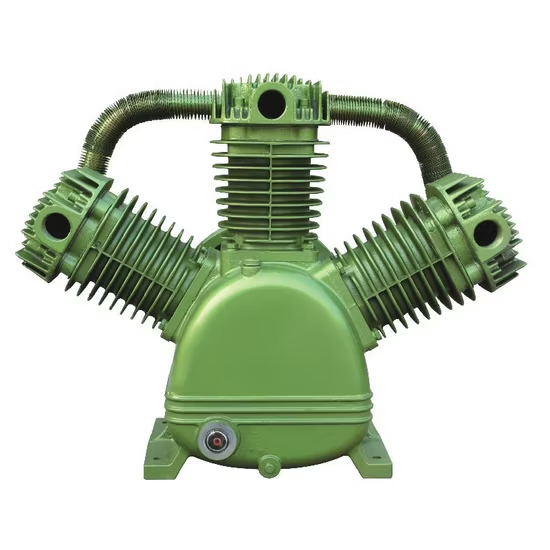
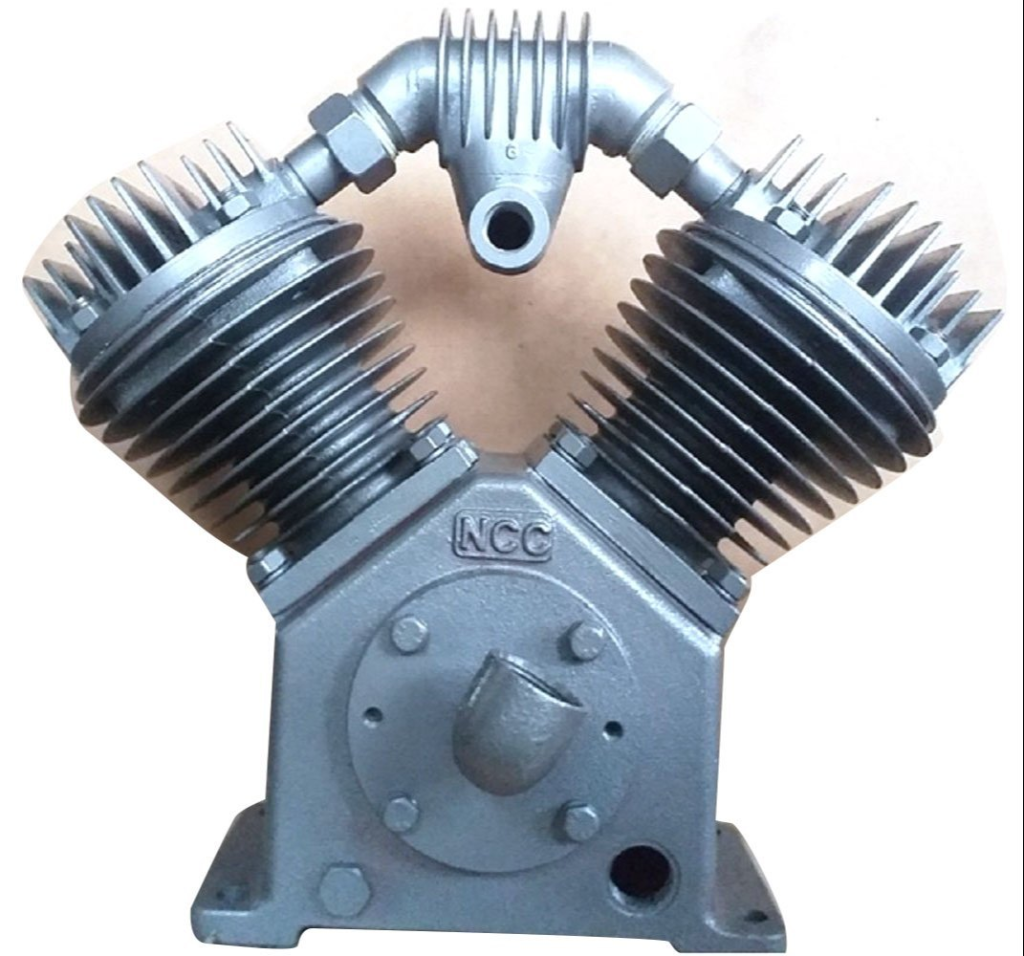
The compressor head (also called the pump, compressor block, or air end) is the assembly that actually compresses air. It’s the part with cylinders, pistons, valves, and cooling fins.
What it includes:
- Cylinders: Where compression happens
- Pistons: Move back and forth to compress air
- Valves: Control air flow in and out
- Cylinder head: The top cover with cooling fins
- Crankcase: Housing for the crankshaft and connecting rods
Where it is:
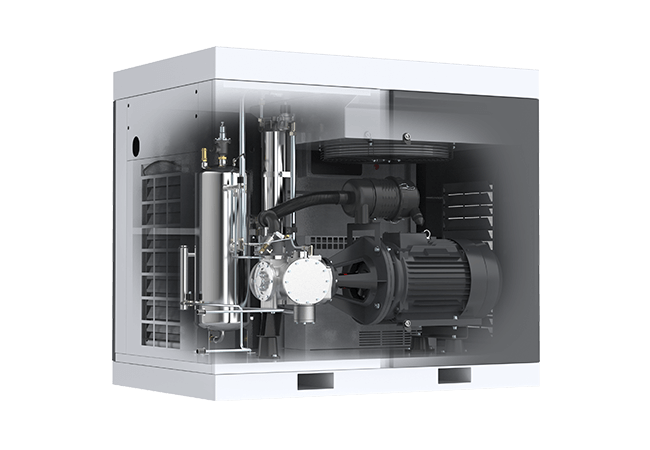
On a piston compressor, the head is the prominent assembly on top, often with visible cooling fins. On a rotary screw compressor, the “head” is called the air end—the large housing containing the rotors.
Single-stage vs. two-stage heads:
- Single-stage: One cylinder compresses air in a single step. Common for lower pressures (up to 100-125 PSI).
- Two-stage: Two cylinders of different sizes. Air is compressed in the first, cooled, then compressed further in the second. More efficient and capable of higher pressures.
III. How Does an Air Compressor Head Work?
Understanding the basics helps you troubleshoot problems.
The intake stroke:
The piston moves down, creating a vacuum in the cylinder. The intake valve opens, and atmospheric air rushes in.
The compression stroke:
The piston moves up, reducing the volume of air in the cylinder. The intake valve closes. Pressure rises.
The discharge stroke:
When pressure exceeds the discharge valve setting, the valve opens, and compressed air flows into the tank.
Cooling:
Compression generates heat. Cooling fins on the cylinder and head dissipate heat. Some compressors use fans or water cooling for heavy-duty applications.
Two-stage process:
- Air enters the first (larger) cylinder, compresses to an intermediate pressure
- Air passes through an intercooler (removes heat)
- Air enters the second (smaller) cylinder, compresses to final pressure
- Heated air flows to the tank
The rotary screw difference:
In a screw compressor, the “head” is the air end—two interlocking rotors that trap and compress air continuously. No pistons, no valves. Oil is injected for sealing, cooling, and lubrication.
IV. Signs Your Compressor Head Has Problems
The compressor head is a wear component. Recognizing problems early can save you from catastrophic failure.
| Symptom | What It Might Mean | Urgency |
| Loss of pressure | Worn piston rings, leaking valves, or head gasket | High |
| Excessive noise | Loose components, worn bearings, valve issues | High |
| Overheating | Cooling fins clogged, inadequate ventilation, worn parts | High |
| Oil in air lines | Worn piston rings, failed separator (screw) | Medium |
| Hard starting | Valve issues, excessive pressure in cylinder | High |
| Visible oil leaks | Failed gaskets or seals | Medium |
| Low CFM output | Worn rings, valve leakage, restricted intake | Medium |
When to repair vs. replace:
- Minor issues (valve replacement, gasket leaks): Repair
- Major wear (scored cylinders, damaged pistons): Consider replacement
- Older pumps with multiple issues: New head or complete compressor
V. Common Compressor Head Problems and Fixes
Valve failure:
Valves are the most common failure point. They open and close with every cycle—millions of times per year.
- Symptoms: Loss of pressure, inefficient operation, unusual sounds
- Fix: Remove head, inspect valves, replace damaged ones
Worn piston rings:
Rings seal the piston against the cylinder wall. When they wear, air escapes past the piston.
- Symptoms: Low output, oil consumption, blow-by (air in crankcase)
- Fix: Disassemble, replace rings (may require cylinder honing)
Head gasket failure:
The gasket seals the cylinder head to the cylinder block.
- Symptoms: Air leaking between head and block, loss of pressure
- Fix: Replace gasket, clean mating surfaces
Cracked head:
Overheating or freezing can crack the cylinder head.
- Symptoms: Visible cracks, coolant loss (if water-cooled), air or oil leaks
- Fix: Replacement of head (welding is rarely successful)
Cooling fin damage:
Bent or broken cooling fins reduce heat dissipation.
- Symptoms: Overheating
- Fix: Carefully straighten fins if possible; severe damage may require replacement
VI. Maintaining Your Compressor Head
The best repair is prevention. Regular maintenance extends head life dramatically.
Daily/Weekly:
- Check for unusual noise or vibration
- Verify pressure builds to normal levels
- Listen for air leaks around the head
Monthly:
- Inspect cooling fins—clean if clogged with dust or debris
- Check head bolts for proper torque (loose bolts cause gasket failure)
- Listen for valve noise (clicking often indicates wear)
Annually:
- Perform valve inspection and cleaning
- Check piston ring condition (if accessible)
- Inspect head gasket for leaks
The most common cause of head failure: overheating
Overheating kills compressor heads. Common causes:
- Clogged cooling fins
- Insufficient ventilation
- Running beyond duty cycle
- Low oil level
- Incorrect oil viscosity
Keep it cool, and it will last.
VII. Head Replacement: When and How
Eventually, every compressor head wears out.
When to replace:
- Performance: Can’t reach rated pressure, even after repairs
- Damage: Cracked head, scored cylinders
- Age: 10+ years, major components worn
- Cost: Repair estimate exceeds 50% of new head cost
Replacement options:
| Option | Pros | Cons |
| OEM replacement head | Exact fit, guaranteed performance | More expensive |
| Aftermarket head | Lower cost | May require modification, varying quality |
| Complete new compressor | New everything, warranty | Higher cost, disposal of old unit |
DIY or professional?
- Simple bolt-on: If you’re mechanically inclined, valve or head replacement is doable
- Complex issues: If the crankcase is damaged or cylinder is scored, professional repair may be needed
- Safety first: Always depressurize and disconnect power before working on the head
FAQ
Q1: What’s the difference between a compressor head and an air end?
A1: On piston compressors, it’s called the head or pump. On rotary screw compressors, the compression assembly is called the air end. Both do the same job—compress air—but the technology differs.
Q2: How long does a compressor head last?
A2: With proper maintenance, 5-10 years for consumer-grade units. Industrial piston compressors can last 10-20 years. Rotary screw air ends typically last 10-15 years with proper care.
Q3: Can I replace just the head on my compressor?
A3: Yes, if the rest of the compressor (motor, tank) is in good condition. Ensure the replacement head matches your motor power, pump speed, and pressure requirements.
Q4: Why is my compressor head getting so hot?
A4: Compression generates heat—some is normal. But excessive heat means: clogged cooling fins, low oil, overworking the compressor, or internal wear. Check these before assuming it’s normal.
Q5: What causes a compressor head to crack?
A5: Most common causes: freezing (if water-cooled), severe overheating, mechanical impact, or manufacturing defect. A cracked head usually requires replacement.
Q6: How do I know if my compressor head valves are bad?
A6: Signs include: loss of pressure, slower tank filling, unusual clicking or hissing sounds, and overheating. A simple test: with the compressor off, listen for air escaping back through the intake.
Q7: Is it worth rebuilding an old compressor head?
A7: It depends. If the cylinder is in good condition and parts are available, rebuilding is often worthwhile. If the cylinder is scored, the head is cracked, or parts are hard to find, replacement is usually better.
Conclusion
The compressor head is the heart of your air compressor. It does the hard work of drawing in air and squeezing it to high pressure. When it fails, your compressor stops.
But with proper attention, a compressor head can last for years. Keep it cool. Change oil on schedule. Listen for changes in sound. Address small problems before they become big ones.
And when the time comes for replacement, know your options. A new head can breathe life into an old compressor. Sometimes, a whole new compressor makes more sense. The key is recognizing when it’s time to act.
At MINNUO, we help customers keep their compressors running—whether that’s finding the right replacement head, sourcing parts, or recommending a complete upgrade. Because we know that when your compressor runs, your work runs.

 Email
Email sales:+86 15366749631