A factory compressed air system consumes more electricity than any other single utility except process cooling. A 250 kW compressor operating 6,000 hours annually draws roughly 1.5 million kilowatt-hours per year. To the production manager, this is an operating cost. To the energy manager, it is a carbon footprint. But to the electricity grid, it is a controllable load. Grid operators in markets around the world now pay industrial users to reduce consumption during peak periods. Your compressor, combined with smart controls and adequate air storage, can accept that payment—without interrupting production. This is demand response, and it turns the compressed air system from a pure cost center into a flexible grid asset.
I. What Demand Response Means for Industrial Users
Electricity grids must balance supply and demand at every instant. Traditionally, this balance was achieved by adjusting supply—ramping power plants up and down to follow the load. The growth of renewable generation has made this harder. Solar output collapses when clouds pass. Wind generation varies unpredictably. Grid operators increasingly need flexibility from the demand side as well.
Demand response is the mechanism through which electricity consumers adjust their consumption in response to grid signals. When the grid is stressed—peak demand on a hot summer afternoon, a sudden loss of generation, a period of low renewable output—the grid operator sends a signal requesting or requiring load reduction. Industrial consumers who reduce their load receive compensation. The compensation can take several forms: a direct payment for each kilowatt-hour of load reduced, a reduced electricity rate in exchange for agreeing to reduce load when called, or avoided costs from shifting consumption to cheaper off-peak hours.
The industrial demand response market is substantial. In the United States, industrial demand response capacity exceeds 15 gigawatts. In Europe, the capacity market and balancing services create similar opportunities. In China, pilot demand response programs in provinces including Jiangsu, Shandong, and Guangdong compensate industrial users for verified load reductions. The common thread is that industrial electricity consumers own flexible loads that are larger than most grid-scale battery installations, and those loads can be modulated without affecting production if the right equipment and controls are in place.
II. Why Screw Compressors Are Ideal Demand Response Assets
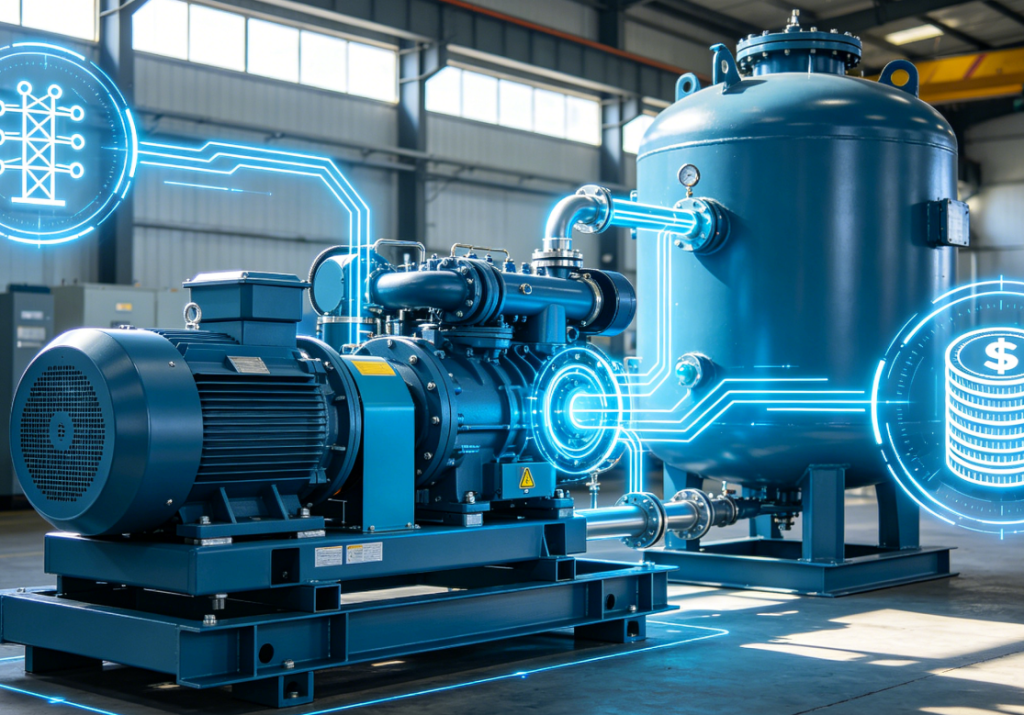
A screw compressor connected to adequate air storage behaves like a battery. It charges the storage when electricity is available and affordable. It discharges the storage when electricity is expensive or when the grid requests load reduction. The compressor does not need to produce air continuously. It needs to maintain adequate pressure in the system. The difference between continuous production and pressure-maintaining production is flexibility.
The storage capacity of a compressed air system is determined by the receiver volume and the allowable pressure band. A 10,000-liter receiver operating between 7 bar and 9 bar stores approximately 20 cubic meters of usable compressed air at standard conditions. This stored air can supply downstream loads for minutes to tens of minutes depending on the demand level, allowing the compressor to remain off or at reduced load while the receiver discharges into the distribution system.
Variable speed drive compressors are particularly well-suited to demand response. A VSD compressor can modulate its power consumption across a wide range without cycling on and off. When the grid signals a load reduction, the VSD reduces motor speed. Power consumption drops proportionally. The stored air in the receiver bridges the gap until the load reduction period ends, or until the compressor can ramp back up to recharge the storage during lower-cost hours.
The power consumption of a compressor is electrically significant. A single 250 kW compressor operating at 70% load presents approximately 175 kW of flexible demand. This is comparable in magnitude to the demand of a mid-sized commercial building. A facility with multiple compressors has correspondingly greater flexibility.
III. How the System Works in Practice
Demand response operation requires three elements: a compressor that can modulate its output, adequate air storage to bridge consumption during compressor turndown, and a controller that receives grid signals and adjusts compressor operation accordingly.
The control architecture is the critical integration layer. The demand response controller receives external signals—time-of-use price schedules, day-ahead market prices, or real-time grid signals—and combines them with internal data on system pressure, air demand, and receiver fill level. The controller determines whether the compressor can safely reduce load based on current pressure, the rate of pressure decline at various load levels, and the minimum pressure required by production equipment. If conditions allow, the controller reduces compressor speed or cycles the compressor off. If pressure approaches the minimum acceptable level, the controller overrides the demand response signal and resumes normal operation.
The control logic operates within firm constraints. Production must never be interrupted. System pressure must never fall below the minimum required by pneumatic equipment, valves, and instruments. The compressor must not be cycled in ways that accelerate wear or damage components. These constraints are programmed into the controller and take priority over grid signals. Demand response is enabled only when there is sufficient stored air and sufficient margin between current pressure and the minimum allowable.
The storage requirement for demand response is larger than for basic pulsation dampening. A system designed purely for cycling control might have two to three minutes of storage. A system optimized for demand response typically needs ten to twenty minutes of storage at normal demand flow. This larger storage smooths the transition between compressor modes and provides the buffer required for meaningful load reduction periods.

IV. The Economics: From Cost Center to Revenue Stream
The financial benefit of compressor demand response comes from multiple sources that can be stacked in many markets.
Energy arbitrage is the simplest mechanism. Where electricity prices vary by time of day, the compressor can be scheduled to produce air during low-cost periods and reduce output during high-cost periods. The price difference between peak and off-peak electricity can be significant. A 250 kW compressor operating at 75% load for 2,000 hours during peak periods with a price differential of $0.06 per kilowatt-hour between peak and off-peak saves $22,500 annually simply by shifting those hours to off-peak operation, assuming the storage and demand profile allow the shift.
Demand charge reduction provides additional savings for facilities on rate structures that include a demand charge—a monthly fee based on the highest power draw during any 15-minute interval. Reducing compressor load during the facility’s peak demand period can reduce the demand charge for the entire month. For a facility where the compressor represents 30% of peak demand and the demand charge is $15 per kilowatt per month, eliminating that compressor contribution for the monthly peak saves $1,125 per month or $13,500 annually.
Formal demand response program payments provide revenue beyond energy cost savings. Grid operators and aggregators pay industrial participants for verified load reductions during called events. Payment rates vary by market and program but are typically $20,000 to $80,000 per megawatt of flexible capacity per year in mature markets. A 250 kW compressor providing 150 kW of flexible capacity generates $3,000 to $12,000 annually in direct demand response payments, in addition to the energy and demand charge savings.
The combined benefit from all three sources can reach $30,000 to $50,000 annually for a mid-sized compressor installation. The investment required includes additional storage capacity, the demand response controller, and integration with the site energy management system—costs that are typically recovered within one to three years depending on local market conditions.
V. Implementation: Requirements and Prerequisites
Not every compressed air system is ready for demand response. Several conditions must be met.
Adequate storage is the primary prerequisite. The system must have sufficient receiver capacity to supply downstream loads during compressor turndown periods without pressure dropping below the minimum acceptable level. The storage requirement is calculated from the expected demand response duration, the average air demand, and the allowable pressure band. Facilities that already have generously sized wet and dry receivers for other reasons may meet this requirement with no additional investment. Those with minimal storage will need to add receiver capacity.
Compressor turndown capability determines how much load can be reduced without cycling the compressor excessively. VSD compressors offer the greatest flexibility, with continuous turndown to 30% to 50% of rated capacity depending on the model. Fixed-speed compressors with load-unload control offer less flexibility and may cycle excessively during demand response operation. Facilities with older fixed-speed compressors may find that upgrading to VSD provides both energy efficiency improvement and demand response capability.
The control system must be capable of receiving and responding to external signals. Modern compressor controllers with communication interfaces can be integrated with site-level energy management systems. For older compressors that lack these interfaces, a retrofit controller or an external load management relay can provide basic demand response capability, though the functionality will be more limited than with an integrated digital controller.
Production impact must be assessed before enrolling in any demand response program. The demand response controller must be programmed with firm pressure limits and must be tested during non-critical production periods to verify that the stored air capacity is sufficient and that no production equipment is affected by the pressure variations inherent in demand response operation. A demand response event that stops production costs far more than any demand response payment, so conservative limits and thorough testing are essential.
VI. The Future: Grid-Interactive Compressed Air
The trajectory of electricity markets and industrial controls points toward deeper integration between industrial loads and the grid. Several developments are converging to make compressor demand response more accessible and more valuable.
Electricity price volatility is increasing as renewable generation penetration grows. The value of flexible loads that can respond to price signals increases correspondingly. Industrial facilities that can shift load to low-price periods and reduce load during high-price events will capture growing value compared to those with inflexible consumption.
Compressor controls are becoming more sophisticated. Cloud-connected controllers can receive external price signals and execute demand response strategies autonomously, without operator intervention. Machine learning algorithms can predict air demand patterns and optimize compressor scheduling against expected electricity prices, making demand response decisions based on probabilistic forecasts rather than simple threshold triggers.
The aggregation of distributed industrial loads is expanding. Third-party aggregators enroll multiple industrial facilities and bid their combined flexible capacity into wholesale electricity markets. A single 250 kW compressor is too small to participate directly in most wholesale markets. An aggregator combining the flexible capacity of hundreds of industrial compressors creates a resource large enough to bid and valuable enough to share the revenue with each participating facility.
FAQ
Q1: Will demand response shorten my compressor’s service life?
If implemented correctly, no. Demand response strategies that respect the compressor’s mechanical limits—minimum speed, maximum starts per hour, maximum discharge temperature—do not accelerate wear. In fact, reduced average operating speed during demand response periods can extend bearing and component life. The critical requirement is that the control system enforces mechanical constraints and does not sacrifice equipment health for energy savings.
Q2: How much storage do I need for demand response?
A system with ten to twenty minutes of storage at average demand flow provides adequate flexibility for most demand response applications. The exact requirement depends on the expected duration of demand response events in your market, your air demand profile, and the allowable pressure band. A detailed analysis of your system’s pressure-volume characteristics determines the optimal storage investment.
Q3: Can my existing compressor control system handle demand response?
This depends on the age and capability of the controller. Compressors manufactured within the last five to ten years typically have communication interfaces and variable control setpoints that can be integrated with an external demand response controller. Older compressors can be retrofitted with current sensors and load control relays that provide basic demand response functionality. A controls assessment by the compressor manufacturer or a qualified integrator determines the retrofit requirements.
Q4: What happens if air demand spikes during a demand response event?
The demand response controller monitors system pressure continuously. If pressure drops toward the minimum allowable level—either due to higher-than-expected demand or longer-than-expected event duration—the controller automatically restores compressor output to maintain pressure above the safety margin. Production protection overrides demand response.
Q5: Is demand response practical for a single-compressor facility?
Yes, but with more limited flexibility than a multi-compressor installation. A single compressor facility can participate in scheduled demand response—reducing load during known peak price hours—more easily than in dynamic response to unscheduled grid events. The key is having sufficient storage to bridge the period when the compressor is at reduced output.
Q6: What are the cybersecurity implications of connecting my compressor to external grid signals?
Cybersecurity should be addressed through standard industrial control system practices. The compressor controller should be connected to the demand response interface through a demilitarized zone or gateway that isolates the production network from external connections. Communication should be outbound from the compressor to the aggregator or energy manager whenever possible, avoiding inbound connections from the internet. A cybersecurity assessment should be part of any demand response deployment.
Conclusion
The screw compressor is one of the largest electrical loads in many industrial facilities. It is also one of the most flexible, because compressed air can be stored and used later, decoupling production from consumption. This flexibility has value to the electricity grid, and grid operators are willing to pay for it. Demand response transforms the compressed air system from a fixed cost into a flexible asset that generates savings through energy arbitrage, demand charge reduction, and direct grid payments. The technology to capture this value—VSD compressors, smart controllers, and adequate storage—exists today and is proven in industrial service. For facility operators looking to reduce energy costs and contribute to grid stability, the question is not whether their compressor can participate, but whether they are capturing the value their compressed air system already has the potential to provide.
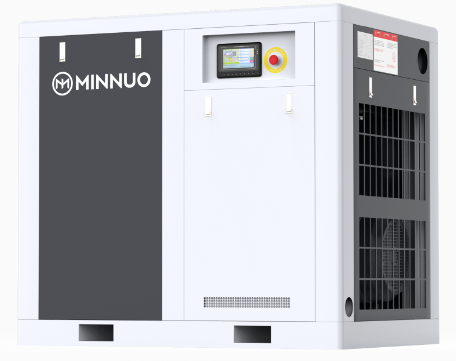
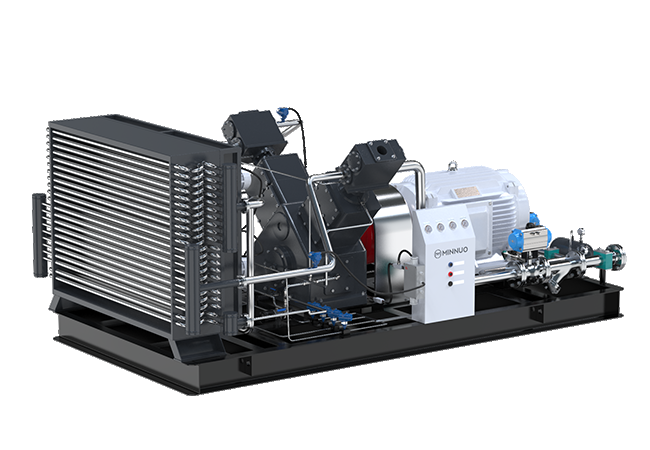
At MINNUO, our VSD screw compressors are engineered with the control flexibility and communication interfaces required for demand response participation. Our intelligent compressor controllers integrate with site energy management systems and aggregator platforms to enable autonomous load adjustment while maintaining production air supply within safe limits. Whether you are responding to time-of-use pricing today, participating in formal demand response programs, or preparing for a future of fully grid-interactive industrial operations, MINNUO provides the compressor technology and application expertise to turn your compressed air system from a pure cost center into a flexible energy asset. Every MINNUO system includes control documentation and integration support for your energy management objectives.
 Email
Email sales:+86 15366749631