In the industrial gas compression sector, diaphragm compressors and piston compressors are the two most widely used types, but they differ significantly in applicable scenarios and performance characteristics. The core of selection is not “which is better” but “which is more suitable for your actual needs” — every operational detail, from pressure requirements and gas purity to operating costs, directly impacts the final decision. Combining the latest 2026 industry standards and application cases, this article clearly breaks down the core differences and selection logic between the two.
I. Core Working Principle Differences
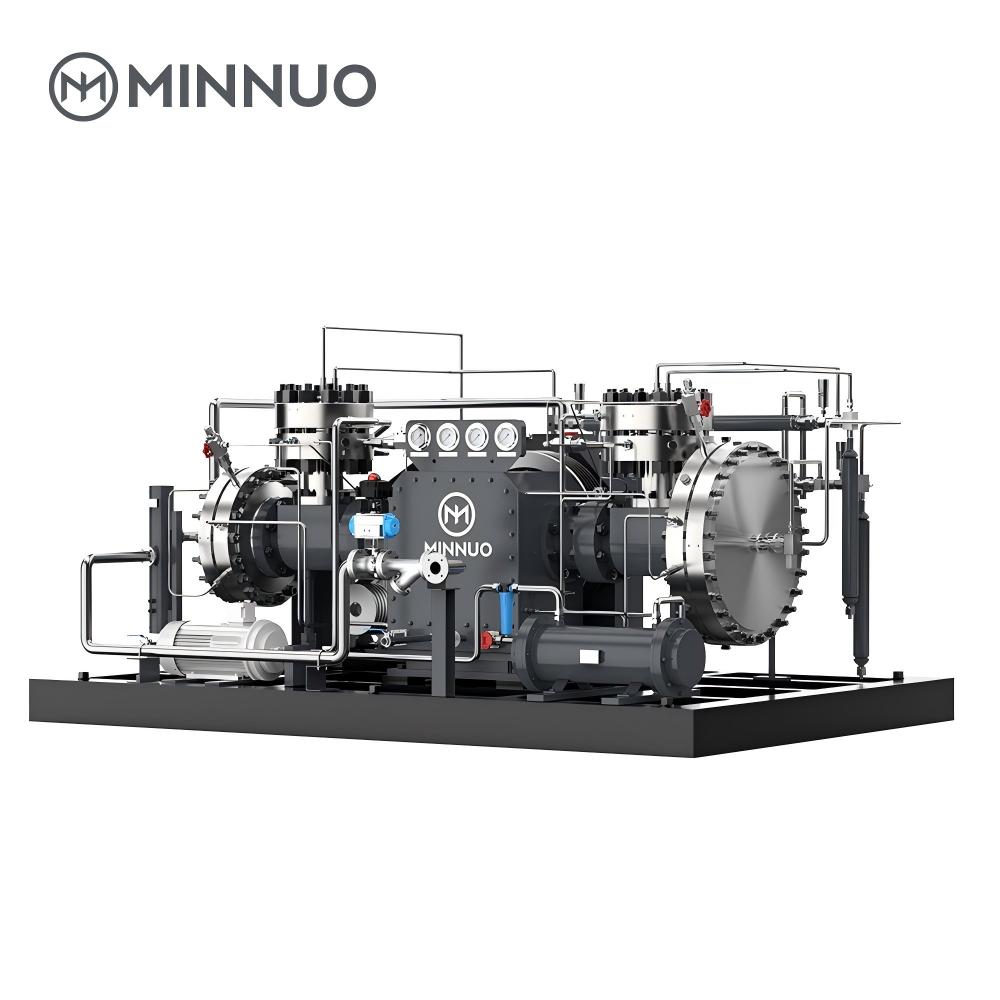
- Diaphragm Compressors: Use a metal or composite diaphragm to completely isolate the compression chamber from the hydraulic drive system. Gas compression is achieved by the reciprocating deformation of the diaphragm to change the chamber volume. The compressed gas does not come into contact with lubricating oil or moving parts throughout the process, eliminating contamination structurally.
- Piston Compressors: Rely on the linear reciprocating motion of a rigid piston in the cylinder to directly compress gas, with sealing maintained by piston rings. The gas is in direct contact with the piston and cylinder wall, requiring lubricating oil to reduce friction (oil-free models still cannot fully avoid micro-wear contamination).
II. Key Performance Parameter Comparison
Pressure and Flow Adaptability
- Diaphragm Compressors: Single-stage compression ratio can reach over 8:1, and multi-stage series can achieve ultra-high pressure above 300MPa, suitable for low-flow (usually <20m³/min) and high-pressure scenarios.
- Piston Compressors: Single-stage compression ratio is only 3:1-4:1, and multi-stage compression can reach a maximum pressure of no more than 50MPa, with advantages in medium-flow (10-100m³/min) and medium-low pressure scenarios.
Gas Purity and Safety
- Diaphragm Compressors: The fully sealed and isolated design ensures oil-free and pollution-free compressed gas, meeting Class 0 oil-free standards. They are the ideal choice for toxic, flammable, corrosive gases and high-purity gases.
- Piston Compressors: Even with oil-free design, micro-contamination may occur due to piston ring wear, making them more suitable for conventional scenarios with low gas purity requirements.
Operation and Maintenance Costs
- Initial Investment: For the same specification, the cost of a diaphragm compressor is 1.5-3 times that of a piston compressor due to its complex structure and high material requirements.
- Operation and Maintenance Costs: The core wearing part of a diaphragm compressor is the diaphragm, with a service life of 20,000-50,000 hours and long maintenance intervals. Piston compressors require regular replacement of piston rings, bearings and other components, with higher maintenance frequency and annual maintenance costs about 2-3 times that of diaphragm compressors.
- Energy Efficiency: Under the same working conditions, diaphragm compressors have slightly lower efficiency due to minor energy loss in hydraulic transmission. Piston compressors, optimized with frequency conversion technology, have more advantages in energy consumption under stable loads.
Operational Stability
- Diaphragm Compressors: Few moving parts and small mass result in slight vibration and low noise, no need for complex vibration reduction foundations, suitable for sensitive environments such as laboratories and hospitals.
- Piston Compressors: Large reciprocating inertia force leads to obvious vibration and noise, requiring special vibration reduction devices and sound insulation facilities.
III. Scenario-Based Selection Recommendations
Scenarios to Prioritize Diaphragm Compressors
- High Purity Requirements: Industries such as semiconductor specialty gases, medical oxygen, and food processing, where gas contamination must be avoided to affect product quality.
- High-Pressure Special Working Conditions: High-pressure experimental equipment, small hydrogen refueling stations, corrosive/flammable and explosive gas treatment, and scenarios with pressure requirements exceeding 50MPa.
- Sensitive Environments: Laboratories, hospitals, precision manufacturing workshops, and places with strict restrictions on vibration and noise.
Scenarios to Prioritize Piston Compressors
- Conventional Industrial Applications: General mechanical drive, refrigeration systems, ordinary gas transmission, and medium-low pressure scenarios with low purity requirements.
- High Flow Requirements: Mine ventilation, large-scale pneumatic equipment air supply, and continuous operation scenarios with flow requirements of 10-100m³/min.
- Cost-Sensitive Projects: Projects with limited initial budget, short annual operating time (<2000 hours), and sufficient maintenance resources.
IV. Minnuo Compressor Selection Support
Whether it is a diaphragm compressor for ultra-high pressure and clean scenarios or a piston compressor for cost-effective medium-low pressure scenarios, Minnuo offers a full range of products that meet the 2026 new energy efficiency standard. Our technical team can provide free customized selection plans based on your core parameters such as gas type, pressure and flow requirements, and operating hours, as well as lifelong operation and maintenance support, making selection more accurate and operation more economical.

 Email
Email sales:+86 15366749631