A single drop of oil in the wrong place can scrap an entire batch of printed circuit boards. It does not take much. The pneumatic systems that drive SMT pick-and-place machines, the air knives that dry boards after cleaning, and the actuators that move conveyors all use compressed air that comes into direct or indirect contact with the product. If that air carries even trace amounts of oil, the consequences show up fast. Solderability defects. Conformal coating failures. Optical inspection false rejects.
Electronics manufacturers spend millions on controlled environments and process control. The compressed air system should not be the variable that undermines that investment. This article explains why oil-free compressed air matters for PCB and electronics production, how oil contamination causes specific defects, and why filtration alone may not be enough to protect your line.
I. Where Compressed Air Touches Electronics Production
SMT pick-and-place machine pneumatic actuation
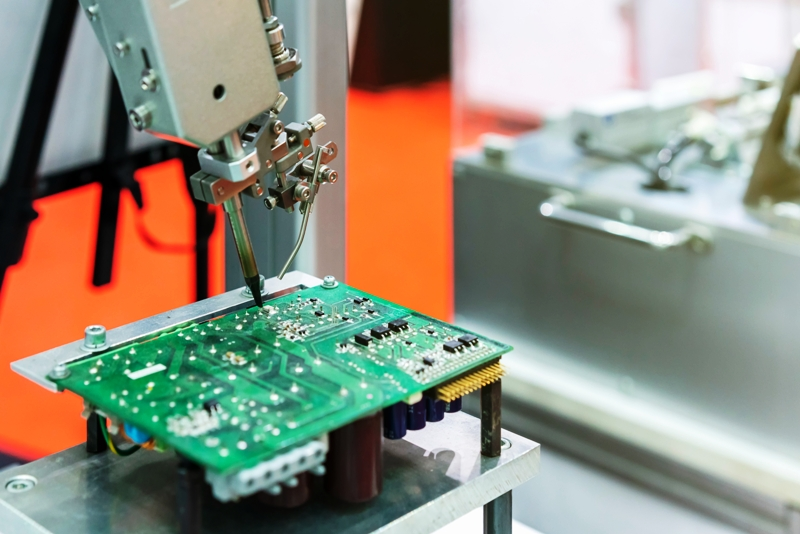
Surface-mount technology lines depend on high-speed pick-and-place machines that use pneumatic nozzles to lift components from feeders and place them on PCB pads. The nozzles operate in direct contact with the components. Compressed air powers the vacuum generation and the nozzle actuation. If that air contains oil aerosol, the oil deposits on the nozzle tips. From there, it transfers to the component leads or the PCB pads. The contamination layer is microscopic. The soldering defect it causes is not.
PCB cleaning and blow-off after soldering
After reflow or wave soldering, boards often pass through a cleaning stage to remove flux residues. Compressed air knives or blow-off nozzles dry the boards or remove excess cleaning solution. This air impinges directly on the board surface. Oil in the air stream leaves a thin film on the copper traces, pads, and substrate. That film can prevent conformal coating adhesion. It can also trap flux residues that the cleaning stage was supposed to remove, creating a contamination sandwich that causes long-term reliability problems.
Conveyor actuation, test fixtures, and packaging equipment
Beyond the direct product contact points, compressed air runs throughout the electronics factory. Pneumatic cylinders index conveyors. Air-powered clamps hold boards in test fixtures. Packaging equipment uses compressed air to seal bags and boxes. In most of these applications, the air does not intentionally contact the product. But exhaust ports vent near the line. Leaks at fittings release small amounts of air. In a cleanroom or a controlled production environment, fugitive oil mist settles on surfaces, including product surfaces. The cumulative exposure matters.
II. How Oil Contamination Damages PCB Assemblies
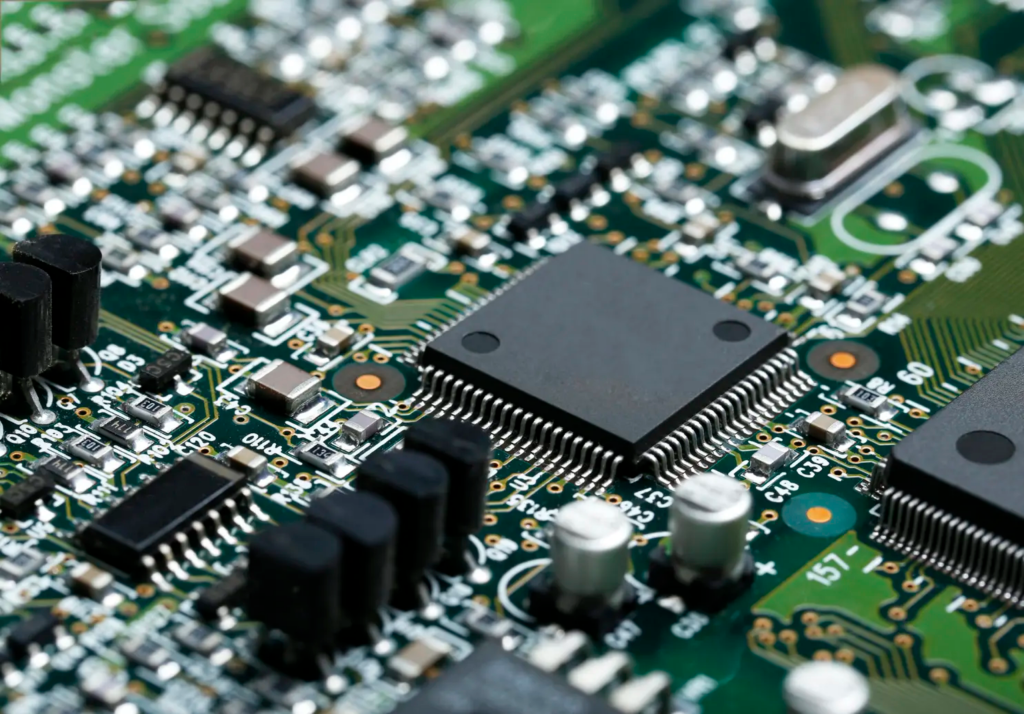
Oil residue on pads and the resulting solderability defects
Solder paste prints onto PCB pads through a stencil. The paste must wet the pad surface to form a reliable joint during reflow. Oil residue on the pad acts as a barrier. The solder does not wet properly. The result is a non-wetting defect, a head-in-pillow joint, or a completely open circuit. These defects are not always caught by in-circuit test. Some pass electrical test cold but fail after thermal cycling or mechanical stress in the field. The root cause — oil on the pad — is difficult to trace after the fact because the oil volatilizes during reflow, leaving little chemical evidence.
Conformal coating adhesion failure from surface contamination
Many PCBs destined for automotive, aerospace, or industrial applications receive a conformal coating to protect against moisture and corrosion. The coating bonds to the board surface. Oil contamination prevents that bond from forming. The coating may appear to cover the board but delaminates later, creating voids where moisture can collect. In service, these voids become sites for corrosion and dendritic growth. The failure mode is delayed — months or years after the board left the factory — and the field return costs far exceed the value of the board itself.
Optical inspection false rejects and rework costs
Automated optical inspection systems detect surface anomalies. Oil residue on a board looks like a stain or a foreign material deposit to the AOI camera. The system flags the board as defective. An operator must inspect it manually. If the stain is oil and not a real defect, the board goes back into the line. The inspection time is wasted. The rework adds cost. The oil that caused the false reject is still on the board, waiting to cause a real defect at the next process step or in the field.
Long-term reliability risks: corrosion and dendritic growth
Oil films attract and hold dust and airborne contaminants. Over time, the combination of oil, trapped moisture, and ionic residues from flux or plating chemistry creates an electrochemical environment on the board surface. Copper traces corrode. Silver migration forms conductive dendrites between adjacent conductors. The board develops leakage currents or short circuits that did not exist when it passed final test. These failures are the most expensive kind. They happen at the customer site, not the factory floor.
III. Why Filtration Alone Is Not Always Enough
The limitations of coalescing and carbon filters under real operating conditions
A lubricated screw compressor can be paired with downstream filtration. Coalescing filters remove oil aerosol. Activated carbon filters remove oil vapor. In theory, this combination can achieve air quality approaching Class 1 or even Class 0 standards. In practice, filter performance depends on inlet conditions, temperature, and maintenance. A coalescing filter that is not drained regularly loses efficiency. A carbon filter that is not changed on schedule saturates and releases previously captured hydrocarbons. The filtration train is only as reliable as the maintenance program behind it.
Filter bypass, saturation, and maintenance gaps
Filters do not fail gracefully. A coalescing filter that clogs increases pressure drop, which reduces air flow at the point of use. A maintenance technician who needs to keep the line running may temporarily bypass a clogged filter. A saturated carbon filter offers no visible warning that it has stopped working. The air smells clean. The production line keeps running. The oil is already on the boards. Filtration as a primary protection strategy introduces a dependency on human vigilance that is at odds with the reality of high-volume electronics manufacturing.
The difference between Class 1 and Class 0: what your electronics line actually needs
ISO 8573-1 defines compressed air purity classes. Class 1 allows a maximum oil concentration of 0.01 milligrams per cubic meter. That is very clean air by industrial standards. But for PCB production — particularly for lines producing high-reliability boards for automotive, medical, or aerospace applications — even Class 1 may not be clean enough. Class 0, as defined by the compressor manufacturer and typically more stringent than Class 1, represents air that is technically oil-free at the source. For an electronics manufacturer, the question is not whether filtration can achieve a specification under test conditions. The question is whether it can achieve it every minute of every shift across the life of the equipment.
FAQ
Q1: What air quality standard do I need for electronics manufacturing?
A1: Most electronics manufacturers require compressed air meeting ISO 8573-1 Class 1 or better. For PCB production involving high-reliability applications — automotive, medical, aerospace — Class 0 is increasingly specified. Class 1 allows up to 0.01 mg/m³ of oil. Class 0 is defined by the equipment manufacturer and is typically more stringent. The higher the board reliability requirements, the stronger the case for oil-free air at the source rather than relying on filtration to clean lubricated compressor output.
Q2: Can I use a lubricated compressor with filters instead of an oil-free compressor?
A2: Technically yes, and many factories do. The filters must include a coalescing stage for oil aerosol and a carbon stage for oil vapor, and both require rigorous maintenance. The risk is that a filter saturation event, a drain failure, or a maintenance gap allows oil to reach the production line. For an electronics manufacturer producing standard consumer boards, well-maintained filtration may be acceptable. For manufacturers producing boards where field failure is unacceptable, oil-free compression at the source removes the variable entirely.
Q3: What specific defects does oil in compressed air cause on PCBs?
A3: Oil residue on PCB pads causes solderability defects — non-wetting, head-in-pillow, and open joints. Oil on the board surface prevents conformal coating adhesion, leading to delamination and corrosion in service. Oil stains also cause false rejects on automated optical inspection, adding rework cost. In the long term, oil combined with moisture and ionic residues promotes electrochemical migration and dendritic growth between conductors, causing field failures.
Q4: How does oil get from the compressor into the SMT pick-and-place nozzles?
A4: A lubricated screw compressor injects oil into the compression chamber for cooling and sealing. Most of the oil is separated and recirculated, but a small aerosol fraction carries downstream into the air receiver and distribution piping. From there, it travels to the SMT machine’s pneumatic system. The nozzles use this air for vacuum generation and component handling. Oil deposits on the nozzle tips and transfers to components and pads on every placement cycle.
Q5: Do I need an oil-free compressor for the entire factory or just the SMT line?
A5: Ideally, the entire compressed air supply for the electronics production area should be oil-free. Even pneumatic cylinders on conveyors and test fixtures exhaust small amounts of air near the product. In practice, some factories dedicate an oil-free compressor to the SMT and cleaning areas while using a separate lubricated system for non-critical utilities. If a single air network supplies both critical and non-critical equipment, the entire network should use oil-free air.
IV. Oil-Free Screw Compressors: Built to Eliminate the Risk at the Source
How dry screw technology works without lubricant in the compression chamber
An oil-free screw compressor looks similar to its lubricated counterpart from the outside. Inside, the difference is fundamental. The two rotors do not touch each other or the housing. Precision-ground timing gears on the shaft ends maintain the rotor clearances within a few microns. No oil enters the compression chamber. The rotors run dry. They are typically coated with PTFE or a similar low-friction material that provides a wear surface and reduces the clearance gap. The coating wears slowly over the life of the machine, which is why oil-free screws have defined service intervals for coating inspection and rotor replacement — typically 40,000 to 60,000 hours depending on operating conditions.
Water and particulate: the remaining contaminants and how to handle them
Oil-free does not mean contaminant-free. The ambient air drawn into the compressor contains water vapor and airborne particulates. The compression process concentrates these. A dryer — typically a refrigerated dryer for moderate dew points or a desiccant dryer for lower dew points — removes the water vapor. Particulate filters at the compressor outlet and at the point of use remove any atmospheric dust that passed the inlet filter. The combination of an oil-free compressor and proper air treatment delivers air that is free of oil, dry, and clean. For electronics manufacturing, a pressure dew point of -40°C is commonly specified to prevent any possibility of condensation in the air lines.
Matching the compressor to a typical electronics factory air demand profile
Electronics factories tend to run steady shifts with predictable compressed air demand. Multiple SMT lines, each with several pick-and-place machines, create a relatively stable base load. A properly sized oil-free screw compressor running near its design point will operate efficiently for years. Variable-speed models can handle demand variations from shift changes or line reconfiguration. The key sizing inputs are the total number of air-consuming machines, their individual flow requirements, and the simultaneous peak demand across all lines.
V. Specifying an Oil-Free Compressor for an Electronics Production Environment
Sizing for multiple SMT lines and shift patterns
Start with the machine specifications. Each SMT pick-and-place machine lists its compressed air consumption in liters per minute or cubic feet per minute. Sum across all machines on all lines. Add the consumption of other pneumatic equipment — conveyors, test fixtures, rework stations. Add a 20 percent margin for leakage, future expansion, and transient demand peaks. The result is the required free air delivery for the compressor. Undersizing leads to pressure drops that slow pick-and-place cycle times and reduce line throughput. Oversizing wastes capital and energy.
Air drying requirements for electronics
Compressed air for electronics manufacturing should be dry enough that no condensation forms in the distribution piping. A pressure dew point of -40°C is a common specification. This typically requires a desiccant dryer — heatless, heated, or blower-purge — downstream of the compressor. The dryer consumes a portion of the compressed air for regeneration, which must be added to the total air demand when sizing the compressor. An integrated package that combines the oil-free compressor with the desiccant dryer on a single skid simplifies installation and ensures the two components are properly matched.
Indoor installation and noise considerations
Many electronics factories place the compressor on the production floor or in an adjacent utility room rather than in a remote compressor house. Oil-free screw compressors are available in sound-dampened enclosures with noise levels low enough for installation near occupied work areas. A compressor rated at 65 to 68 dBA at one meter is roughly the noise level of normal conversation. If floor space is limited, a vertical receiver tank configuration can reduce the installation footprint. The compressor should be installed away from sensitive optical inspection equipment to avoid any vibration coupling through the floor.
Conclusion
Oil contamination in compressed air is a risk that electronics manufacturers cannot afford to discover after the boards have shipped. The defects it causes — solderability failures, coating delamination, latent corrosion — are expensive to diagnose and more expensive to remediate in the field. Filtration can reduce the risk. Eliminating the oil at the source, by using an oil-free screw compressor, removes the risk entirely.
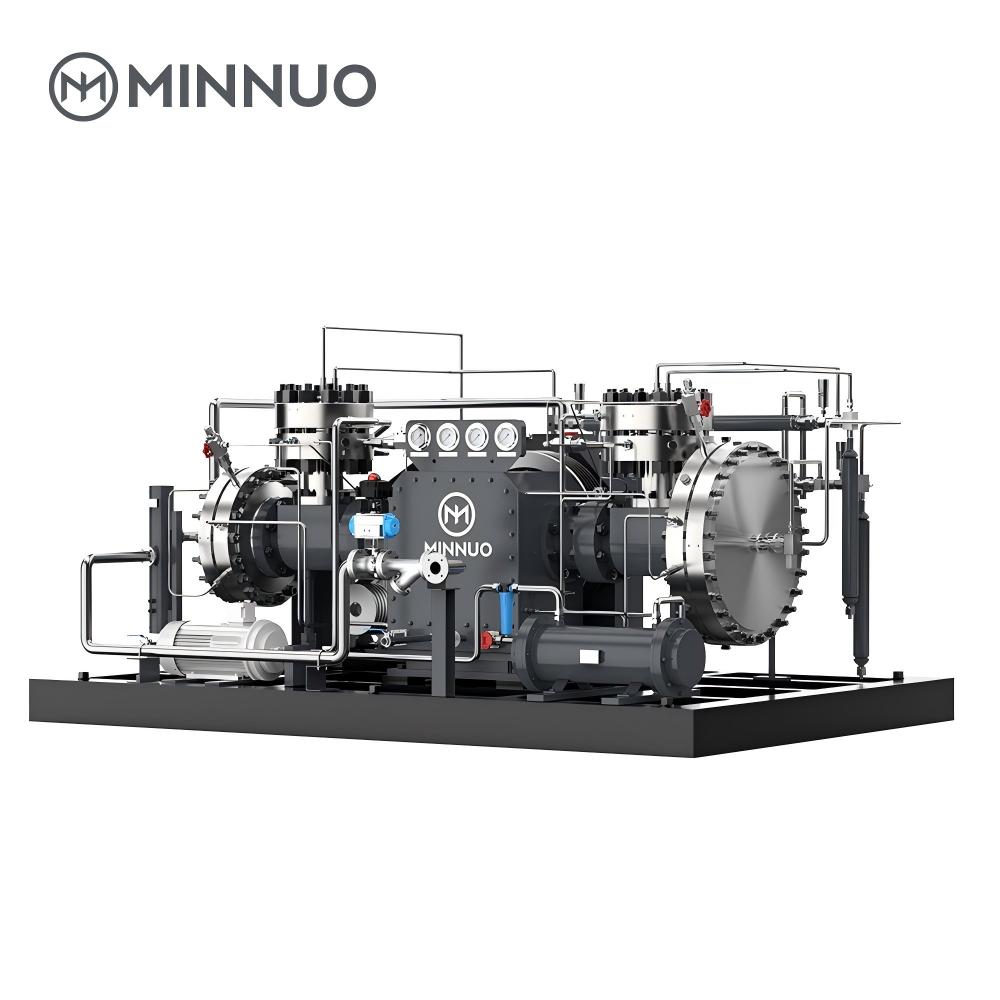
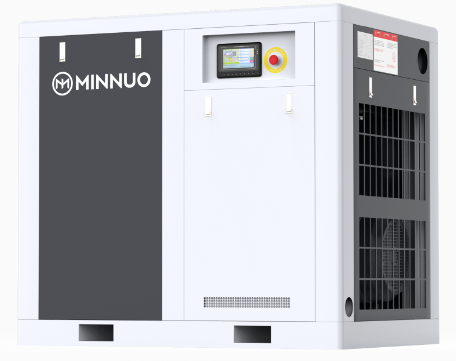
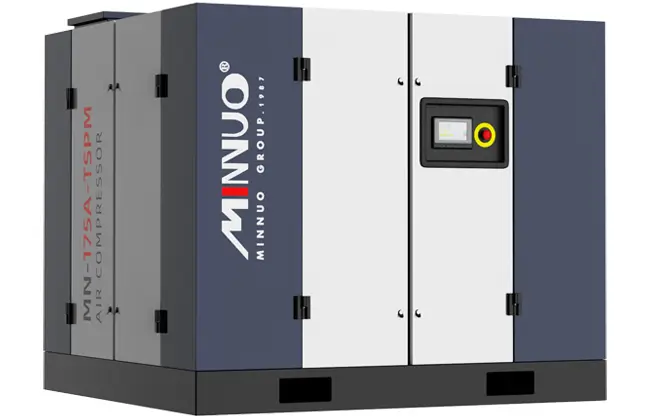
At MINNUO, we design oil-free screw compressor packages for industries where air purity is inseparable from product quality. We work with electronics manufacturers to size the compressor to the factory air demand, to match the dryer to the required dew point, and to install a system that delivers the specified air quality reliably across every shift. A well-specified oil-free compressed air system is not a cost center. It is insurance against the field failures that cost a factory far more than the equipment that prevents them.
 Email
Email sales:+86 15366749631