As the core power equipment of the nitrogen generation system, the performance, specifications and type of air compressor directly determine the operational efficiency, stability and long-term operating costs of the entire nitrogen generation system. In nitrogen generation operations, the core function of the air compressor is to provide qualified compressed air raw materials for the nitrogen generator. Therefore, the core of selection is not the demand adaptation of the nitrogen generator, but the accurate selection of air compressors that meet the nitrogen generation scenarios, with reliable performance and controllable costs. This article will focus on the key dimensions of air compressors, such as core parameters, type selection, quality control and maintenance management, and detailedly elaborate on how to select a suitable air compressor for nitrogen generators, focusing on the selection logic and practical points of the air compressor itself throughout the process.
The core principles of selection are “adapting to the scene, meeting performance standards, energy saving and high efficiency, and convenient maintenance”. There is no need to pay excessive attention to the specific model of the nitrogen generator. It is only necessary to select the optimal scheme according to the own characteristics of the air compressor and the compressed air requirements for nitrogen generation. The following details the key points of air compressor selection, focusing on the parameters, types, quality and other core contents of the air compressor throughout the process.
I. Core Parameter Selection of Air Compressors: Flow Rate and Pressure are Key, Accurate Matching is Core
The flow rate and pressure of the air compressor are the core parameters determining whether it can adapt to the nitrogen generation scenario, and also the primary consideration during selection. The accurate matching of the two can not only ensure the nitrogen generation demand, but also avoid problems such as energy waste and increased equipment wear of the air compressor. Different from other industrial scenarios, the parameter selection of air compressors for nitrogen generation has clear industry standards, and the following details need to be focused on.
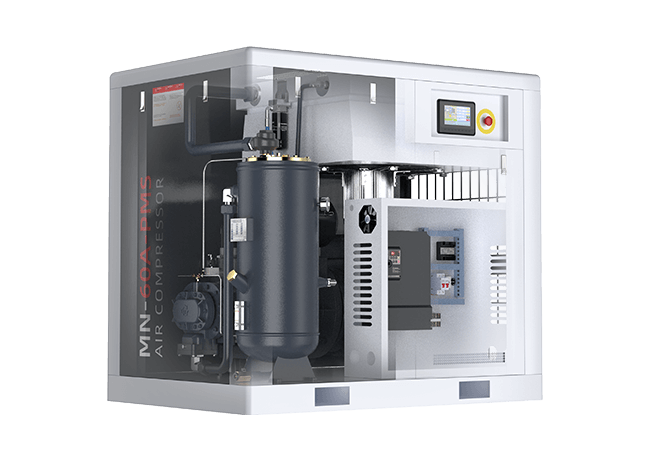
First, the flow rate parameter, which is the core embodiment of the air compressor’s gas production capacity and the primary basis for air compressor selection in nitrogen generation scenarios. The exhaust flow rate of the air compressor needs to meet the compressed air consumption during nitrogen generation, and the compressed air consumption is related to the nitrogen purity. However, during selection, there is no need to excessively entangle with the specific value of nitrogen purity. It is only necessary to select according to the conventional industry experience and the air compressor’s own flow reserve capacity. Under normal circumstances, in nitrogen generation scenarios, the rated exhaust flow rate of the air compressor should be 10%-30% higher than the actual required compressed air volume. The setting of this safety margin is mainly to avoid the air compressor running at full load for a long time, reduce component wear and extend the service life. Specifically, due to the poor gas production stability of piston air compressors, it is recommended to reserve a flow margin of 20%-25%; screw air compressors have stable gas production and can reserve a margin of 10%-20%. In addition, attention should be paid to the unit unification of the air compressor’s flow rate marking. In industrial nitrogen generation, Nm³/h (standard cubic meters per hour) is commonly used. It is necessary to avoid confusing the working condition flow rate with the standard flow rate to ensure the accuracy of the flow rate parameter during selection – the working condition flow rate will be affected by the ambient temperature and altitude, while the standard flow rate is based on the standard working condition (temperature 20℃, pressure 101.325kPa), and the standard flow rate is preferred during selection.
Second, the pressure parameter. The rated output pressure of the air compressor directly determines whether the compressed air can meet the basic needs of nitrogen generation operations, and also affects the energy consumption and operational stability of the air compressor. In nitrogen generation scenarios, the conventional rated output pressure range of air compressors is 0.6MPa-1.2MPa (about 6-12bar). This range is determined by combining the air compressor’s own pressure output characteristics and the basic pressure required for nitrogen generation. There is no need to adjust according to the specific requirements of the nitrogen generator, just ensure that the air compressor’s pressure output is within this range. It should be emphasized that the output pressure of the air compressor is not as high as possible. Excessively high pressure will lead to a significant increase in energy consumption (for every 1bar increase in pressure, energy consumption increases by about 7%), and at the same time, it will accelerate the wear of internal components of the air compressor (such as cylinders, pistons, valves) and shorten the service life of the equipment; too low pressure cannot meet the needs of compressed air transportation and purification, indirectly affecting the nitrogen generation efficiency. In addition, if the on-site altitude is high (above 1000 meters), the decrease in atmospheric pressure will lead to a decrease in the actual output pressure of the air compressor. For every 300 meters increase in altitude, the pressure output capacity of the air compressor decreases by about 5%. At this time, the rated pressure specification of the air compressor needs to be correspondingly increased to ensure that the actual output pressure meets the range of 6-12bar. At the same time, the pressure regulation accuracy of the air compressor also needs to be focused on. Priority should be given to models with small pressure fluctuation range (within ±0.05MPa) to avoid frequent start and stop of the air compressor due to pressure fluctuation and reduce equipment wear.
II. Air Compressor Type Selection: Select on Demand to Adapt to the Operation Mode of Nitrogen Generation Scenarios
At present, the commonly used air compressors in industrial nitrogen generation scenarios are mainly divided into three types: screw type, piston type and centrifugal type. Different types of air compressors have significant differences in gas production efficiency, operational stability, maintenance costs, applicable scenarios and other aspects. The core of selection is to select the most suitable air compressor type according to the operation mode (continuous operation or intermittent operation) and gas production scale of the nitrogen generation scenario, without considering the model difference of the nitrogen generator. The following details the characteristics, applicable scenarios and selection points of various types of air compressors, focusing on the performance differences of the air compressors themselves throughout the process.
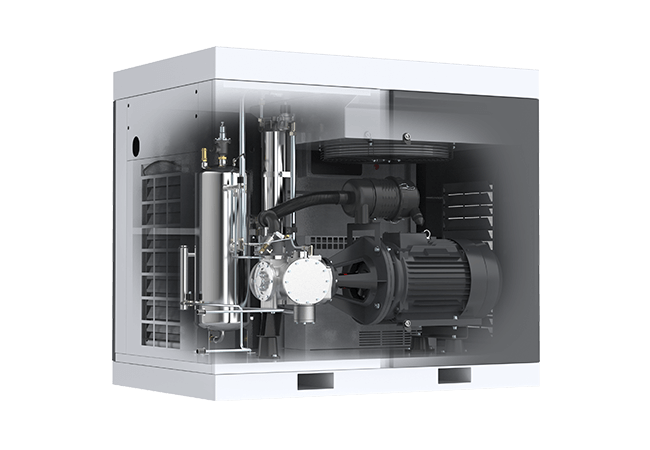
Screw air compressors are the most widely used models in nitrogen generation scenarios and the first choice for medium and large-scale nitrogen generation scenarios. Their core advantages are high gas production efficiency, stable operation, low noise, small maintenance volume, and the ability of continuous operation, which are fully suitable for the demand for continuous supply of compressed air in nitrogen generation operations. In terms of structure, screw air compressors are divided into single-screw and double-screw types. Among them, double-screw air compressors have better gas production stability and energy consumption control, and are more suitable for nitrogen generation scenarios – the rotors of double-screw air compressors have high meshing accuracy, small leakage, and the gas production efficiency is 5%-10% higher than that of single-screw air compressors. At the same time, the vibration during operation is small, and the noise can be controlled below 75dB, which is suitable for installation and use in the workshop. In addition, the variable frequency model (VSD) of screw air compressors is a better choice. It can dynamically adjust the speed according to the actual demand for compressed air. When the nitrogen generation demand fluctuates, the variable frequency air compressor can automatically reduce the speed, saving 15%-30% energy compared with the conventional frequency model, and can significantly reduce the energy consumption cost in long-term operation. It should be noted that the purchase cost of screw air compressors is relatively high, but their service life is long (up to 8-10 years under normal maintenance), and the maintenance frequency is low (maintenance once or twice a year), so the comprehensive long-term operating cost is more advantageous. They are suitable for nitrogen generation scenarios with continuous operation and large gas production scale (such as nitrogen generation operations in electronics, chemical industry, semiconductor and other industries).
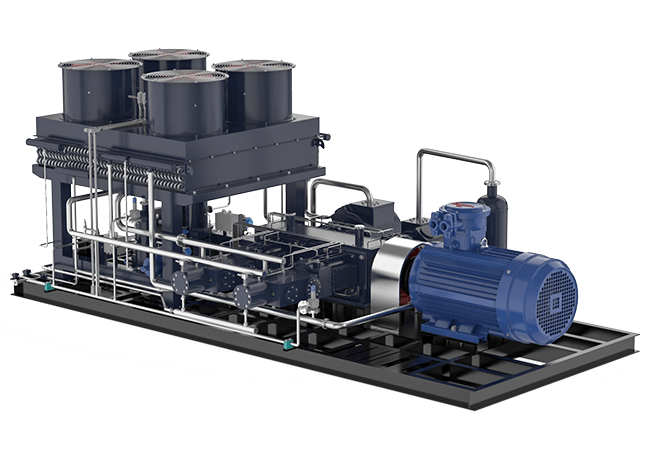
Piston air compressors are the preferred choice for small-scale nitrogen generation scenarios or intermittent nitrogen generation scenarios. Their core advantages are low purchase cost, simple structure and convenient operation, which are suitable for scenarios with small demand for compressed air and no need for continuous operation (such as small-scale food processing, laboratory nitrogen generation, etc.). The working principle of piston air compressors is to compress air through the reciprocating movement of pistons. Their gas production pressure is stable, but the gas production flow rate fluctuates greatly, and the noise is high (usually above 85dB), and the maintenance frequency is higher than that of screw air compressors (maintenance is required every 3-6 months). During selection, attention should be paid to the lubrication method of piston air compressors, and oil-free lubrication models should be preferred – oil-free piston air compressors can directly produce oil-free compressed air, avoid lubricating oil polluting subsequent purification equipment, and reduce maintenance costs; if a micro-oil piston air compressor is selected, an efficient oil remover needs to be additionally configured, which increases equipment investment and maintenance workload, so it is not recommended to be preferred. In addition, the exhaust volume of piston air compressors is limited, usually the maximum exhaust volume is no more than 20Nm³/h, which is suitable for small-scale nitrogen generation scenarios. If the gas production scale is large, it is not recommended to use, otherwise multiple units need to be operated in parallel, increasing energy consumption and maintenance costs.
Centrifugal air compressors are suitable for ultra-large flow nitrogen generation scenarios (such as large-scale nitrogen generation projects in large chemical parks and iron and steel plants). Their core advantages are large gas production (exhaust volume up to more than 100Nm³/h), low energy consumption and stable operation, which are suitable for scenarios with continuous operation and large gas production scale. The working principle of centrifugal air compressors is to compress air through centrifugal force. There are no vulnerable components inside, and the service life is long (up to 10-15 years), but the purchase cost is extremely high, and the system is complex, which has high requirements for installation environment and maintenance technology – it needs a professional installation team for commissioning, professional technical personnel for maintenance, and the maintenance cost is high. Therefore, it is only suitable for ultra-large flow nitrogen generation scenarios, and does not need to be considered for ordinary nitrogen generation scenarios.
In addition, the cooling method of the air compressor also needs to be selected according to the on-site conditions, which is also an important link in air compressor selection. Air-cooled air compressors have simple structure and convenient maintenance, and do not need to be additionally equipped with cooling water systems. They are suitable for scenarios with moderate temperature (5-40℃) and limited space, but their cooling effect is greatly affected by the ambient temperature. In summer, when the temperature is high, the exhaust temperature may be too high, so attention should be paid to ventilation and heat dissipation; water-cooled air compressors have more stable cooling effect and small fluctuation of exhaust temperature, which are suitable for high temperature and high humidity environments (temperature above 40℃), but need to have a stable water source, and the cooling water system needs regular maintenance (descaling, replacing cooling water), with relatively high system complexity and maintenance cost. During selection, it is necessary to reasonably select according to the on-site temperature and water source conditions.
III. Air Compressor Quality Control: Focus on Cleanliness and Stability to Extend Equipment Life
In nitrogen generation scenarios, the output quality of the air compressor (mainly the cleanliness of compressed air) directly affects the operational stability of the air compressor itself and the service life of subsequent equipment, and also indirectly affects the nitrogen generation efficiency. Therefore, the quality control of the air compressor is one of the core points during selection, focusing on the oil content, moisture, solid particle content of the compressed air, and the operational stability of the air compressor itself.
Oil content control is the core of air compressor quality selection and the most critical consideration. If the compressed air produced by the air compressor contains lubricating oil, it will not only pollute the subsequent filtration and drying equipment, but also accelerate the wear of internal components of the air compressor and shorten the service life of the air compressor. In nitrogen generation scenarios, the requirements for the oil content of compressed air are relatively high. The conventional scenario requires the oil content ≤0.01ppm (i.e., 0.01mg/m³), and the high-end scenario (such as pharmaceutical and electronic nitrogen generation) requires ≤0.003ppm. Therefore, priority should be given to selecting oil-free air compressors during selection – oil-free air compressors can directly produce oil-free compressed air through oil-free lubrication technology, without the need to additionally configure oil removal equipment, which not only reduces equipment investment, but also avoids oil pollution, and reduces the maintenance workload of the air compressor. If a micro-oil air compressor is selected due to cost constraints, it is necessary to ensure that it is equipped with an efficient oil remover, and the filtration accuracy of the oil remover needs to be above 0.01ppm. At the same time, the oil removal filter element needs to be replaced regularly, which increases the maintenance cost, so it is not recommended to be preferred. In addition, attention should be paid to the oil-gas separation system of the air compressor. A high-quality oil-gas separation system can effectively separate the oil content in the compressed air, reduce oil residue, and extend the service life of the air compressor.
Moisture control is also an important link in air compressor quality selection. The moisture in the compressed air will cause rust and corrosion of internal components of the air compressor, accelerate wear, and affect the operational efficiency of subsequent purification equipment. During the process of compressing air by the air compressor, the moisture in the air will condense into condensate due to increased pressure and decreased temperature. If the condensate cannot be discharged in time, it will accumulate inside the air compressor, leading to component damage. Therefore, attention should be paid to the drainage system of the air compressor during selection, and models equipped with automatic drainage devices should be preferred. The automatic drainage device can discharge the condensate in time, avoid moisture residue, and reduce equipment corrosion. At the same time, the outlet dew point of the air compressor also needs to be focused on. The conventional nitrogen generation scenario requires the air compressor outlet dew point ≤-40℃, and the high-end scenario requires ≤-60℃. The lower the dew point, the less the moisture content in the compressed air, and the better the protection effect on the air compressor and subsequent equipment. Therefore, if the on-site requirements for moisture control are high, an air compressor equipped with an adsorption dryer can be selected. The adsorption dryer can effectively reduce the dew point of the compressed air and ensure that the moisture content meets the standard.
In terms of solid particle control, dust and impurities in the air will enter the air compressor, wear the core components such as cylinders, pistons and rotors, and block the filter of the air compressor, affecting the gas production efficiency. Therefore, attention should be paid to the intake filtration system of the air compressor during selection, and models equipped with high-efficiency intake filters should be preferred. The filtration accuracy of the intake filter needs to be below 1μm, which can effectively filter the solid particles in the air and avoid impurities entering the air compressor. In addition, the material of the internal components of the air compressor also needs to be focused on. Priority should be given to wear-resistant and corrosion-resistant materials (such as stainless steel, high-strength alloy), which can reduce the wear of components by particles and extend the service life of the air compressor.
In addition to cleanliness, the operational stability of the air compressor also needs to be focused on. During selection, attention should be paid to the quality of the core components of the air compressor, such as the rotor and bearing of the screw air compressor, and the piston and cylinder of the piston air compressor. Priority should be given to core components of well-known brands, which have more guaranteed quality and higher operational stability. At the same time, the control system of the air compressor also needs to be focused on. Priority should be given to models with intelligent control functions, which can realize automatic start and stop, pressure regulation, fault alarm, operation status monitoring and other functions, reduce manual intervention, find equipment faults in time, avoid fault expansion, and ensure the stable operation of the air compressor.
IV. Air Compressor Maintenance and Cost Control: Avoid Subsequent Hidden Dangers in Advance During Selection
The selection of air compressors should not only focus on the current purchase cost, but also consider the long-term operating cost and maintenance cost, which is also an important principle for air compressor selection in nitrogen generation scenarios. During selection, it is necessary to combine the maintenance convenience and energy consumption level of the air compressor, avoid subsequent operational hidden dangers in advance, and achieve controllable costs and convenient maintenance.
In terms of maintenance convenience, priority should be given to models with simple structure, easy disassembly and easy maintenance during selection to reduce the workload and difficulty of subsequent maintenance. For example, the maintenance of screw air compressors mainly involves replacing filter elements and lubricating oil, with a simple structure, and basic maintenance can be completed without professional technical personnel; while centrifugal air compressors have a complex structure, high maintenance difficulty, require professional technical personnel to operate, and have a short maintenance cycle and high maintenance cost. At the same time, attention should be paid to the versatility and replacement difficulty of the vulnerable components of the air compressor. Priority should be given to models with universal and easy-to-replace vulnerable components to avoid equipment shutdown due to difficult purchase or complex replacement of vulnerable components, which affects nitrogen generation operations. In addition, the after-sales service of the air compressor manufacturer also needs to be focused on. Priority should be given to brands that provide perfect technical support, many after-sales outlets and fast response speed, to ensure that the equipment can be repaired in time when a fault occurs, reducing shutdown losses.
In terms of cost control, it is necessary to balance the purchase cost and long-term operating cost, and avoid the misunderstanding of “only looking at low prices and ignoring long-term losses”. For small-scale intermittent nitrogen generation scenarios, cost-effective piston air compressors can be selected, which have low purchase cost and can meet basic needs; for medium and large-scale continuous nitrogen generation scenarios, screw air compressors are recommended. Although the purchase cost is relatively high, they have high gas production efficiency, low energy consumption and low maintenance frequency, and the long-term operating cost is more advantageous. In addition, the energy consumption level of the air compressor is the core of long-term cost control. During selection, attention should be paid to the specific power of the air compressor (the lower the specific power, the lower the energy consumption). Priority should be given to models with specific power ≤7.5kW/(Nm³/min), which can significantly reduce long-term operating energy consumption. At the same time, air compressors with waste heat recovery function can be considered. A large amount of waste heat will be generated during the operation of the air compressor (the exhaust temperature can reach about 90℃). The waste heat recovery system can use this waste heat for workshop heating, production of hot water, etc., realizing energy recovery and utilization, and further reducing operating costs.
V. Key Points to Avoid Pitfalls in Air Compressor Selection: Focus on Yourself and Avoid Common Misunderstandings
- Do not blindly pursue large specifications, nor ignore the safety margin: During selection, focus on the flow rate and pressure parameters of the air compressor, reasonably reserve the safety margin according to the actual needs of the nitrogen generation scenario, avoid energy waste caused by excessive selection, and also avoid equipment running at full load due to insufficient margin.
- Do not ignore the cleanliness of the air compressor, and prioritize oil-free models: The nitrogen generation scenario has high requirements for the cleanliness of compressed air. If a micro-oil air compressor is selected, additional oil removal equipment needs to be configured, which increases costs and maintenance workload. It is more advantageous to prioritize oil-free models.
- Do not blindly pursue low prices and ignore long-term operating costs: Low-cost air compressors often have poor quality core components, high energy consumption and high maintenance frequency, and high long-term operating costs. During selection, it is necessary to comprehensively consider the purchase cost and long-term operating costs, and prioritize cost-effective models.
- Do not ignore maintenance convenience and after-sales service: The maintenance frequency of the air compressor directly affects the operational efficiency. During selection, it is necessary to select models that are easy to maintain and have perfect after-sales service, avoiding equipment shutdown due to inconvenient maintenance or delayed after-sales response.
In summary, selecting a suitable air compressor for the nitrogen generator focuses on the air compressor itself, and conducts scientific selection around its key dimensions such as parameters, types, quality, maintenance and cost, combined with the operation mode and gas production scale of the nitrogen generation scenario. There is no need to pay excessive attention to the specific requirements of the nitrogen generator. It is only necessary to ensure that the flow rate and pressure of the air compressor meet the standards, the type is suitable for the scenario, the quality meets the standards, the maintenance is convenient and the cost is controllable, so as to provide stable and efficient power support for the nitrogen generation system, and at the same time realize the long-term efficient operation of the air compressor itself.
 Email
Email sales:+86 15366749631