I. Introduction
When you need compressed air or gas above 150 PSI, your options narrow. Standard industrial screw compressors typically top out at 150-200 PSI. Reciprocating compressors can go higher, but they bring pulsation, vibration, and maintenance demands.
In between lies a specialized category: high-pressure oil-free screw compressors.
These machines bridge the gap. They deliver pressures from 200 to 600 PSI—sometimes higher—with the continuous-duty reliability of rotary screw technology and the oil-free purity that many applications require. They’re not as common as standard screw compressors, but for the right applications, they’re indispensable.
This guide explores where high-pressure oil-free screw compressors excel, where they have limitations, and how to determine if one is right for your application.
II. What Defines a High-Pressure Oil-Free Screw Compressor
Before diving into applications, let’s clarify what these machines are and how they differ from standard designs.
Pressure range
Standard industrial oil-free screw compressors typically deliver 100-150 PSI. High-pressure units extend that range to 200-600 PSI, with some specialized designs reaching 1,000 PSI or more. This higher pressure capability comes from modifications to rotor profiles, cooling systems, and discharge port design.
How they achieve higher pressure
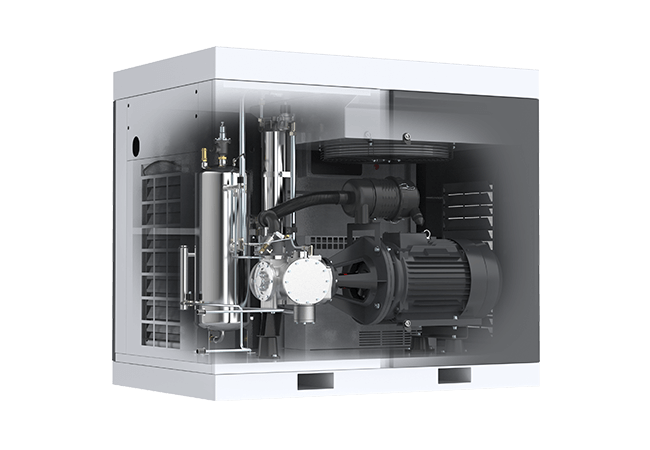
Reaching higher pressures requires more compression stages. Standard oil-free screw compressors use one or two stages. High-pressure units use three or four stages, with intercooling between each stage. This staged approach keeps discharge temperatures manageable and maintains efficiency.
Oil-free design differences
Like their standard counterparts, high-pressure oil-free screw compressors use timing gears to synchronize rotors without contact. However, the higher pressures demand tighter clearances, more robust bearings, and more sophisticated cooling systems. Rotor coatings are critical—they must withstand both higher pressures and the temperatures that come with them.
Drive systems
Most high-pressure units use variable speed drives (VSD) to match output to demand. This is particularly important because these compressors are often used in applications where demand fluctuates significantly.
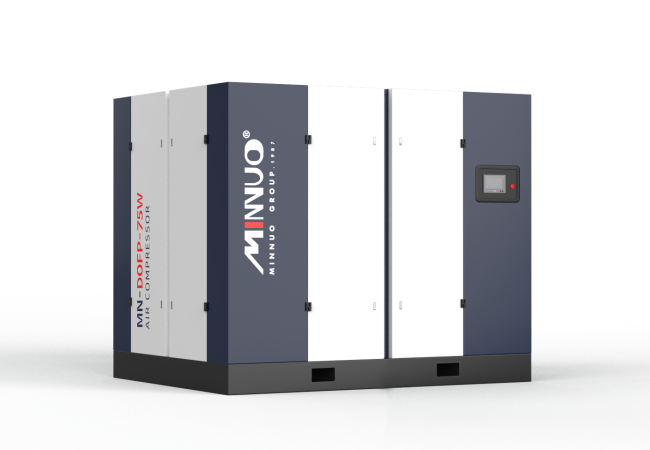
III. Applications Where High-Pressure Oil-Free Screw Compressors Excel
These compressors fill specific niches where both high pressure and oil-free purity are essential.
PET bottle blowing
One of the largest applications is in PET bottle manufacturing. Blow molding machines need high-pressure, oil-free air to form bottles from preforms. Pressures typically range from 350-600 PSI. The continuous nature of bottle production demands reliability, and the oil-free requirement is absolute—any oil contamination would ruin the bottles.
Nitrogen generation for laser cutting
High-pressure nitrogen is essential for laser cutting of thick materials. Many laser cutting systems operate at 200-300 PSI. On-site nitrogen generation using PSA technology requires feed air at these pressures. High-pressure oil-free screw compressors provide the clean, dry compressed air that PSA systems need to produce high-purity nitrogen.
Hydrogen compression
In hydrogen fueling stations and some industrial hydrogen applications, compression to 350-700 bar (5,000-10,000 PSI) is needed. High-pressure oil-free screw compressors serve as intermediate stages, boosting hydrogen from low pressure to the inlet pressure required by reciprocating or diaphragm final-stage compressors. Their oil-free design is essential to avoid contaminating the hydrogen.
Aerospace and military applications
Aircraft ground support, missile launch systems, and other military applications often require high-pressure, oil-free air. Reliability, purity, and continuous operation are all critical.
High-pressure breathing air
For SCUBA filling, firefighter air packs, and other breathing air applications, compressors must deliver oil-free air at 3,000-5,000 PSI. High-pressure oil-free screw compressors are used as booster stages or for medium-pressure supply in larger systems.
Specialty gas compression
In semiconductor manufacturing and specialty gas production, high-purity gases must be compressed without contamination. High-pressure oil-free screw compressors handle these gases when flow requirements are moderate and pressures are in the 200-500 PSI range.
IV. Limitations of High-Pressure Oil-Free Screw Compressors
For all their advantages, these compressors aren’t the right choice for every high-pressure application.
Pressure limitations
Even the best high-pressure screw compressors have practical limits. For pressures above 600-1,000 PSI, reciprocating or diaphragm compressors are typically more efficient and reliable. The multi-stage screw designs become increasingly complex and costly as pressure targets rise.
Flow constraints
High-pressure screw compressors excel in moderate flow ranges—typically 100-2,000 CFM. Below that range, reciprocating compressors are often more cost-effective. Above that range, centrifugal compressors become the better choice.
Efficiency at high pressure
At very high pressures, reciprocating compressors often achieve better efficiency than screw designs. The gap varies by manufacturer and specific operating conditions, but it’s a factor worth evaluating when efficiency is a primary concern.
Initial cost
High-pressure oil-free screw compressors are expensive. A single unit can cost $100,000-$500,000 depending on capacity. For applications where oil-free air isn’t essential, an oil-flooded screw with filtration is far cheaper. For low-flow applications, reciprocating compressors have a lower upfront cost.
Complexity and maintenance
More stages mean more components: additional coolers, more bearings, more seals. High-pressure oil-free screw compressors require specialized maintenance. Not every compressor service provider has experience with them. When they do need repair, parts availability can be a challenge.
Gas compatibility
While these compressors are excellent for air and nitrogen, not all gases are suitable. Some gases may react with rotor coatings. Others may have lubrication requirements that differ from air. Always verify compatibility before specifying a high-pressure oil-free screw compressor for gas other than air or nitrogen.
V. High-Pressure Oil-Free Screw vs. Reciprocating Compressors
The most common comparison is between high-pressure screw and reciprocating compressors.
Where screws win
Screw compressors deliver continuous, pulsation-free flow. This is critical for applications like PET blowing where consistent pressure is essential. They have fewer wearing parts than reciprocating machines, which can translate to higher reliability in continuous service. They also run quieter and with less vibration, making them easier to install in occupied facilities.
Where reciprocating wins
Reciprocating compressors achieve higher pressures more efficiently. For pressures above 500-600 PSI, they’re the proven technology. They also have lower initial cost for small to moderate flow rates. Parts are widely available, and many service providers are familiar with them. For intermittent duty, reciprocating compressors handle start-stop cycles better.
Making the choice
The decision comes down to application specifics. For continuous, moderate-flow applications with pressures up to 600 PSI, high-pressure oil-free screw compressors are often the best choice. For higher pressures, lower flows, or intermittent duty, reciprocating compressors typically win. For very high flows, centrifugal compressors enter the picture.
VI. Installation and Operating Considerations
These compressors demand careful attention to installation and operation.
Cooling requirements
Multi-stage compression generates significant heat. Most high-pressure units require water cooling for optimal performance. The cooling water must be clean and within specified temperature ranges. Air-cooled versions exist but are less common and typically have lower efficiency.
Inlet air quality
As with any oil-free screw compressor, inlet air quality is critical. The high pressure amplifies the impact of contaminants. Dust, moisture, or oil vapor can damage rotor coatings and bearings. Inlet filtration must be excellent, and the intake location should be away from potential contaminants.
Foundation and mounting
High-pressure oil-free screw compressors are heavy and can generate vibration, though less than reciprocating machines. They require solid foundations. Vibration isolators may be needed if the compressor is located in a sensitive area.
Controls and monitoring
Modern high-pressure units come with sophisticated controls. Remote monitoring, predictive maintenance features, and integration with plant control systems are common. These features are not optional—they’re essential for keeping these complex machines running reliably.
Spare parts strategy
Because these compressors are less common, spare parts availability can be an issue. Operators should maintain a critical spares inventory, including filters, seals, and perhaps a complete air end for critical applications.
VII. Cost and ROI Considerations
The investment case for high-pressure oil-free screw compressors requires careful analysis.
Initial investment
These machines are expensive—often 2-3 times the cost of a reciprocating compressor of similar capacity. The premium reflects the complexity of multi-stage design, specialized materials, and sophisticated controls.
Energy costs
At moderate pressures (200-400 PSI), high-pressure screw compressors can be more efficient than reciprocating alternatives, especially at part load. At higher pressures, the efficiency advantage may reverse. Energy costs over 10-20 years often dominate total cost of ownership.
Maintenance costs
Maintenance intervals are typically longer than reciprocating machines, but when maintenance is required, it’s often more expensive. Specialized labor, proprietary parts, and longer downtime all factor in.
Total cost of ownership comparison
A proper total cost of ownership analysis should include initial purchase, installation, energy consumption, maintenance, spare parts, and expected lifespan. For continuous-duty applications with moderate pressures, high-pressure oil-free screws often win. For intermittent or very high-pressure applications, reciprocating compressors may have lower total cost.
FAQ
Q1: What pressure range do high-pressure oil-free screw compressors cover?
A1: Typical units deliver 200-600 PSI. Some specialized designs reach 1,000 PSI or higher, but above 600 PSI, reciprocating compressors are more common. The optimal range is typically 250-500 PSI.
Q2: What is the most common application for these compressors?
A2: PET bottle blowing is the largest application, requiring oil-free air at 350-600 PSI for continuous operation. Other common applications include nitrogen generation for laser cutting, hydrogen boosting, and aerospace ground support.
Q3: How do high-pressure oil-free screws compare to reciprocating compressors?
A3: Screws offer pulsation-free flow, quieter operation, and longer continuous-duty capability. Reciprocating compressors achieve higher pressures more efficiently, have lower initial cost for small flows, and handle intermittent duty better. The best choice depends on your specific application.
Q4: Are these compressors suitable for hydrogen service?
A4: For hydrogen applications up to 600 PSI, high-pressure oil-free screw compressors can be used as intermediate stages. However, hydrogen requires special materials and sealing. Always consult with the manufacturer about hydrogen compatibility—standard air compressors are not suitable.
Q5: How many stages do high-pressure oil-free screw compressors have?
A5: Standard oil-free screws typically have one or two stages. High-pressure units have three or four stages, with intercoolers between each stage. More stages allow higher pressures while keeping discharge temperatures manageable.
Q6: What maintenance do these compressors require?
A6: Regular maintenance includes filter changes (every 2,000-4,000 hours), oil changes for timing gears, cooler cleaning, and periodic inspection of rotor coatings and bearings. Service intervals are typically longer than reciprocating compressors, but specialized expertise is required.
Q7: Are air-cooled versions available?
A7: Yes, but water-cooled is more common for high-pressure applications. Air-cooled units are typically less efficient and may have lower pressure capabilities. Water cooling handles the higher heat loads more effectively.
Conclusion
High-pressure oil-free screw compressors occupy a valuable niche in industrial compression. They deliver continuous, pulsation-free, oil-free air at pressures that standard screw compressors can’t reach—all with the reliability of rotary screw technology.
They’re not the right choice for every application. For pressures above 600 PSI, reciprocating compressors often make more sense. For low flows, the cost premium may be hard to justify. But for continuous-duty applications like PET bottle blowing, laser cutting, and hydrogen boosting, they’re often the optimal solution.
The key is understanding your application’s specific requirements: pressure, flow, duty cycle, and air quality needs. With that understanding, you can evaluate whether a high-pressure oil-free screw compressor is the right fit—or whether another technology serves you better.
At MINNUO, we help customers navigate these decisions. From analyzing application requirements to comparing total cost of ownership, we focus on finding the right compression solution for your specific needs. Because we know that the right compressor isn’t the one with the highest specs—it’s the one that fits your operation.
 Email
Email sales:+86 15366749631