A wrong diaphragm compressor material selection in corrosive gas service doesn’t just reduce efficiency—it risks catastrophic diaphragm rupture, process contamination, and dangerous leaks. This guide breaks down exactly how to match wetted materials to gases like wet chlorine, hydrogen sulfide, and acid vapors for safe, reliable operation.
I. Why Diaphragm Compressor Material Selection Matters for Corrosive Gases
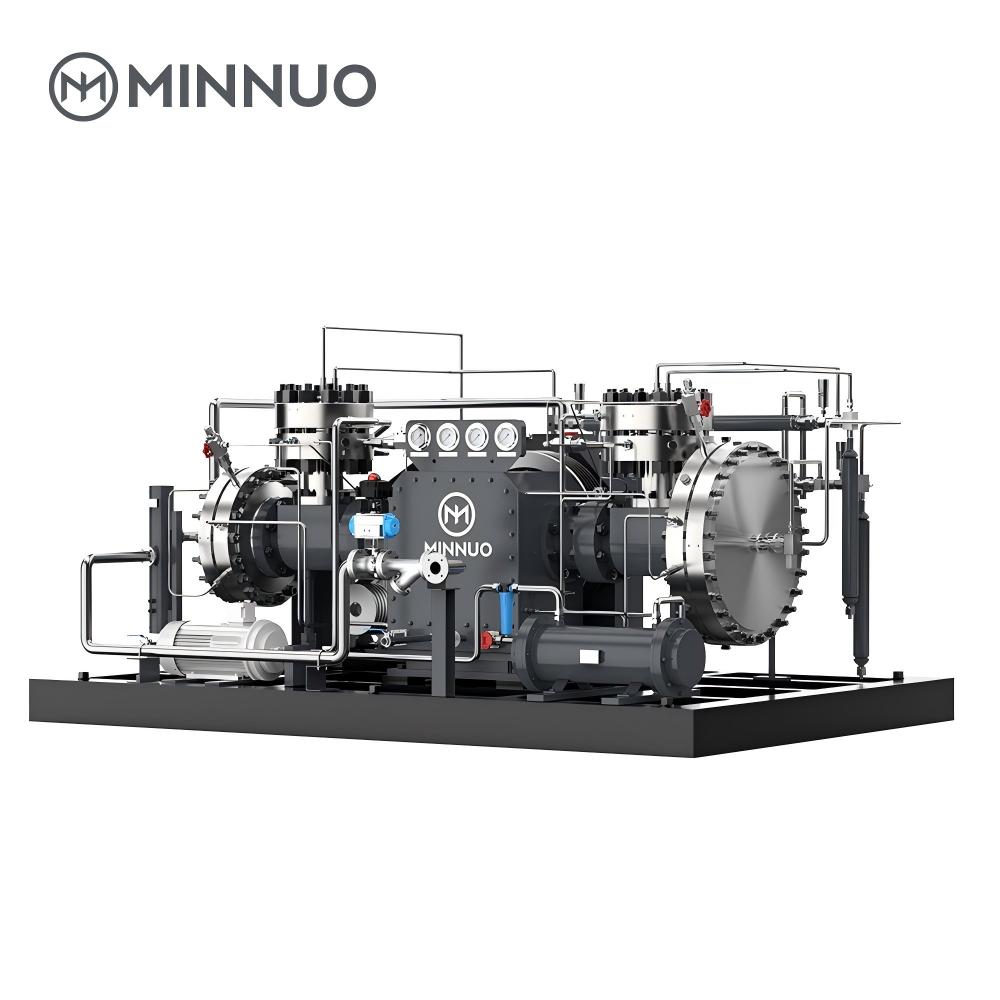
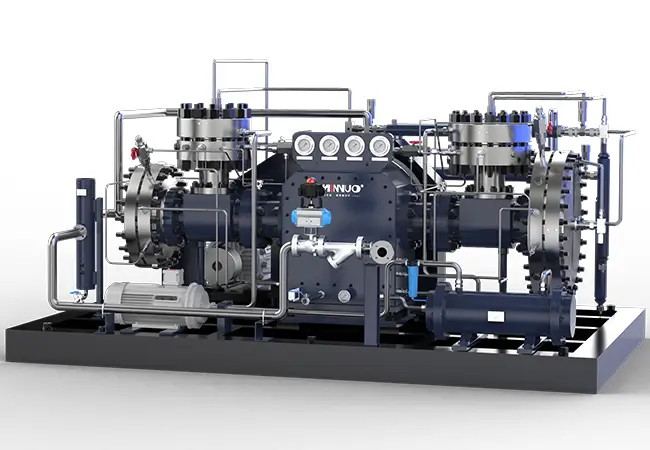
In a diaphragm compressor, the gas contacts three critical areas: the diaphragm head cavity, the process-side valve components, and the diaphragm layers themselves. Unlike a piston compressor where oil can buffer the gas, a diaphragm compressor offers a near-static, oil-free compression environment. While this is excellent for purity, it means the wetted surfaces experience prolonged static exposure to corrosive media at elevated pressures and temperatures.
The Primary Failure Modes in Corrosive Service:
- Stress Corrosion Cracking (SCC): Occurs when a susceptible alloy (like standard 304 stainless) is under tensile stress in a chloride-rich environment.
- Pitting Corrosion: Localized attacks often seen with halogens (chlorine, fluorine) on stainless steel passivation layers.
- Hydrogen Embrittlement: A critical concern in H₂S or high-pressure hydrogen service where atomic hydrogen diffuses into high-strength steels, making them brittle.
II. Matching Wetted Materials to Common Corrosive Gases
The heart of proper diaphragm compressor material selection lies in understanding gas-to-metal compatibility. Below is the practical breakdown for the most challenging industrial gases.
1. Chlorine (Cl₂) – Wet vs. Dry
- The Challenge: Dry chlorine is manageable with carbon steel. However, wet chlorine is aggressively corrosive to almost all ferrous metals due to the formation of hydrochloric and hypochlorous acids.
- Material Solution: The head and valve seats must be upgraded to Hastelloy C-276. This nickel-chromium-molybdenum alloy offers superior resistance to pitting and crevice corrosion in oxidizing chlorides. The diaphragm layers are typically Stainless Steel 316L, but for extremely wet chlorine, a PTFE-coated diaphragm is non-negotiable.
2. Hydrogen Sulfide (H₂S) – Sour Gas Service
- The Challenge: H₂S presents a dual threat: general acidic corrosion and sulfide stress cracking. High-strength carbon steels are strictly prohibited here per NACE MR0175/ISO 15156 standards.
- Material Solution: Wetted metallic components must adhere to NACE compliance. For the diaphragm cavity, Inconel 718 or 17-4 PH stainless (heat-treated to specific hardness limits) are standard. Diaphragm plates typically use 316L, but hardness must remain below HRC 22 to prevent cracking.
3. Hydrogen Chloride (HCl)and Acid Vapors
- The Challenge: HCl gas with even trace moisture becomes hydrochloric acid, rapidly corroding 300-series stainless steels.
- Material Solution: Monel 400 or Hastelloy B excels here. These nickel-copper alloys are virtually immune to non-oxidizing acids like HCl. For budget-sensitive applications, a 316L head with full PTFE encapsulation offers a viable alternative.
4. High-Purity Oxygen (O₂)
- The Challenge: Corrosion is not the issue; combustion is. Hydrocarbon oils and certain polymers are incompatible with high-pressure oxygen.
- Material Solution: All wetted parts must be Oxygen Clean. Brass or Monel trim is preferred over stainless steel to reduce ignition risk from particle impact. Seals must be PTFE or PCTFE.
III. A Practical Checklist for Diaphragm Compressor Material Selection
Before finalizing specifications, run through this three-step checklist to avoid costly errors.
1. Analyze the Full Gas Composition
Do not just look at the bulk gas. A 99% nitrogen stream with 1% H₂S is sour gas, not inert nitrogen. Trace moisture is the single biggest corrosion accelerator. If the gas dew point exceeds -40°C, assume “wet” corrosion conditions.
2. Verify Temperature Derating
Corrosion rates double with every 10°C rise. A Hastelloy head that performs flawlessly at 20°C may suffer accelerated pitting at 150°C discharge temperatures. Always check the material’s Pitting Resistance Equivalent Number (PREN) at operating temperature.
3. Don’t Overlook Static Seals and O-Rings
Even with a Hastelloy head, a standard Buna-N (Nitrile) O-ring disintegrates instantly in H₂S or chlorine. Specify seal materials in parallel with metal choices:
- H₂S/Chlorine: PTFE or Kalrez(FFKM)
- General Corrosive: Viton(FKM) — only if no steam or hot water is present.
FAQ
Q1: Can I use a standard stainless steel diaphragm compressor for dry CO₂?
A1: Dry carbon dioxide is generally compatible with 316L stainless steel. However, if moisture is present, CO₂ forms carbonic acid, which aggressively corrodes standard stainless steel. For wet CO₂ service, upgrade to 316L with electropolished surfaces or specify duplex stainless steel.
Q2: What is the difference between Hastelloy C-22 and C-276 for chlorine compression?
A2: Both alloys resist chlorine well. Hastelloy C-276 is the industry standard for wet chlorine due to higher resistance to localized pitting and crevice corrosion. C-22 offers better overall performance in mixed acid environments, but C-276 remains preferred for dedicated chlorine service.
Q3: What does NACE compliance mean in diaphragm compressor material selection?
A3: NACE MR0175/ISO 15156 governs materials used in H₂S-containing environments (sour service). It dictates strict hardness limits and heat treatment requirements for steels and alloys to prevent sulfide stress cracking. Always specify “NACE Compliant” wetted components if any H₂S is present.
Q4: How often should I inspect the diaphragm in corrosive gas service?
A4: Inspection intervals should be significantly shorter than for inert gas service. An air compressor diaphragm might run 8,000–10,000 hours between inspections. For wet chlorine or sour gas, inspect every 2,000–3,000 hours, checking for surface discoloration, micro-pitting, or loss of passivation layer integrity.
Q5: Is PTFE coating on diaphragms a permanent solution for corrosive gases?
A5: PTFE coatings provide excellent chemical barrier protection but are subject to cold flow under high compressive loads and can develop micro-cracks over time. Treat PTFE as a sacrificial layer rather than a permanent fix. For the most aggressive gases, solid exotic alloy diaphragms often deliver lower lifecycle costs.
Q6: Can one diaphragm compressor handle multiple different corrosive gases?
A6: Technically possible with proper material selection, but generally not recommended. Different corrosive species interact unpredictably, and cross-contamination residues may accelerate corrosion. If unavoidable, select materials compatible with the most aggressive gas and implement rigorous purging and passivation procedures between changeovers.
Conclusion
Proper diaphragm compressor material selection for aggressive gases balances upfront capital cost against total ownership expense. A Hastelloy head costs more than 316L, but it prevents unscheduled downtime and safety incidents. The key takeaway: thoroughly understand your gas composition, account for trace moisture, and verify NACE compliance when H₂S is involved. For wet chlorine or acid vapors, specify high-nickel alloys or PTFE encapsulation—the investment returns itself through extended service intervals and reduced contamination risk.
At MINNUO, we configure diaphragm compressor systems tailored to specific corrosive gas profiles. Whether your application involves wet chlorine, sour gas, or high-purity oxygen, our engineering team ensures every wetted component matches your process demands precisely.
 Email
Email sales:+86 15366749631