The rhythmic thump-thump-thump echoing from a workshop corner is one of the most recognizable sounds in industry. That sound is the heartbeat of a piston air compressor, the original and still one of the most widely used technologies for generating compressed air power. Known for their simplicity, durability, and ability to achieve high pressures, these workhorses have powered everything from assembly lines to impact wrenches for over a century.
But what exactly is happening inside that chugging metal box? When is a piston compressor the right choice, and when should you consider other technologies? This complete guide dives deep into the world of reciprocating compressors, explaining how they work, breaking down their different types, and providing the practical knowledge you need to select, use, and maintain one effectively.
What is a Piston (Reciprocating) Air Compressor?
A piston air compressor, also accurately called a reciprocating compressor, is a type of positive displacement compressor. It works by using one or more pistons driven by a crankshaft to perform a back-and-forth (reciprocating) motion inside a cylinder. This motion reduces the volume of the air trapped in the cylinder, thereby increasing its pressure before discharging it.
Think of it as a sophisticated, motorized version of a bicycle pump. Just as you push a plunger down to force air into a tire, the piston compresses air inside the cylinder. The term “reciprocating” directly describes the piston’s linear, back-and-forth movement, which is the source of the machine’s characteristic sound and vibration.
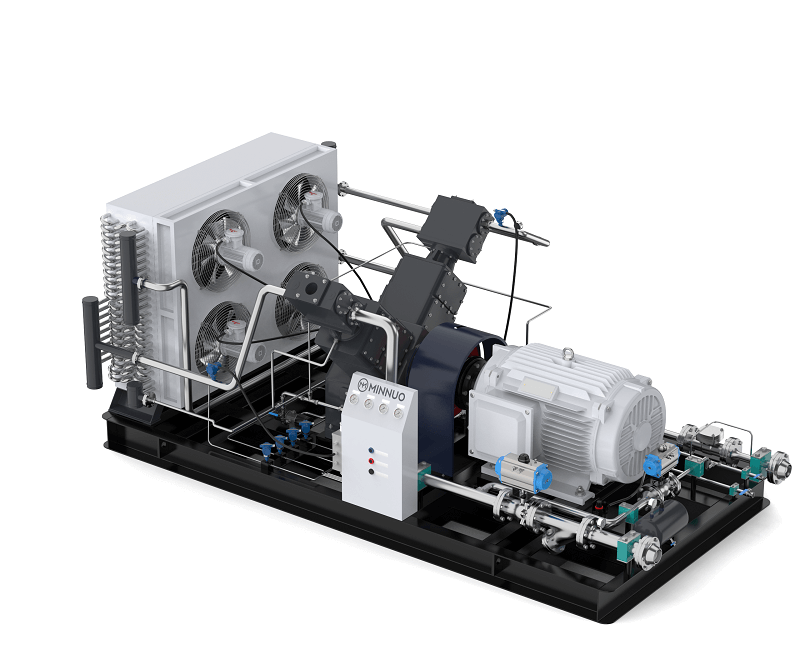
How Does a Piston Air Compressor Work? The Reciprocating Cycle
The operation of a single-acting piston compressor follows a classic four-stroke cycle, similar to an internal combustion engine but with the goal of compressing air instead of igniting fuel.
- Intake Stroke: The piston moves downward within the cylinder. This movement creates a vacuum, causing the intake valve to open and draw ambient air into the chamber through an air filter.
- Compression Stroke: The piston reverses direction and begins moving upward. The intake valve snaps shut, trapping the air inside the cylinder. As the piston continues upward, the volume of the chamber decreases, squeezing the air and dramatically increasing its pressure.
- Discharge (Power) Stroke: When the air pressure inside the cylinder exceeds the pressure in the discharge line (or air receiver tank), it forces the discharge valve open. The highly compressed air is then pushed out of the cylinder and into the system.
- Expansion Stroke (Brief Moment): At the top of its stroke, with most air expelled, the piston begins its downward movement again. A tiny amount of compressed air left in the clearance volume expands, momentarily dropping the pressure until the intake valve opens to start a new cycle.
This cycle repeats dozens of times per second, delivering pulses of compressed air. An air receiver tank is almost always used with piston compressors to smooth out these pulsations, provide storage, and allow the compressor to cycle on and off rather than run continuously.
Types of Piston Air Compressors: Key Classifications
Piston compressors come in several configurations, each suited to different needs. Understanding these classifications is crucial for proper selection.
1. By Cooling Method
- Air-Cooled: The vast majority of small to medium-sized compressors are air-cooled. They use fins on the cylinder and a fan (often on the flywheel) to dissipate heat generated during compression. They are simple and cost-effective but can be noisier and less efficient in high-duty-cycle applications.
- Water-Cooled: Used primarily for large, industrial-grade units. Water jackets surround the cylinder, providing superior and more consistent cooling. This allows for higher efficiency, longer continuous run times, and reduced noise, but requires a cooling water supply and infrastructure.
2. By Number of Compression Stages
- Single-Stage Compressors: Air is compressed from atmospheric pressure to the final discharge pressure in a single piston stroke within one cylinder. These are common for pressures up to 150 psi (10 bar). They are simpler and less expensive but run hotter and are less efficient at higher pressures.
- Two-Stage (or Double-Stage) Compressors: Air is compressed in two steps. First, it is compressed to an intermediate pressure (e.g., 60 psi) in a larger, low-pressure (LP) cylinder. It then passes through an intercooler, which cools the air before it enters a smaller, high-pressure (HP) cylinder for final compression. This process is much more efficient, reduces operating temperature, and allows for higher pressures (typically up to 200 psi or more) with less strain on components. Two-stage compressors are the standard for demanding industrial applications.
3. By Lubrication Method
- Lubricated (Oil-Flooded) Compressors: Oil is used to lubricate the cylinder walls, piston rings, and bearings. This reduces friction and wear, improves sealing for higher efficiency, and extends component life. The downside is that oil can carry over into the compressed air stream, requiring downstream oil filters if clean air is needed. Maintenance includes regular oil changes.
- Oil-Free Compressors: These use permanently lubricated bearings and piston rings made from advanced materials like Teflon (PTFE) that are self-lubricating. They deliver 100% oil-free air, which is critical for applications in food & beverage, pharmaceuticals, electronics, and painting. They typically have a higher initial cost and may have a shorter service life for the wear rings, but eliminate the cost and hassle of oil changes and oil contamination risk.
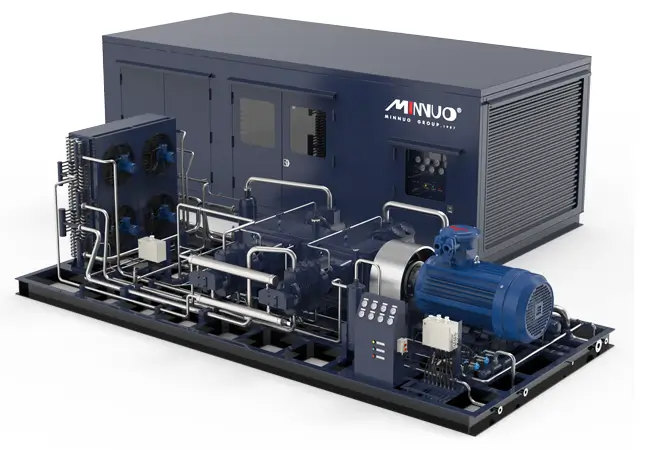
Advantages and Disadvantages of Piston Compressors
Advantages:
- High Pressure Capability: Excels at delivering very high pressures (easily 150-200 psi+), making them ideal for tools like rock drills and sandblasters.
- Lower Initial Cost: Generally have a lower purchase price per unit of airflow (CFM) compared to rotary screw compressors, especially in smaller sizes.
- Simple Technology: The design is straightforward, making them easier for technicians to understand, repair, and maintain. Parts are widely available.
- Good Part-Load Efficiency: For applications with long idle times, the simple load/unload control can be efficient, as the motor stops completely during off cycles (unlike some screw compressors that idle).
- Durability and Long Life: With proper maintenance, the robust construction can lead to a very long service life.
Disadvantages:
- High Vibration and Noise: The reciprocating motion creates significant vibration and noise, often requiring a solid foundation or vibration pads and installation in a separate room.
- Pulsating Airflow: Delivers air in pulses, requiring a receiver tank to buffer the flow for smooth downstream use.
- Higher Maintenance Requirements: More moving parts (pistons, rings, valves) mean more wear items that need periodic inspection and replacement.
- Limited Duty Cycle: Most standard models are designed for intermittent duty (e.g., 60-70% run time). Continuous 24/7 operation requires a true industrial, heavy-duty model.
- Size and Footprint: Typically bulkier and heavier than rotary screw compressors delivering comparable CFM.
Common Applications: Where Do Piston Compressors Excel?
Piston compressors are the undisputed champions in scenarios that match their strengths:
- Auto Shops & Garages: Powering impact wrenches, tire inflators, and spray guns.
- Small Workshops & DIY: Running nail guns, staplers, sanders, and small paint sprayers.
- Construction Sites: Operating jackhammers, chipping hammers, and pneumatic tampers.
- Agriculture: For crop spraying, operating dairy parlor equipment, and inflating large tires.
- Specialty High-Pressure Applications: As boosters in gas pipelines, in PET bottling plants, and for specialized manufacturing processes.
- Budget-Conscious, Oil-Free Air: Small oil-free piston models provide a cost-effective entry point for applications requiring clean air but with low hourly demands.
Key Maintenance Tips for Long Service Life
Proactive maintenance is the key to decades of reliable service from a piston compressor.
- Daily/Weekly: Drain moisture from the air receiver tank. Check oil level (on lubricated models).
- Every 500-1,000 Hours: Replace the air intake filter. Inspect and clean the intake and discharge valves. Check for unusual noises or vibrations.
- Every 2,000-4,000 Hours (or as per manual): Change the compressor oil (lubricated models). Replace oil separator/filter if equipped. Have a technician check piston ring wear, bearing condition, and valve plate integrity.
- Always: Ensure the compressor operates in a clean, cool, and well-ventilated area. Keep the exterior and cooling fins clean. Tighten any loose bolts or fittings.
How to Choose the Right Piston Air Compressor
Follow this decision framework:
- Determine Your Needs:
- Maximum Pressure (PSI/Bar): Check the requirement of your highest-pressure tool.
- Total Airflow (CFM/SCFM): Sum the CFM of all tools that might run simultaneously, and add a 25-30% safety margin.
- Duty Cycle: Estimate what percentage of an hour the compressor will run. Intermittent use (<60%) suits standard models; continuous use requires a heavy-duty, two-stage model.
- Select the Type:
- For pressures >125 PSI or continuous use, choose a Two-Stage compressor.
- For food, pharmaceutical, or spray painting, choose an Oil-Free model.
- Size the Components: Ensure the motor horsepower (HP) and air receiver tank size (in gallons) are appropriately matched to the compressor pump’s output. A larger tank allows for longer off-cycles and smoother operation.
- Consider the Environment: Account for available space, electrical supply, and noise restrictions.
- Know When to Look Elsewhere: If your needs exceed ~50 CFM continuously, or require ultra-quiet, vibration-free operation in a main production area, a rotary screw compressor may be a more suitable and cost-effective long-term solution.
FAQ
Q1: What is the main difference between a piston and a screw air compressor?
A1: The core difference is the compression mechanism. A piston compressor uses reciprocating pistons, resulting in intermittent, pulsating airflow. A screw compressor uses two rotating helical screws for continuous, smooth airflow. Screw compressors are generally better for high, continuous CFM demands with lower vibration, while piston compressors are champions of high pressure and lower initial cost for intermittent use.
Q2: How loud is a typical piston compressor? Can it be used in a small shop?
A2: Noise levels vary but often range from 70 to 90 dBA, which is comparable to heavy traffic or a lawnmower. They can be used in small shops, but consider a quiet or “silenced” enclosure model, install it in a separate closet or outside (with weather protection), and always wear hearing protection when near a running compressor.
Q3: Why does my piston compressor need an air receiver tank?
A3: The tank serves three vital functions: 1) Dampens Pulsations: It smooths out the pulsing flow from the pistons, providing steady pressure to tools. 2) Provides Storage: It stores compressed air, allowing the compressor to cycle off and cool down, extending its life. 3) Cools Air and Condenses Moisture: It allows hot air from the compressor to cool, causing water vapor to condense so it can be drained out.
Q4: How often should I change the oil in a lubricated piston compressor?
A4: Consult your owner’s manual. A general rule for standard mineral oil under normal conditions is every 500 to 1,000 hours of operation, or at least once a year if usage is light. Synthetic oils can often extend this interval to 2,000+ hours. Always change oil more frequently in hot or dusty environments.
Q5: Can a piston compressor run continuously?
A5: Most consumer and light industrial models are rated for a 60-70% duty cycle, meaning they should run no more than 42 minutes per hour. True 100% duty cycle industrial-grade piston compressors (often two-stage, water-cooled) are built for continuous operation but are less common. For true 24/7 demands, a rotary screw compressor is almost always the recommended choice.
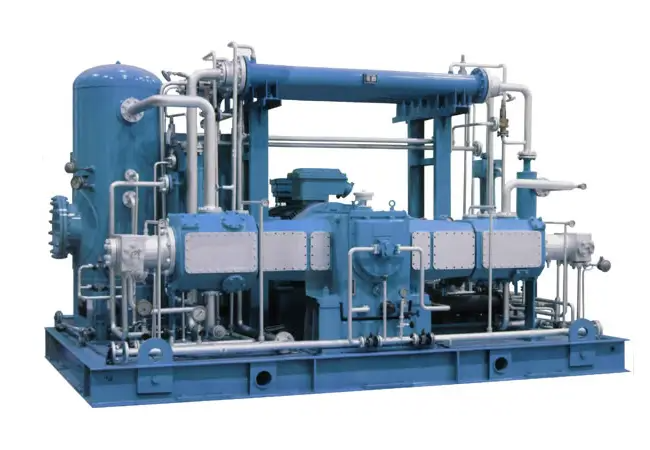
Conclusion
The piston air compressor remains a cornerstone of pneumatic power, a testament to a design whose effectiveness has stood the test of time. Its combination of mechanical simplicity, high-pressure capability, and cost-effectiveness ensures it will continue to be the first choice for workshops, garages, job sites, and many specialized industrial applications for years to come.
Choosing the right compressor is about matching technology to task. By understanding the reciprocating principles, the trade-offs between different types, and the maintenance they require, you can harness the reliable power of a piston compressor with confidence. For the applications where it shines, there is no more dependable or economical workhorse.
At MINNUO, we understand that reliability starts with the right tool for the job. We offer a comprehensive range of piston air compressors, from durable single-stage models for the tradesperson to heavy-duty two-stage industrial workhorses, ensuring you find the perfect balance of performance, value, and longevity to power your success.
 Email
Email sales:+86 15366749631