You’ve invested in a reliable air compressor and perhaps even a dryer. You expect clean, dry power for your tools and processes. But the harsh reality is that air straight from the compressor is dirty. It contains compressor lubricant (in oil-lubricated types), water vapor that has condensed into liquid, dust from the intake, wear particles from the system itself, and even microbial life. This contamination cocktail is a silent killer of pneumatic equipment, a spoiler of products, and a drain on your energy budget.
This is where compressed air filters become non-negotiable. They are not just accessories; they are the dedicated, precision guardians of your air quality. Each type is engineered to target specific contaminants, working together in a coordinated “filtration train” to transform raw, dirty compressed air into a clean, reliable utility. This guide will demystify how filters work, explain the different types, detail the critical importance of their installation sequence, and show you how to maintain them for peak performance and cost savings.
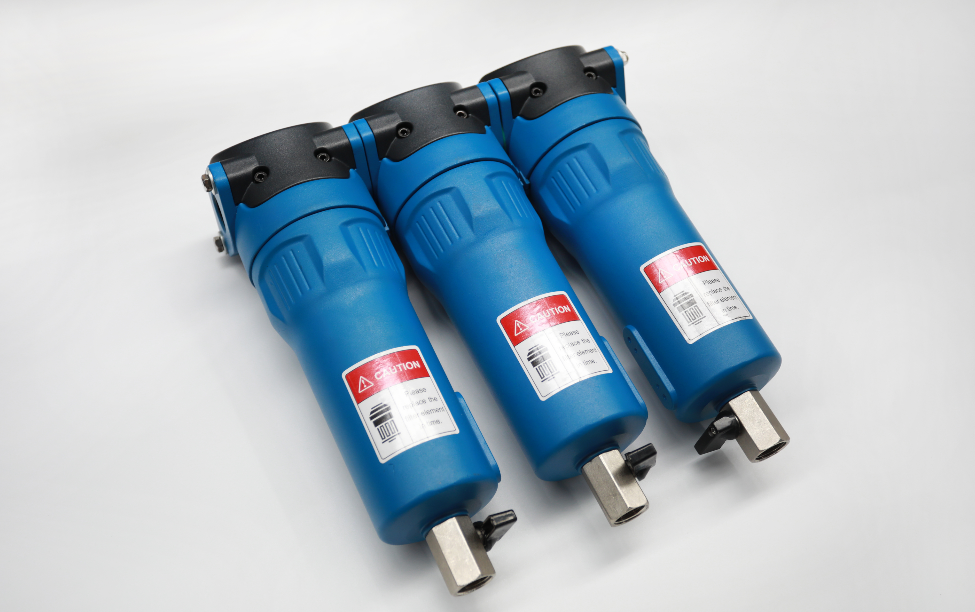
Why Filter Compressed Air? The Cost of Contamination
Understanding the enemy is the first step. Contaminants in compressed air come in three main forms: Liquid water and oil aerosols, oil vapor, and solid particles. Their impact is both direct and costly:
- Equipment Failure and Downtime: Liquid water and oil wash away lubrication in cylinders and air tools, causing rapid wear and seizure. Particles act as abrasives, scoring surfaces and clogging small orifices in valves, nozzles, and pneumatic controls. The result is unplanned downtime, expensive repairs, and shortened equipment life.
- Product Rejection and Spoilage: In spray painting, oil and water cause fisheyes, blisters, and poor adhesion. In food and pharmaceutical packaging, they introduce contaminants that lead to spoilage or unsafe products. In electronics manufacturing, particles can cause short circuits or faulty assemblies.
- Increased Energy Consumption: Contamination builds up inside pipes, effectively reducing their diameter. This increases pressure drop, forcing your compressor to work harder and longer to maintain system pressure, wasting significant electricity.
- Reputational and Safety Risks: Product recalls due to contamination damage brand reputation. In critical applications like instrument air for plant controls, contaminated air can lead to faulty readings, process instability, or even safety system failures.
How Do Compressed Air Filters Work? Core Principles
Different filters use different physical principles to capture contaminants.
1. Coalescence – Removing Liquid Aerosols
This is the primary mechanism for removing liquid oil and water droplets suspended in the air stream (aerosols).
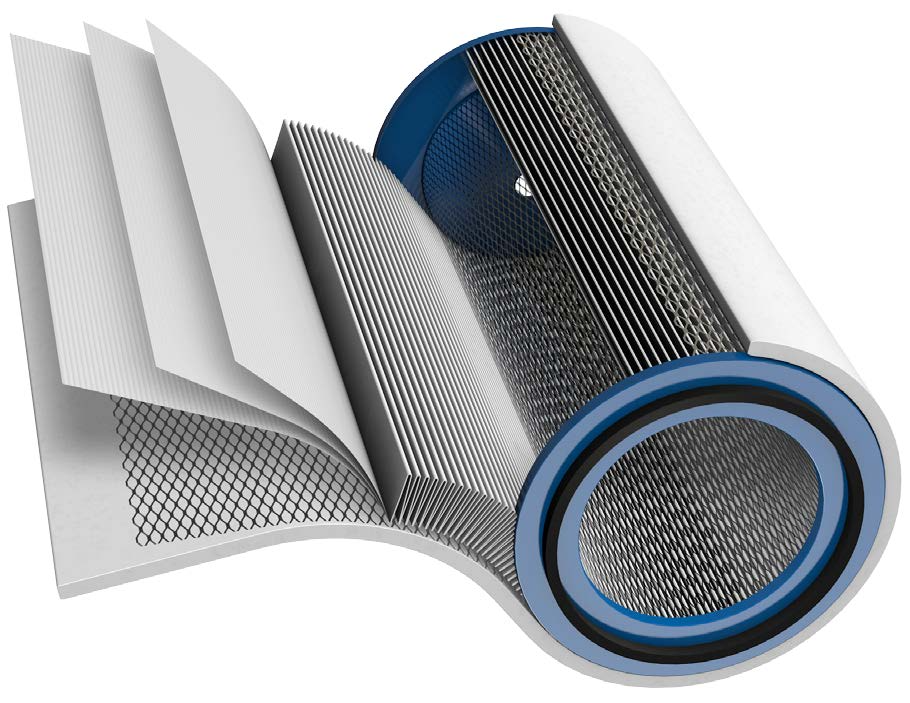
- Process: Dirty air flows through a specially designed fibrous media pack. As the tiny droplets (as small as 0.01 micron) pass through the maze of fibers, they collide with the fibers and each other through mechanisms like Brownian diffusion, direct interception, and inertial impaction.
- Coalescing Action: These collisions cause the microscopic droplets to merge, or coalesce, into larger and heavier droplets. As they grow, gravity takes over, pulling them down to the bottom of the filter housing where they are collected and automatically drained away.
- Output: A high-efficiency coalescing filter can remove 99.99%+ of liquid aerosols, delivering air with oil content as low as 0.01 mg/m³ (Class 1 according to ISO 8573-1).
2. Adsorption – Removing Vapors and Odors
Some contaminants, like oil vapor and certain gases, are in a molecular, gaseous state and cannot be captured by coalescence.
- Process: An adsorption filter, typically using activated carbon, is employed. Activated carbon has a vast network of microscopic pores, creating an enormous internal surface area (a gram can have the area of a football field).
- Adsorbing Action: As the air passes through, oil vapor molecules and odorous gases are physically attracted and adhere (adsorbed) to the carbon surface via weak molecular forces (van der Waals forces), removing them from the air stream.
3. Depth/Surface Filtration – Removing Solid Particles
For dust, rust, pipe scale, and other dry particulates.
- Process: Air is forced through a porous material. In depth filtration, particles are trapped throughout the thick, fibrous matrix of the media. In surface/sieve filtration (common for sterile applications), particles larger than the absolute pore size of a membrane are blocked on the surface.
- Action: It’s a physical barrier effect. The filter media is rated by the size of particles it can retain (e.g., 1 micron, 5 microns).
Main Types of Compressed Air Filters & Their Roles
1. General Purpose / Particulate Filters
- Function: The first line of defense. They remove bulk solid particles (typically >5 microns) and some liquid, protecting more expensive downstream filters and equipment from coarse contamination.
- Media: Often pleated paper or synthetic fiber. Relatively inexpensive.
- Placement: Installed immediately after the air receiver tank or as a pre-filter before dryers and coalescing filters.
2. Coalescing Filters
- Function: The workhorse for liquid removal. Their primary job is to remove liquid oil and water aerosols to very low levels (e.g., 0.01 mg/m³). They also capture fine particles down to 0.01 micron.
- Media: Multi-layer, fine glass or synthetic fiber mats designed for optimal coalescence.
- Critical Feature: Must have an automatic drain valve to eject collected liquids. Available in different efficiency grades (Class 1, 2, 3) to match purity requirements.
3. Adsorption (Activated Carbon) Filters
- Function: The final polisher. Removes oil vapor and odors that pass straight through a coalescing filter. Essential for applications like food and beverage, breathing air, and high-quality spray painting.
- Media: Bed of activated carbon pellets or a carbon-impregnated filter element.
- Golden Rule: MUST always be installed AFTER a high-efficiency coalescing filter. Liquid oil will instantly clog and ruin the carbon bed.
4. Sterile / Membrane Filters
- Function: Used in critical applications in pharmaceutical, biotechnology, and food processing to provide bacteria-free air (sterile air).
- Media: A membrane with an absolute pore rating (e.g., 0.22 or 0.01 micron) that physically blocks microorganisms and particles.
- Note: These create a significant pressure drop and are used as point-of-use filters for specific processes.
The Correct Filtration Train: Installation Order is Everything
Installing filters in the wrong sequence is a common, costly mistake. Here is the standard, effective order from compressor to point of use:
- Aftercooler / Air Receiver Tank (Not a filter, but where bulk liquids condense).
- General Purpose (Pre-Filter): Catches large debris, protecting the more sensitive and expensive coalescing filter.
- Refrigerated Air Dryer (if used).
- Coalescing Filter (Grade A, e.g., Class 1): Removes the liquid aerosols formed after the dryer cools the air. This is often the main workhorse filter.
- Desiccant Air Dryer (if used for very dry air).
- Coalescing Filter (Grade B): Crucial after a desiccant dryer! Its main job here is to capture desiccant dust (“fines”) from the dryer bed, preventing it from damaging downstream equipment.
- Adsorption (Activated Carbon) Filter: The final vapor and odor removal step, placed at the very end of the main treatment line or at specific point-of-use locations.
- Point-of-Use Filters: Small, high-precision filters installed right before a sensitive machine (e.g., a CNC, paint booth, or packaging machine) for ultimate protection.
Key Specifications & How to Read Them
- ISO 8573-1 Purity Class: The international standard. Expressed as [A:B:C], where A=particle class, B=water dew point class, C=oil class. Class 0 is the strictest. A filter is typically specified by its oil class (e.g., Class 1 for 0.01 mg/m³ oil).
- Filtration Rating: The size of the smallest particle the filter is designed to remove with a stated efficiency (e.g., “removes 99.99% of particles ≥ 0.01 micron”).
- Maximum Operating Pressure & Temperature: Must exceed your system’s conditions.
- Flow Capacity (SCFM @ psig): The maximum air flow the filter can handle with acceptable pressure drop. Always size for your peak system flow.
- Initial Pressure Drop: The resistance a new, clean filter creates. Lower is better for energy efficiency.
Maintenance: When and How to Change Filter Elements
Neglected filters become a liability. Here’s how to maintain them:
- The #1 Indicator: Differential Pressure (ΔP): Every filter should have a differential pressure gauge. It shows the pressure loss across the filter. Replace the element when ΔP reaches the manufacturer’s recommended maximum (often 5-7 psi or 0.3-0.5 bar). Waiting longer wastes enormous energy.
- Routine Tasks: Drain the filter bowl daily via the auto-drain or manually. Check the ΔP gauge weekly.
- Replacement Procedure: 1) Isolate and depressurize the filter. 2) Open the bowl and drain any liquid. 3) Replace the filter cartridge and O-rings. 4) Tighten housing, repressurize, and check for leaks. 5) Reset the ΔP indicator (if applicable).
- The Energy Cost of a Clogged Filter: A pressure drop increase of just 15 psi (1 bar) can increase your compressor’s energy consumption by about 7%. Regular filter changes pay for themselves in energy savings alone.
FAQ
Q1: What’s the difference between a filter and a dryer?
A1: A dryer lowers the dew point to remove water vapor (a gas) by cooling or adsorption. A filter removes liquid and solid contaminants (aerosols, particles, vapors) through physical capture mechanisms. You need both for clean, dry air.
Q2: How often should I change my compressed air filter?
A2: There is no fixed time interval. Change it based on the differential pressure (ΔP) gauge. The interval depends entirely on your air quality and system usage—it could be every 3 months or once a year. Visual inspection or time-based changes are guesses; the ΔP gauge provides factual data.
Q3: Can I clean and reuse a filter element?
A3: Absolutely not. Coalescing and adsorption media cannot be effectively cleaned without destroying their microstructure. Attempting to clean them will compromise their efficiency and likely release captured contaminants back into your system. Filters are consumables designed for one-time use.
Q4: Why is there still liquid water downstream of my coalescing filter?
A4: Likely causes: 1) The filter is oversaturated because the auto-drain is faulty or not draining frequently enough. 2) The inlet air has more liquid than the filter is rated to handle (e.g., a failed dryer or missing pre-filter). 3) The filter element is damaged or incorrectly installed.
Q5: Do I need an oil-removal filter if I have an oil-free compressor?
A5: Yes. “Oil-free” means no lubrication oil is added in the compression chamber. However, oil vapor from ambient air (e.g., from nearby machinery, vehicle exhaust) can be drawn into the intake. Furthermore, you still need protection against water aerosols and solid particles. A coalescing filter remains essential for overall air cleanliness.
Conclusion
A compressed air filter is far more than a simple sieve; it is a precision-engineered component that actively purifies one of your plant’s most critical utilities. Selecting the right types, installing them in the correct order, and maintaining them based on differential pressure are the keystones of achieving reliable, clean air.
The return on investment in a proper filtration system is clear: extended equipment life, zero product contamination, lower energy bills, and uninterrupted production. In the economy of compressed air, clean air is cheap air.
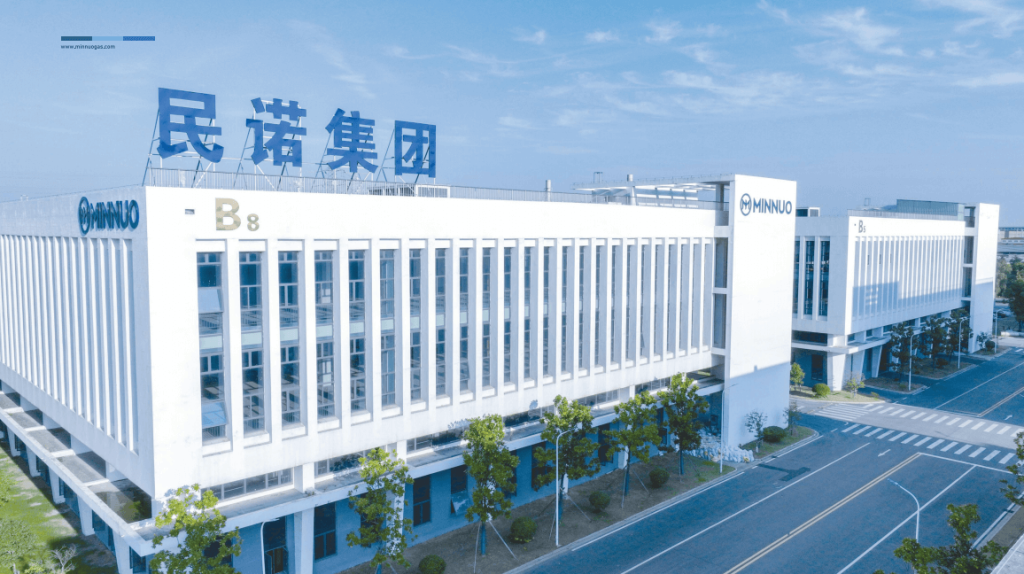
At MINNUO, we understand that clean air is the foundation of efficient production. We offer a comprehensive range of high-efficiency filters—from particulate pre-filters to Class 1 coalescing filters and activated carbon units—all designed for low initial pressure drop and high dirt-holding capacity. Our experts can help you audit your air quality and design a filtration strategy that protects your process and your bottom line.
 Email
Email sales:+86 15366749631