In the symphony of a modern automotive factory, where robots dance and assembly lines hum, there is a silent, pervasive force powering the production of every vehicle: compressed air. It is the second most critical utility after electricity, yet it is often the most misunderstood and inefficiently managed. While essential for precision and power, compressed air is notoriously expensive to generate—consuming roughly 7 to 8 times more energy per unit of work than electricity. In an industry where margins are measured in seconds and cents per vehicle, a poorly designed or maintained compressed air system becomes a relentless drain on profitability.
Automotive manufacturing presents a unique set of challenges: extreme scale, relentless demand for uptime, stringent quality standards, and widely varying air requirements across different production zones. This guide provides a comprehensive blueprint for designing, operating, and optimizing a compressed air system that meets the rigorous demands of automotive production, transforming it from a cost center into a reliable, efficient pillar of manufacturing excellence.
Compressed Air: The Lifeblood of the Automotive Production Line
The scale is immense. A large automotive plant can have a compressed air system with a total installed compressor power of several megawatts, representing millions of dollars in annual electricity costs. The system must be engineered to handle wildly fluctuating demands—from the thunderous, instantaneous draw of a 5,000-ton stamping press to the delicate, steady breath of a paint robot—all while maintaining unwavering pressure stability and air purity. Failure is not an option; a pressure drop can halt a line, and contaminated air can ruin thousands of dollars worth of paint on a single car body.
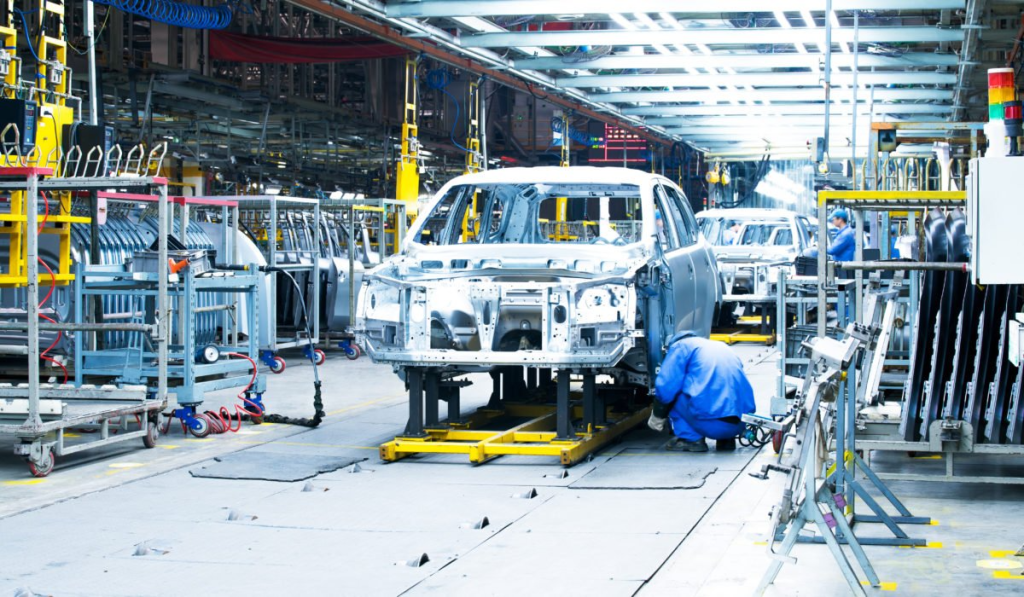
Demand Profile: A Breakdown by Manufacturing Zone
1. Stamping Shop – The Power User
The stamping plant is home to massive mechanical or servo presses that transform coils of steel into body panels in a fraction of a second.
- Primary Uses: Activating press clutches and brakes, powering hydraulic intensifiers, operating giant blank destackers and panel stackers, and blowing debris from dies.
- Air Characteristics: Extremely high, short-duration peak demands. Consumption is not continuous but occurs in powerful, intermittent pulses coinciding with the press stroke. Pressure requirements are typically 6-7 bar, with a critical need for stability to ensure consistent press timing and force.
- System Design Focus: Massive air storage and oversized mains piping. The key is to install a receiver tank bank (often 10,000+ gallons) as close to the presses as possible, coupled with large-diameter looped mains. This “capacitor” absorbs the shock of the peak demand, preventing a pressure wave from crashing through the entire plant’s air system. Compressors here must be sized for the average demand, not the peak.
2. Body Shop – The Precision User
In the body shop, hundreds of robots perform precise welding, clinching, and adhesive application to assemble the vehicle’s skeleton.
- Primary Uses: Pneumatic clamping and fixturing of sheet metal, actuating weld gun cylinders, operating rivet guns, and powering sealing adhesive applicators.
- Air Characteristics: High, continuous, and stable flow. Dozens of robots may clamp and weld simultaneously, creating a steady, high-volume demand. Pressure stability is paramount—a drop of just 0.2 bar can reduce clamping force, leading to poor weld quality or panel misalignment. Oil-free air is increasingly mandatory to prevent oil mist from contaminating welding electrodes (causing inconsistent resistance) and bare metal surfaces prior to painting.
- System Design Focus: Dedicated supply lines with pressure regulators and premium filtration. A robust, looped distribution system is essential to prevent pressure drops at distant workcells. Coalescing filters rated for oil aerosol removal (e.g., Class 1, 0.01 mg/m³) are required at the point of use.
3. Paint Shop – The Critical User
The paint shop is where the vehicle gets its finish, and it has the most stringent air quality requirements in the entire factory.
- Primary Uses: Atomizing paint in spray robots, operating pneumatic agitators in paint mix rooms, powering bell cleaners, and providing “air knives” for final body blow-off.
- Air Characteristics: Moderate, consistent flow with uncompromising purity needs. The air must be Class 0 oil-free, dry, and particle-free. Any contamination—oil, water, or dust—will transfer directly to the vehicle surface, causing defects like fisheyes, craters, or pops, leading to costly rework. Required pressure dew points are often -40°C or lower.
- System Design Focus: Completely isolated air treatment system. Air for critical painting processes should be supplied from oil-free compressors and processed through a desiccant (adsorption) dryer followed by a series of high-efficiency coalescing and activated carbon filters. This treated air should be distributed via a dedicated, clean, stainless steel or aluminum piping loop serving only the paint shop.
4. General Assembly – The Diverse User
The final assembly line is a dense landscape of diverse, lower-volume air uses.
- Primary Uses: Powering pneumatic pulse tools (nut runners, screwdrivers), suspension and tire inflation systems, test station actuators, and ventilation controls.
- Air Characteristics: Widely distributed, low-to-medium flow, highly variable. The main challenge is delivering clean, dry air to hundreds of tool drops without excessive pressure loss. Moisture is the enemy here, as it causes internal corrosion in tools, leading to premature failure and inconsistent torque output.
- System Design Focus: Effective condensate management and point-of-use filtration. The distribution network must have proper slope and drains. Each tool drop should have a filter-regulator-lubricator (FRL) unit, with the lubricator often omitted for clean-air tools. Adequate pipe sizing for the cumulative load of many small users is crucial.
Designing the Central Air Station: The Heart of the System
The compressor room is the engine of the entire network. Its design dictates overall efficiency and reliability.
- Capacity Planning: Load analysis must aggregate the demand profiles of all four shops, identifying the baseload (continuous demand) and the trim load (fluctuating demand). This informs the selection of a mixed compressor portfolio.
- Technology Selection:
- Centrifugal Compressors: Ideal for providing the large, steady baseload required by a big plant. They are highly efficient at full load but cannot handle large turndown.
- Variable Speed Drive (VSD) Rotary Screw Compressors: The perfect trim compressors. They modulate output precisely to match the plant’s fluctuating demand, saving substantial energy compared to fixed-speed units that load and unload.
- Oil-Free Compressors: A necessity for paint shops and modern body shops. Either oil-free screws or centrifugal compressors can be used.
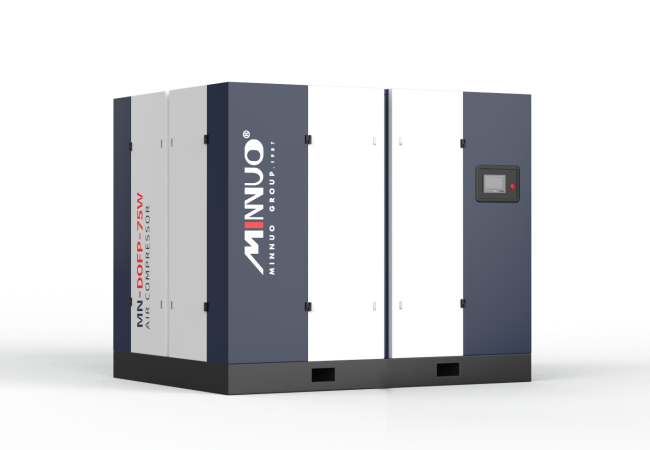
- Air Treatment Strategy: Implement a cascading treatment approach.
- Primary Treatment (for general plant air): Refrigerated dryer and general-purpose filter after the main receiver.
- Secondary Treatment (for critical zones): A separate stream with a desiccant dryer and high-efficiency filters for the paint shop.
- Tertiary Treatment (at point of use): Micro-filters and pressure regulators at individual tools or machines.
- Heat Recovery: Up to 94% of a compressor’s electrical input is converted into heat. Modern systems can recover 50-80% of this as hot water or air, which can be used for factory space heating, paint booth makeup air heating, or process water, often paying back the investment in less than two years.
Intelligent Piping Network: The Arteries and Capillaries
The distribution system is what delivers the potential energy from the compressor room to the point of use.
- Loop Design: The main header must be a loop surrounding the production areas. This provides two paths for air to reach any point, ensuring pressure stability and allowing maintenance without shutdowns.
- Pipe Material:
- Aluminum Pipe: The modern standard. It is lightweight, corrosion-resistant, has a smooth interior for low pressure drop, and uses push-to-connect fittings for fast, leak-resistant installation.
- Stainless Steel: Used in the paint shop for maximum cleanliness and corrosion resistance.
- Sizing & Slope: Pipes must be sized for peak instantaneous flow, not average flow, with consideration for future expansion. A minimum slope of 1% must be maintained towards drain points to prevent condensate pooling.
Control, Monitoring, and Energy Management
Intelligence turns a collection of hardware into an optimized system.
- Centralized Master Controller: This “brain” connects to all compressors and dryers. It monitors total system pressure and automatically sequences compressors on/off or modulates VSDs to maintain the target pressure in the most energy-efficient way, preventing units from working against each other.
- IoT and Data Analytics: Wireless sensors on mains and key branches provide real-time data on pressure, flow, and dew point. Cloud-based software analyzes this data to:
- Identify and quantify air leaks.
- Reveal inefficient operating patterns.
- Enable predictive maintenance by tracking compressor performance trends.
- Key Performance Indicators (KPIs): Establish and track metrics like:
- Specific Power (kW/100 cfm): The overall system efficiency.
- System Pressure Profile: Identifies unnecessary pressure drops.
- Leakage Percentage: (% of total generation).
Best Practices and Common Pitfalls to Avoid
- Do:
- Conduct a professional system audit before designing a new system or expanding an old one.
- Implement a formal, quarterly ultrasonic leak detection and repair program.
- Train maintenance personnel on the critical nature of air quality and system mechanics.
- Don’t:
- Underestimate paint shop requirements. This is the costliest mistake, leading to massive quality losses.
- Use “tree” instead of “loop” piping. This creates pressure drops at the ends of lines and limits flexibility.
- Oversize or undersize equipment. Both waste capital and energy.
- “Set and forget.” Without data monitoring, performance will inevitably degrade.
Conclusion
In automotive manufacturing, the compressed air system is not a background utility; it is a critical, active component of the production process. Its performance directly impacts production throughput, product quality, and operational cost. A well-designed, intelligently managed system is a strategic asset that provides a competitive edge through unwavering reliability and minimized energy waste.
Investing in such a system delivers a clear return: reduced energy bills, higher equipment availability, superior product quality, and the operational resilience needed in a demanding just-in-time environment. It is an investment in the fundamental integrity of the manufacturing process itself.
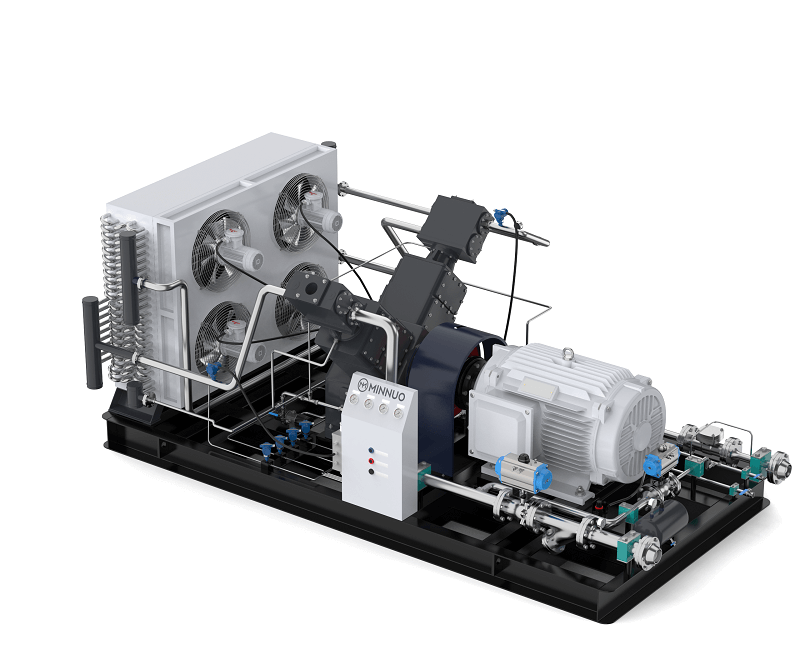
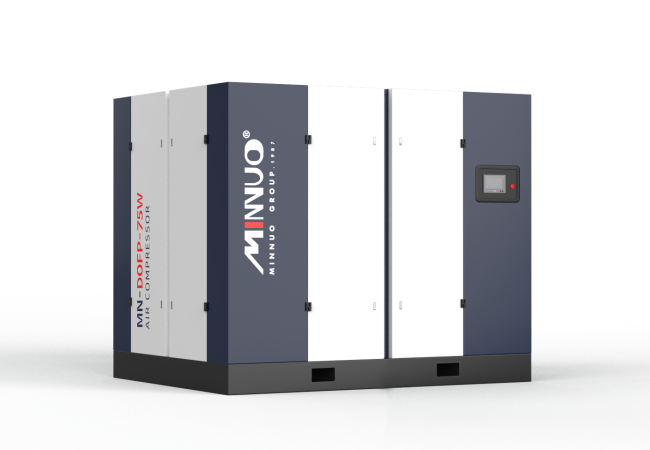
At MINNUO, we understand the precision and scale required by the global automotive industry. We provide integrated solutions—from high-efficiency VSD and oil-free compressors, to engineered piping systems and intelligent master controls—designed to deliver the clean, stable, and reliable air that automotive manufacturing demands. We partner with our clients to build compressed air systems that aren’t just cost-effective, but are foundational to manufacturing excellence.
 Email
Email sales:+86 15366749631