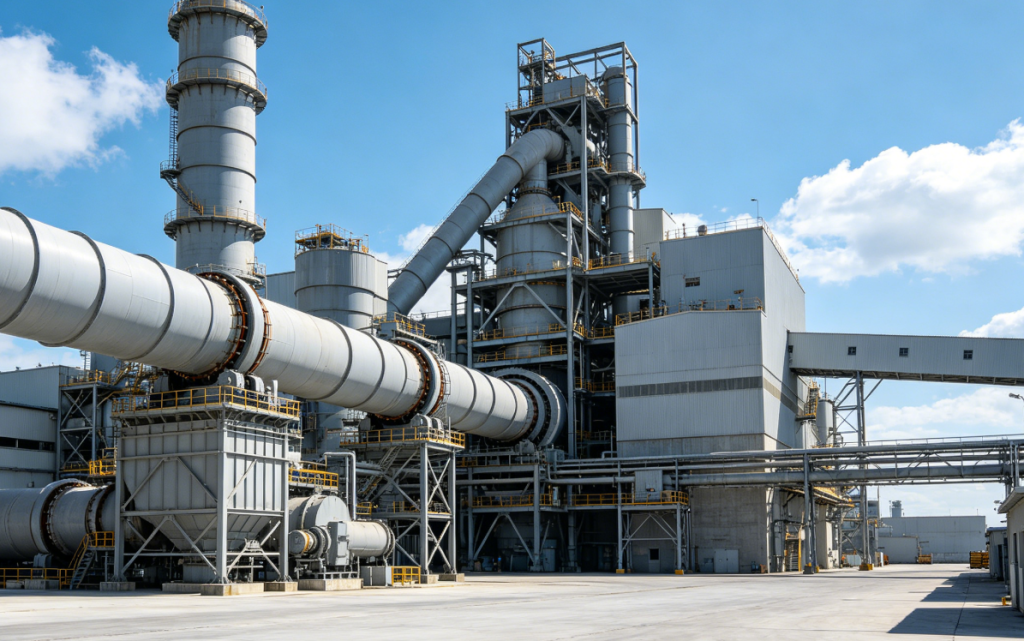
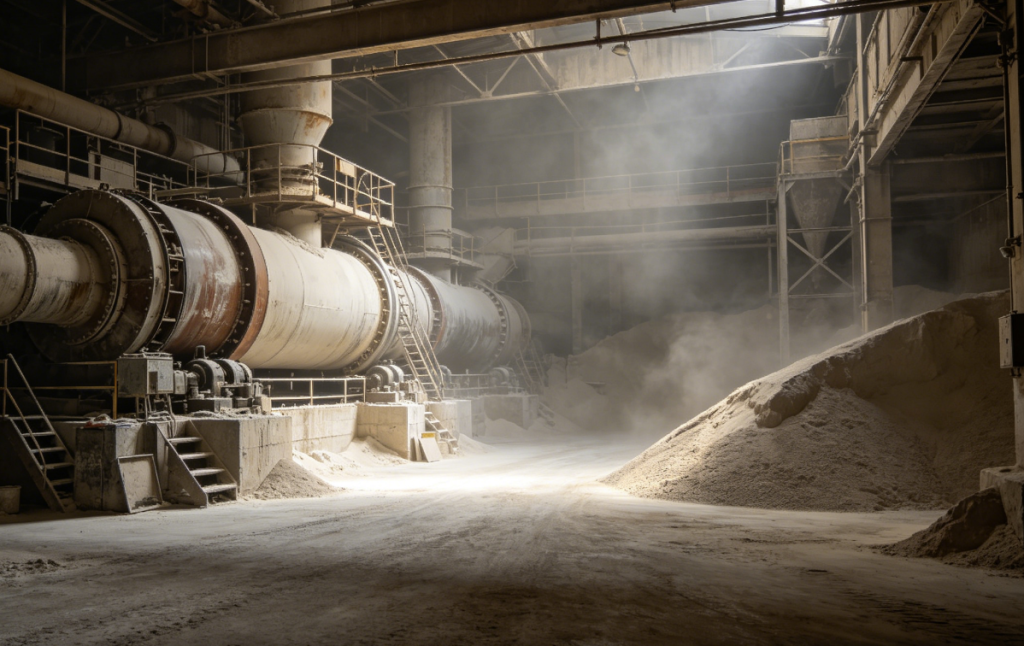
Cement plants present one of the most punishing environments for any rotating machinery. Fine cement dust infiltrates every opening. Ambient temperatures routinely exceed 100°F, with compressor rooms often reaching 120°F. Production demands continuous operation—365 days a year, 24 hours a day, with maintenance windows measured in hours rather than days. A screw compressor that thrives in a clean, climate-controlled factory may fail within months in a cement plant. Understanding the specific challenges and engineering solutions for cement plant compressed air systems prevents costly downtime and ensures reliable operation.
I. Why Cement Plants Demand Reliable Compressed Air
Compressed air is not a utility of convenience in cement manufacturing—it is essential to continuous production.
1. Critical Applications Across the Cement Process
| Process Area | Compressed Air Application | Consequence of Air Failure |
| Raw material handling | Pneumatic conveying of raw meal, fly ash, and additives | Material flow stoppage, kiln feed interruption |
| Kiln and preheater | Instrument air for burner controls, damper actuators | Loss of combustion control, kiln shutdown |
| Clinker cooling | Air cannon operation to prevent buildup | Material bridging, production bottleneck |
| Baghouse dust collection | Pulse-jet filter cleaning | Filter bag blinding, emissions exceedance |
| Packing and dispatch | Pneumatic packers and valve actuators | Inability to load product, shipment delays |
2. The Cost of Compressed Air Failure
A single compressor failure in a cement plant can cascade into kiln shutdown. Restarting a kiln after an unplanned stoppage costs $50,000 to $250,000 in fuel, lost production, and refractory damage. This dwarfs the cost of even the most robust compressor installation.
3. Continuous Duty Requirements
Cement kilns operate continuously for 11-12 months between scheduled shutdowns. Compressors must run 8,000+ hours annually without interruption. This duty cycle demands engineering far beyond typical industrial compressors rated for intermittent or two-shift operation.
II. The Three Environmental Challenges of Cement Plants
Cement plant conditions attack compressors through three primary mechanisms.
1. Airborne Cement Dust: The Silent Killer
Cement dust is not ordinary dirt. It is abrasive, hygroscopic, and electrically conductive.
Abrasive wear: Cement particles range from sub-micron to 100 microns, with sharp, irregular shapes. These particles erode compressor rotors, bearings, and seals. A compressor ingesting unfiltered cement plant air can lose rotor coating within 1,000-2,000 hours —a fraction of its 40,000+ hour design life.
Hygroscopic action: Cement dust absorbs moisture from humid air, forming a paste that hardens on surfaces. This paste clogs cooler fins, blocks drainage paths, and cements moving parts in place. Condensate mixed with cement dust creates a concrete-like sludge that defeats standard automatic drains.
Electrical conductivity: Cement dust conducts electricity when moist. Accumulated dust inside electrical panels and motor windings creates short circuits and ground faults.
2. Extreme Ambient and Operating Temperatures
| Location | Typical Temperature Range |
| Outdoor ambient (summer) | 95-115°F (35-46°C) |
| Compressor room | 110-130°F (43-54°C) |
| Kiln area | 130-150°F (54-65°C) |
High ambient temperatures reduce compressor performance through multiple mechanisms:
- Reduced air density: Compressor mass flow drops approximately 3% per 10°F above rating conditions
- Increased discharge temperature: Oil life shortens dramatically above 200°F
- Cooler inefficiency: Air-cooled heat exchangers lose effectiveness as ambient approaches oil temperature
3. Continuous Operation Without Rest
Most industrial compressors are designed for 60-80% duty cycle with periodic cooling periods. Cement plant compressors run continuously for months. This demands:
- Oversized cooling systems
- Premium bearings rated for continuous duty
- Robust oil management for sustained high-temperature operation
- Component life engineered for 8,000+ hours/year
III. Compressor Selection for Cement Plant Service
Not all screw compressors are suitable for cement plant duty. Specific features separate reliable performers from frequent failures.
1. Oil-Flooded vs. Oil-Free Screw Compressors
| Parameter | Oil-Flooded Screw | Oil-Free Screw |
| Dust tolerance | Higher (oil flushes contaminants) | Lower (rotor coating vulnerable) |
| Continuous duty capability | Excellent with proper cooling | Good, but coating wear accelerates in dust |
| Maintenance complexity | Moderate (oil changes, separator) | Higher (rotor coating inspection) |
| Initial cost | Lower | Higher |
| Recommendation for cement plants | Preferred | Only with exceptional filtration |
Oil-flooded screw compressors are the standard choice for cement plants. The injected oil provides cooling, sealing, and—critically—continuous flushing of any fine dust that bypasses intake filtration.
2. Critical Compressor Features for Cement Plant Duty
Heavy-duty intake filtration:
- Two-stage filtration with cyclone pre-separator
- Primary filter: F9 grade minimum (95% at 1 micron)
- Secondary safety filter: HEPA grade (99.97% at 0.3 micron)
- Filter restriction indicators with remote alarm
High-ambient cooling package:
- Oversized air-cooled oil cooler for 115°F+ ambient
- High-efficiency fan with increased airflow
- Optional water-cooled heat exchanger for extreme conditions
- Thermostatic oil temperature control
Continuous-duty bearings:
- Premium roller bearings (SKF Explorer, Timken, or equivalent)
- L10 bearing life rating of 100,000+ hours at design conditions
- High-temperature grease or oil-mist lubrication
Robust control and protection:
- High discharge temperature shutdown (adjustable, typically 228°F)
- Remote monitoring with cellular or Ethernet connectivity
- Automatic restart after power failure (with appropriate safety logic)
- Dust-proof electrical enclosure (NEMA 4/IP65 minimum)
3. Water-Cooled vs. Air-Cooled Compressors
| Cooling Type | Advantages | Disadvantages | Cement Plant Suitability |
| Air-cooled | No water treatment, simpler installation | Limited by high ambient | Good with oversizing |
| Water-cooled | Superior in high ambient, stable temperatures | Requires cooling water system | Excellent if water available |
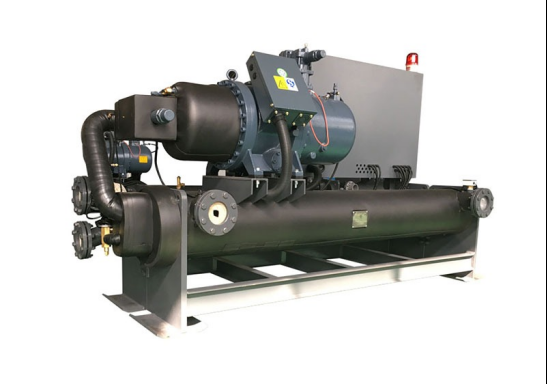
Water-cooled compressors offer significant advantages in cement plants with available cooling water. The stable cooling medium maintains consistent oil temperatures regardless of ambient swings, extending oil and component life.
IV. Intake Air Filtration: The First and Best Defense
In a cement plant, intake filtration is not a commodity—it is the single most critical component protecting the compressor investment.
1. The True Cost of Inadequate Filtration
| Filtration Level | Expected Rotor Life | Maintenance Cost Impact |
| Standard industrial (F7) | 8,000-12,000 hours | Premature airend replacement |
| Heavy-duty (F9 + cyclone) | 25,000-35,000 hours | Acceptable with monitoring |
| HEPA with pre-cleaning | 40,000+ hours | Design life achieved |
The cost premium for HEPA-grade intake filtration is approximately $2,000-5,000 per compressor. A single airend replacement costs $15,000-40,000. The economic case is compelling.
2. Recommended Filtration Configuration for Cement Plants
Stage 1: Cyclone pre-separator
- Removes 90-95% of particles above 10 microns
- Extends primary filter life by 5-10×
- Essential for plants with visible airborne dust
Stage 2: Primary barrier filter
- F9 or HEPA efficiency (95-99.97% at 0.3-1 micron)
- High dust-holding capacity (extended surface area)
- Differential pressure monitoring with alarm
Stage 3: Safety filter
- Secondary element downstream of primary
- Protects compressor during primary filter service
- HEPA efficiency recommended
3. Intake Location Best Practices
Positioning the compressor intake away from dust sources is free protection:
- Locate intake outside the compressor building, on the cleanest side of the plant
- Elevate intake at least 10-15 feet above ground level (dust concentration decreases with height)
- Face intake away from prevailing winds that carry plant dust
- Avoid proximity to clinker cooler vents, kiln exhaust, or material handling areas
- Consider intake ducting to a remote clean air source
4. Filter Maintenance in Dusty Environments
Standard filter change intervals do not apply in cement plants. Implement condition-based replacement:
- Monitor differential pressure continuously with remote alarm
- Change primary filter when DP reaches manufacturer limit (typically 20-25 inches water column)
- Never tap or clean filter elements—this damages media and reduces efficiency
- Replace safety filter every third primary filter change or if primary element damage suspected
- Inspect housing seals at every filter change; a leaking seal bypasses all filtration
V. Managing High Ambient and Operating Temperatures
Cement plant temperatures stress every component of the compressor system.
1. Effects of Elevated Temperature on Compressor Components
| Component | Temperature Effect | Mitigation |
| Lubricating oil | Oxidation accelerates; life reduced 50% per 18°F above 180°F | Synthetic oil, more frequent changes |
| Bearings | Clearances change; lubrication film thins | Premium bearings, lower viscosity oil |
| Seals and O-rings | Hardening and cracking; leakage develops | High-temperature materials (Viton, PTFE) |
| Electrical components | Insulation life reduced 50% per 18°F rise | Ventilated enclosures, cooling fans |
| Rotors (oil-free) | Coating degradation accelerates | Maintain inlet air below 100°F |
2. Cooling System Optimization
Air-cooled systems:
- Clean cooler fins weekly during high dust periods
- Verify fan operation and blade condition
- Maintain minimum clearance around compressor for airflow
- Consider ducting cooler exhaust outside the compressor room
Water-cooled systems:
- Monitor cooling water quality (scaling reduces heat transfer)
- Clean heat exchangers annually or when approach temperature rises
- Maintain proper water flow and pressure
- Consider closed-loop cooling with treated water to prevent scaling
3. Compressor Room Ventilation Design
A properly ventilated compressor room is essential for temperature control:
| Room Parameter | Recommendation |
| Air changes per hour | 30-60 minimum |
| Intake location | Low on shaded wall, away from dust |
| Exhaust location | High on opposite wall, ducted outside |
| Makeup air filtration | MERV 8-11 pre-filters |
| Temperature monitoring | Continuous with high-temp alarm |
Ventilation airflow calculation:
Required CFM = (Compressor heat rejection in BTU/hr) ÷ (1.08 × ΔT)
For a 200 HP compressor rejecting 600,000 BTU/hr with 20°F allowable temperature rise: Ventilation = 600,000 ÷ (1.08 × 20) = 27,800 CFM.
4. Oil Selection for High-Temperature Operation
| Oil Type | Maximum Operating Temp | Change Interval (Continuous Duty) | Cost Premium |
| Mineral oil | 180-190°F | 2,000 hours | Baseline |
| Synthetic (PAO) | 200-220°F | 4,000-6,000 hours | 2-3× |
| Synthetic (Diester) | 210-230°F | 6,000-8,000 hours | 3-4× |
For cement plant continuous duty, synthetic PAO or diester oils are strongly recommended. The extended change interval and high-temperature stability justify the premium cost.
VI. Continuous Duty Maintenance Strategy
Cement plant compressors require a maintenance approach that accommodates limited downtime windows.
1. Annual Shutdown Maintenance Checklist
During the annual kiln outage, perform comprehensive compressor service:
- Oil change with laboratory analysis of drained oil
- Oil filter and separator element replacement
- Intake filter replacement (all stages)
- Cooler cleaning (chemical clean for water-cooled, fin combing for air-cooled)
- Bearing inspection (vibration analysis, clearance check)
- Coupling alignment verification
- Electrical connection torque check
- Control calibration (pressure, temperature sensors)
- Safety device testing (high-temp cutout, pressure relief)
2. Routine Monitoring During Production
Between annual shutdowns, monitor these parameters weekly:
| Parameter | Check Method | Action Threshold |
| Oil level | Sight glass | Add if below 1/3 |
| Oil color | Visual | Darkening indicates oxidation |
| Intake filter DP | Gauge or transmitter | Change at manufacturer limit |
| Discharge temperature | Gauge or trending | Investigate >220°F |
| Vibration | Hand feel or meter | Investigate sudden change |
| Condensate drains | Visual | Verify operation |
| Unusual noise | Listening | Investigate immediately |
3. Oil Analysis Program
Quarterly oil analysis provides early warning of developing problems:
| Parameter | What It Indicates | Cement Plant Typical Limit |
| Viscosity | Oil degradation or contamination | ±10% from new oil |
| Total Acid Number | Oxidation | >0.5 increase |
| Silicon | Dirt ingress (cement dust) | >20 ppm (alert), >50 ppm (action) |
| Iron | Wear (rotors, bearings, gears) | Trending upward |
| Aluminum | Bearing cage wear | >5 ppm |
| Copper | Bearing or cooler corrosion | >10 ppm |
Silicon is the key indicator of dust bypassing intake filtration. Rising silicon demands immediate filter system inspection.
4. Critical Spare Parts Inventory
Maintain these parts on-site to minimize downtime:
| Part | Quantity | Reason |
| Intake filter elements | 2 complete sets | Frequent replacement |
| Oil filter elements | 2 per compressor | Routine service |
| Separator element | 1 per compressor | Critical for oil carryover control |
| Compressor oil | 1 complete fill | Emergency oil change |
| Belt set (if belt-driven) | 1 set | Failure stops compressor |
| Drain valve rebuild kit | 1 per drain type | Common failure point |
| Pressure/temperature sensors | 1 each | Calibration spares |
VII. System Design for Cement Plant Compressed Air
Beyond the compressor itself, system design affects reliability and efficiency.
1. Air Receiver Sizing for Cement Plant Duty
Cement plants have widely varying air demand as baghouse pulse systems cycle and air cannons fire. Proper receiver sizing dampens these fluctuations:
Minimum receiver volume = 2-3 gallons per CFM of compressor capacity. For a 500 CFM compressor, specify 1,000-1,500 gallon receiver capacity.
2. Piping Material Selection
Cement plant compressed air piping must resist internal corrosion and external dust accumulation:
| Material | Advantages | Disadvantages | Recommendation |
| Black iron | Low cost | Internal rust, external corrosion | Not recommended |
| Galvanized | Corrosion resistant | Zinc can flake, not for instrument air | Not recommended |
| Stainless steel | Clean, corrosion-free | Higher cost | Recommended for critical applications |
| Aluminum | Lightweight, corrosion-free | Lower pressure rating | Good for general plant air |
| Copper | Clean, easy to install | Cost, soft material | Instrument air only |
3. Condensate Management
Cement dust mixed with compressor condensate creates an abrasive, concrete-like sludge. Standard float drains fail quickly.
Recommended drain configuration:
- Electronic level-sensing drains with large orifice (no floats to stick)
- Strainers upstream of drains to catch pipe scale
- Drain lines sloped to prevent accumulation
- Regular drain testing as part of weekly rounds
4. Redundancy for Critical Applications
Cement plants should consider N+1 compressor redundancy for critical areas:
- Kiln instrument air: Dedicated compressor with automatic backup
- Baghouse pulse air: Multiple compressors with load sharing
- General plant air: N+1 configuration allows maintenance without shutdown
FAQ
Q1: Can I use a standard industrial compressor in a cement plant if I upgrade the filtration?
A1: Standard compressors lack the cooling capacity, bearing ratings, and continuous duty design required for cement plant service. While upgraded filtration helps, the compressor internals will still suffer from high ambient temperatures and continuous operation. Specify compressors with cement plant duty packages from the manufacturer.
Q2: How often should I change compressor oil in a cement plant?
A2: Base interval on oil analysis, not calendar time. Typical intervals with synthetic oil and proper cooling: 4,000-6,000 hours. Mineral oil in the same conditions may require change at 2,000 hours. Oil analysis guides actual timing—change when TAN increases by 0.5 or viscosity changes by 10%.
Q3: What is the most common cause of compressor failure in cement plants?
A3: Dust ingestion due to inadequate or poorly maintained intake filtration. This causes accelerated rotor and bearing wear, leading to airend failure. Second is high temperature operation from insufficient cooling or ventilation, causing oil degradation and seal failure.
Q4: Should I use desiccant or refrigerated air dryers in a cement plant?
A4: Depends on application:
- General plant air: Refrigerated dryers are adequate and more economical
- Instrument air: Desiccant dryers (-40°F dew point) required for outdoor piping and sensitive controls
- Baghouse pulse air: Refrigerated drying usually sufficient; verify with bag manufacturer
Q5: How do I protect compressors during extended power outages?
A5: Cement plants in lightning-prone areas experience frequent power interruptions. Install:
- Phase monitor and protection relay to prevent single-phasing
- Automatic restart with time delay (staggered restart prevents electrical surge)
- Crankcase heater with battery backup or maintained during outage to prevent liquid migration
- Remote monitoring with battery backup to alert of outage
Q6: Is it worth installing a central compressor monitoring system in a cement plant?
A6: Yes. Cement plants are large, and compressors are often distributed across the site. Central monitoring provides:
- Early warning of developing problems before failure
- Trending data for predictive maintenance
- Energy consumption tracking for efficiency optimization
- Remote access for off-site technical support
The cost of a monitoring system is typically recovered through prevention of a single major failure.
Conclusion
Screw compressors in cement plants face a triad of challenges: abrasive dust, extreme heat, and relentless continuous duty. Success demands more than selecting a quality compressor—it requires a system engineered for the environment. Heavy-duty intake filtration with cyclone pre-separation and HEPA final elements protects against dust ingress. Oversized cooling systems and synthetic lubricants combat high ambient temperatures. Continuous-duty bearings, robust monitoring, and disciplined maintenance ensure reliability through 8,000+ hour operating years. A properly specified and maintained compressed air system delivers the reliability cement plants demand, protecting both production and profitability.
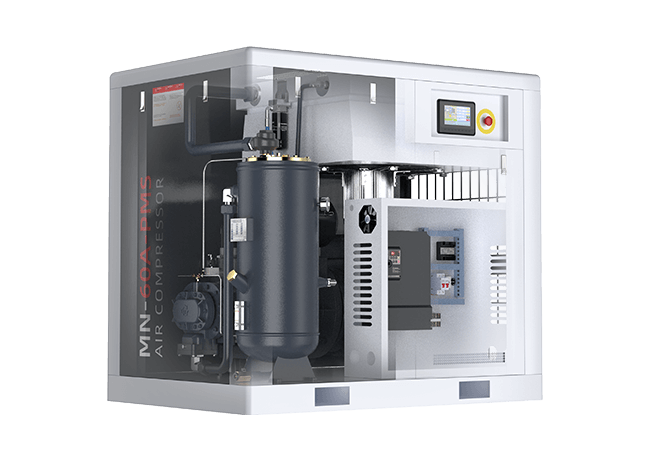
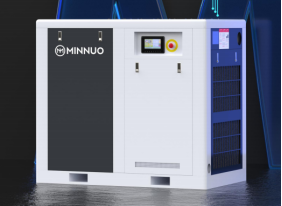
At MINNUO, we supply screw compressors configured specifically for cement plant duty. Our cement plant packages include heavy-duty intake filtration with cyclone pre-cleaners, high-ambient cooling systems, synthetic lubricant fill, and continuous-duty bearing upgrades. We provide oil analysis programs, critical spare parts packages, and remote monitoring solutions tailored to cement industry requirements. Whether you are equipping a new production line, upgrading aging equipment, or seeking to improve compressed air reliability, MINNUO delivers solutions engineered for the demanding conditions of cement manufacturing.
 Email
Email sales:+86 15366749631