I. Core Working Principle: Understand the Differences in One Second
Piston compressor: Imagine a bicycle pump. Air is drawn in, compressed, and then expelled through a reciprocating piston within a cylinder. This process is intermittent, producing pulses of compressed air.
Screw compressors: At their core is a pair of precisely meshing helical rotors (male and female rotors). They rotate continuously, causing air to be compressed continuously and smoothly between the rotor teeth. This process is continuous and stable.
A simple analogy: a piston is like scooping water one spoonful at a time, while a screw is like turning on a tap to let water flow continuously.
II. Comprehensive Comparison: Screw Type vs. Piston Type
| characteristic | Piston compressor | screw compressor |
| Initial investment cost | Low . The purchase cost is usually much lower than that of a screw compressor of the same specifications. | It’s more advanced . The technology is more complex, and the initial investment is larger. |
| Operating efficiency and electricity costs | Low efficiency. Especially under sustained high load, energy efficiency is relatively poor, resulting in high electricity costs in the long run . | High efficiency . Advanced design, especially high energy efficiency during continuous operation, resulting in long-term power savings . |
| Gas output quality and stability | Generally. The air output has pulses and fluctuations, and may contain a small amount of oil. | Excellent . The output air is smooth, continuous, and of consistent quality (especially when used with post-treatment equipment). |
| noise level | High . The reciprocating motion of the piston generates enormous noise, requiring a dedicated machine room. | Low noise . Smooth operation, with noise mainly coming from the fan, making for a more user-friendly working environment. |
| Maintenance and Reliability | Frequent maintenance is required. Wear parts such as piston rings and valves need to be replaced regularly, resulting in a high risk of downtime due to malfunctions. | Maintenance is simple . It mainly requires regular replacement of the “three filters and one oil”. The core unit is designed for a long lifespan and has extremely high reliability . |
| Area | It has a compact structure and occupies a relatively small area. | It typically requires more installation space. |
| Applicable work cycle | Suitable for intermittent operation, with downtime for cooling. | Suitable for continuous high-intensity operation 24/7 . |
III. How to Choose? Your business needs are the only criterion.
After reviewing the comparison, you might think screw compressors are better. However, in specific scenarios, piston compressors remain the more cost-effective choice. Please refer to the following situations to determine your preference:
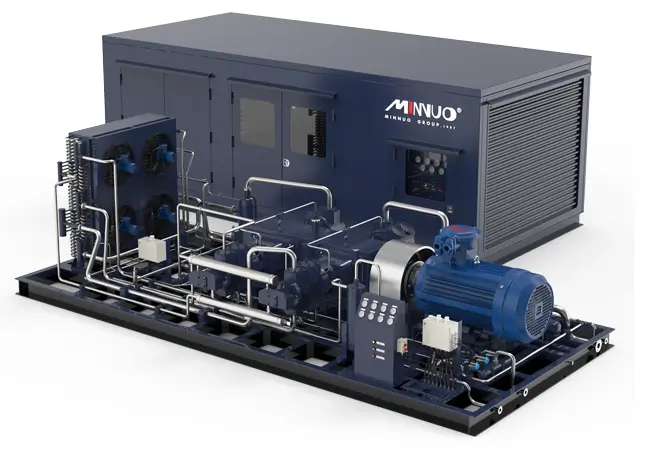
Choose a piston compressor if your business meets the following criteria:
1. Startups or businesses with extremely limited budgets: You should prioritize reducing upfront investment costs.
2. The demand for gas is intermittent and infrequent: for example, small auto repair shops, DIY workshops, and pneumatic tools that are used only occasionally, with a total daily operating time of no more than a few hours.
3. Low requirements for air quality and stability: Used for purging, simple pneumatic tools, etc., and is not sensitive to pressure stability.
4. Sufficient space and conditions to handle noise: The air compressor can be placed in a separate room away from the main work area.
Choose a screw compressor if your business meets the following criteria:
1. High and continuous gas demand: For example, production lines, large manufacturing workshops, and automated equipment require a 24-hour continuous gas supply.
2. Electricity costs are one of the major operating costs: You are concerned about total cost of ownership and are willing to exchange a higher initial investment for long-term electricity savings.
3. Extremely high requirements for reliability and stability: cannot tolerate production stoppages caused by air compressor failures, and requires high uptime.
4. The working environment is sensitive to noise: the air compressor needs to be installed near the workshop or office area, so low noise is crucial.
5. Requires high-quality, clean, and stable compressed air: used in precision instruments, spraying, food and pharmaceutical industries, electronics, etc.

IV. Long-term perspective: Total cost of ownership is the key.
Many decision-makers focus only on the purchase price, neglecting the total cost of ownership. The total cost of a device includes:
Total cost of ownership = Initial purchase cost + Electricity cost + Maintenance cost + Downtime loss
Piston engines: They have an advantage at the starting line (low purchase cost), but in the long run, high electricity bills and potential downtime losses may actually make their total cost higher.
Screw compressors: Although the initial investment is high, their excellent energy efficiency and extremely high reliability allow them to make up for the price difference in electricity and maintenance costs within 1-3 years, resulting in lower total long-term operating costs.
V. Conclusions and Final Recommendations
Piston compressors are an “economical and practical” choice: suitable for small and medium-sized enterprises with tight budgets and low and infrequent gas consumption. They are a powerful tool for solving the “having or not having” problem.
Screw compressors are a “productivity and investment” choice: suitable for growing and medium-to-large-sized enterprises that prioritize efficiency, stability, and long-term cost control. They are the industrial cornerstone ensuring “continuous production and profits.”
Final decision path diagram:
1. Assess your gas usage pattern: Is it continuous high-intensity use for more than 8 hours a day, or occasional, intermittent use?
2. Calculate your budget: This includes not only the budget for purchasing the equipment, but also your ability to afford electricity bills over the next few years.
3. Consider future development: Is the business growing? Choosing a redundant screw compressor may be more cost-effective than replacing two piston compressors in the future.
Hopefully, this comparison will clear up any confusion for you. Making the right choice will not only meet your current production needs but also provide stable and reliable support for your business growth.
 Email
Email sales:+86 15366749631