In the context of the 2026 global energy transition, the CNG filling station remains a core infrastructure for reducing operational costs in heavy-duty logistics and public transportation. For investors, building a filling station is not only a capital-intensive business but also a strategic opportunity to capture clean energy subsidies and secure stable, long-term cash flow.
According to the industry logic of the International Gas Union (IGU), the success of a CNG filling station depends on three core dimensions: site selection, compression efficiency, and Standard compliance for Southeast Asian markets and other high-growth regions.
1. Core Costs and ROI Analysis
Constructing a standard-sized CNG filling station typically requires an initial investment ranging from $500,000 to $1.5 million.
1.1 Cost Composition
- Core Equipment (Compressors, Storage Cascades, Dispensers): Accounts for approximately 50%-60% of the total investment.
- Civil Works & Utility Integration: Accounts for 20%-30%, including high-pressure pipeline access and explosion-proof wall construction.
- Permitting & Compliance Costs: Accounts for 10%-15%, involving international safety certifications such as ISO 11439 and NFPA 52.
1.2 ROI Forecast
In Southeast Asian markets (such as Indonesia or Thailand), if daily gas sales reach 40%-50% of the rated capacity, the Return on Investment (ROI) period is usually within 3 to 5 years. The key profit lever lies in “Anchor Tenants”—signing long-term supply agreements with local bus systems or leading logistics companies (such as DHL or J&T).
2. Core Equipment Checklist: Parent Station vs. Sub-station
Depending on your site conditions and natural gas pipeline coverage, you will need to choose a different technical path. Below is the 2026 industry-standard configuration list:
2.1 Parent Station
Usually connected directly to the high-pressure natural gas pipeline network. In addition to retail, it is responsible for filling tube trailers for sub-stations.
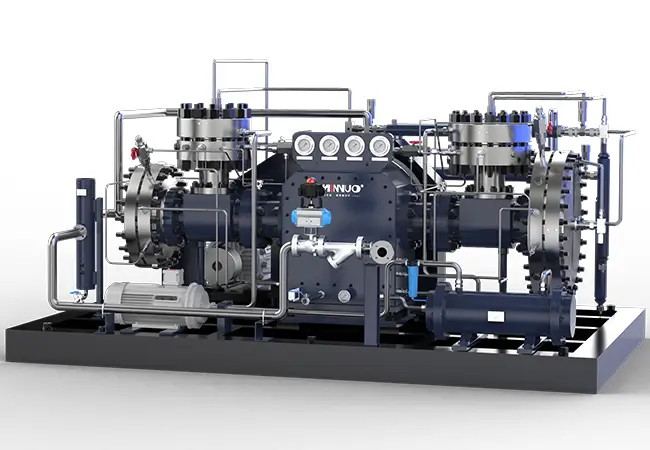
- Reciprocating Compressors: The core power source, boosting pipeline pressure to 20-25 MPa.
- Dehydration & Drying Unit: Ensures dew point temperatures meet standards to prevent valve icing.
- Loading Columns: Specifically used for filling long-tube trailers.
2.2 Sub-station (Daughter Station)
Located in areas not covered by the pipeline network, relying on gas delivered by tube trailers.
- CNG Tube Skids: A container assembly for storing high-pressure compressed natural gas.
- Hydraulic Booster Pump: Uses hydraulic principles to push residual gas out of the trailer, increasing the discharge rate.
- CNG Dispenser: A dual-hose refueling terminal with temperature compensation functions.
Core Component Comparison Table
| Component | Parent Station Requirements | Sub-station Requirements | 2026 Industry Standard |
|---|---|---|---|
| Compressor Type | High Power / Pipeline Direct | Mobile / Hydraulic Booster | Noise Control < 75dB |
| Storage System | Fixed Wells / Cascades | CNG Tube Skids | ISO 11439 Compliant |
| Metering System | Mass Flow Meter | Mass Flow Meter | Error Rate < ±0.5% |
3. Regional Compliance: Southeast Asia & India Markets
If you are conducting research in high-traffic regions such as India, Indonesia, or Vietnam, you must focus on “Standard compliance for Southeast Asian markets.”
“According to practical evidence from the ASEAN Energy Sector (ASEAN Centre for Energy), adopting skid-mounted equipment that meets ASME and ISO standards can significantly shorten government approval times and reduce insurance premiums by over 15%.” Additionally, a new trend in 2026 is the introduction of IoT Smart Monitoring Systems, which is not only a requirement for local environmental regulations (to prevent methane leaks) but also a key factor in applying for green finance loans.
4. Frequently Asked Questions (FAQ)
Common Inquiries Regarding CNG Filling Station Planning
Q: Which is more profitable, a Parent Station or a Sub-station?
A: Parent stations have lower gas sourcing costs due to direct pipeline access, but site selection is restricted and investment is higher. Sub-stations offer high flexibility, making them suitable for rapid deployment near logistics centers to profit through high turnover rates.
Q: Is it necessary to consider Hydrogen when building a station in 2026?
A: It is recommended to reserve “H2-Ready” space. Current leading equipment suppliers already offer upgradeable refueling modules where only a few seals and control software need to be replaced to support hydrogen blending in the future.
Q: How can I reduce the power consumption of the station?
A: Use Variable Frequency Drive (VFD) compressors and an automated Priority Panel. These systems intelligently distribute flow based on the pressure status of the storage banks, achieving energy savings of up to 20%.
5. Conclusion and Next Steps
Investing in a CNG filling station is a long-term business. The formula for success in 2026 can be summarized as: “Secure Contracts, Use Compliant Equipment, and Implement Smart Operations.”
Expert Advice:
- Conduct a Gas Source Pressure Test: Confirm the pipeline connection pressure, as this directly determines compressor selection and energy costs.
- Obtain a Professional Business Plan: Be sure to complete a comprehensive feasibility study before breaking ground.
Free Assessment:
Want to estimate your project costs more accurately?
6. Source Declaration
This article was authored by Li Wei, an Energy Infrastructure Strategist with 15 years of experience. Li Wei has spearheaded the planning and operation of over 20 large-scale alternative fuel stations across Southeast Asia. The information in this article is based on the latest research from the International Gas Union (IGU), NFPA 52 industry guidelines, and the author’s professional insights in the field of for energy.

 Email
Email sales:+86 15366749631