The choice between a screw air compressor and a piston (reciprocating) air compressor is one of the most fundamental decisions when setting up or upgrading your compressed air system. Selecting the wrong type can lead to excessive energy bills, unexpected downtime, and higher long-term costs. This guide breaks down the key differences in operation, technical specifications, and total cost of ownership to help you make a data-driven choice for your specific application.
I. Core Technology and How They Work
The primary difference lies in their compression mechanism.
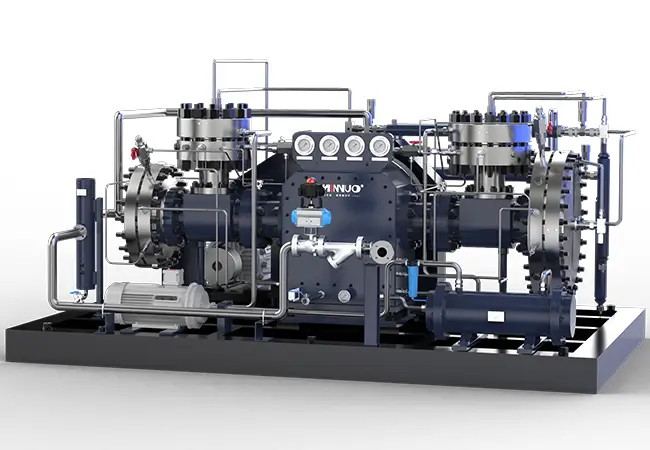
- Piston Air Compressors use a reciprocating motion. A piston moves up and down within a cylinder, drawing in air on the downstroke and compressing it on the upstroke before forcing it into a storage tank. This action is cyclical and creates pulsating airflow.
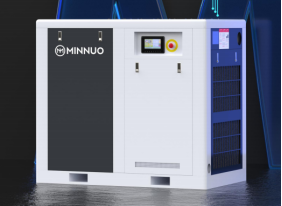
- Screw Air Compressors utilize a rotary principle. Two intermeshing helical screws (rotors) rotate, continuously trapping and compressing air as it moves along the length of the screws. This provides a constant, pulsation-free flow of compressed air.
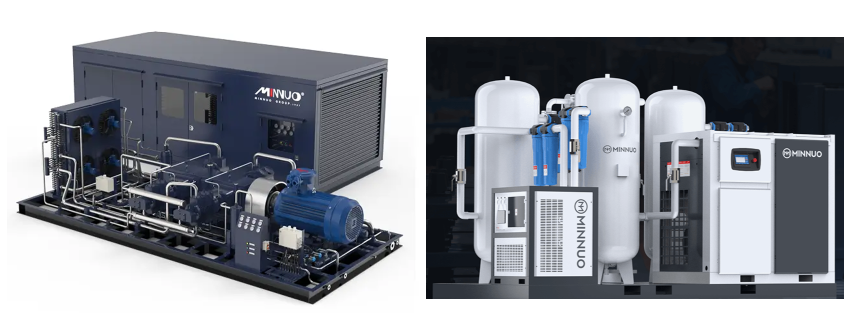
II. Key Decision Factors: A Detailed Technical Comparison
| Feature | Screw Air Compressor | Piston Air Compressor |
| Duty Cycle & Air Flow | 100% Duty Cycle. Designed for continuous operation, delivering a constant air supply. | 50-60% Duty Cycle. Requires rest periods to prevent overheating. Suitable for intermittent use. |
| Typical CFM Range | 10–1000+ CFM, ideal for heavy-load, high-air-demand scenarios. | 1–40 CFM. Larger CFM models are available but become bulky and noisy. Suitable for small to medium-scale applications. |
| Rated Pressure | 8–15 Bar (116–218 PSI), customizable for industrial-grade requirements. | 8–12 Bar (116–174 PSI), standard for common tasks like tire inflation and powering hand tools. |
| Motor Power Range | 5.5–500+ kW, adaptable to large-scale industrial operations. | 0.5–7.5 kW (~1-10 HP), common for small workshops, garages, or DIY use. |
| Energy Efficiency | Highly efficient for continuous use. Advanced Variable Speed Drive (VSD) models match output to demand, saving significant energy. | Less efficient under continuous load. Energy consumption remains relatively high even at partial load. |
| Noise & Vibration | Quieter operation (typically 70-75 dB(A)). Compact, integrated design minimizes vibration. | Noisy and high vibration (often above 90 dB(A)). Requires a dedicated, sturdy foundation. |
| Maintenance & Lifetime | Lower routine maintenance. Key components like rotors have a long lifespan (often 40,000+ hours). Higher initial cost, lower Total Cost of Ownership (TCO) for continuous use. | Frequent maintenance (e.g., valve, ring, bearing replacements). Shorter overall service life under heavy use. Lower upfront cost, potentially higher long-term cost. |
| Ideal Application | Manufacturing, automotive shops, large workshops, processes requiring 24/7 compressed air. | Small garages, DIY projects, tire inflation, applications with very low and intermittent air demand. |
III. A Practical Checklist for Your Decision
Answer these questions to guide your choice:
- Air Demand Pattern: Do you need air continuously or in short, intermittent bursts? High, continuous CFM demand points directly to a rotary screw compressor.
- Total Cost of Ownership (TCO): While a piston unit has a lower purchase price, calculate 2-3 years of energy consumption for air compressors and maintenance. For over 4,000 hours/year of operation, a screw compressor’s efficiency often provides better TCO.
- Site Environment: Will the compressor be placed near workers? The noise level of an air compressor is a critical factor for workplace safety and comfort, favoring quieter screw technology.
- Air Quality & Future Needs: For sensitive tools like CNC machines or spray painting, the consistent, cleaner output from a screw system is preferable. Also, consider if your business might grow and require more air in the near future.
FAQ: Your Common Questions Answered
Q1: Is a screw air compressor always more energy-efficient?
A1: In continuous operation, yes, especially with a Variable Speed Drive (VSD) screw compressor. For extremely low and intermittent usage (e.g., less than 2 hours per day), the efficiency advantage may be less pronounced initially, but the screw compressor’s reliability and lower maintenance costs still contribute to its value.
Q2: Can I use a piston compressor for demanding tasks like sandblasting or running a paint booth?
A2: It is possible but not ideal for professional, continuous use. Sandblasting and painting require high, continuous CFM (airflow). A piston compressor would likely run at 100% duty cycle, leading to rapid wear, overheating, and potential moisture/oil contamination. A large industrial screw compressor is the standard for such demanding applications.
Q3: Why is maintenance for a screw compressor considered simpler and less frequent?
A3: Screw compressors have fewer moving parts involved in the core compression process compared to the numerous valves, rings, and bearings in a piston cylinder. Routine maintenance primarily involves scheduled changes of the air compressor oil, oil filter, and air/oil separator, which is a more streamlined process.
Q4: What if I need completely oil-free air for a laboratory or food processing?
A4: For oil-free compressed air applications, oil-free screw air compressors are generally more robust, efficient, and reliable for continuous duty in professional settings. Oil-free piston compressors exist but are often limited to lower power outputs and shorter duty cycles.
Q5: How long does it take for a screw compressor’s energy savings to offset its higher purchase price?
A5: The payback period depends on your operating hours and local electricity rates. As a rule of thumb, for operations exceeding 4,000 hours annually, the energy savings from an efficient screw compressor (especially a VSD model) can often offset the price difference within 1 to 3 years. A detailed lifecycle cost analysis based on your specific air demand profile is the best way to determine your exact timeline.
Conclusion: Making the Final Choice
There is no universally “better” technology—only the right tool for the job. Carefully evaluate your air usage pattern, calculate the true long-term operating costs (including energy and maintenance), and consider your workspace constraints. For most industrial, automotive, and high-demand scenarios, the reliability, energy efficiency, and lower lifetime cost of a screw air compressor make it the superior long-term investment. For intermittent, low-CFM tasks, a piston compressor may suffice.
For a tailored recommendation that analyzes your specific tools, shift patterns, and future growth plans, consulting with a compressed air specialist is the most reliable step. At MINNUO, our engineering team can help you navigate these choices, providing a detailed compressed air system audit to ensure you select the most reliable, efficient, and cost-effective solution for your operations.

 Email
Email sales:+86 15366749631