Amid the Industry 4.0 wave, as robots and intelligent production lines become standard in workshops, air compressors, the “power heart” of industrial operations, often turn into an invisible shortcoming. Data shows that improper operation and maintenance of traditional air compressors can lead to daily production line losses exceeding 50,000 yuan, with idling energy consumption accounting for as high as 30%. Moreover, 70% of enterprises have fallen into the “pseudo-intelligence” trap during the intelligent transformation of air compressors. In 2026, with the implementation of new energy efficiency regulations and the acceleration of smart manufacturing, the focus of hot issues in the air compressor field has shifted from “fault maintenance” to “intelligent adaptation and energy conservation & efficiency improvement”. Today, we will break down the core pain points and corresponding solutions for you.
Pain Point 1: Prevalence of “Pseudo-Intelligence” – How Can Enterprises Avoid Selection Pitfalls?
“Is an air compressor with remote parameter monitoring considered an intelligent one?” This is a common confusion among many manufacturing enterprises in 2026. With the penetration of IoT technology, the market is flooded with a large number of “pseudo-intelligent” products – they can only realize basic parameter monitoring but fail to complete remote control and fault early warning. As a result, enterprises spend money on intelligent equipment but still have to rely on manual inspection. A new energy enterprise once had a fault shutdown rate as high as 5% due to choosing the wrong “pseudo-intelligent” model, directly affecting order delivery.
The key to solving this problem lies in clarifying three core standards: First, remote monitoring capability, which needs to support real-time collection of more than 60 key parameters with an alarm response time ≤ 5 minutes; second, intelligent energy-saving performance, equipped with permanent magnet variable frequency technology and AI regulation algorithms, with an annual energy saving rate of not less than 25%; third, predictive maintenance level, which can early warn potential faults such as bearing wear 7-15 days in advance, and the main engine’s trouble-free operation time ≥ 40,000 hours. During selection, attention should also be paid to platform compatibility to ensure connection with the enterprise’s existing ERP and MES systems, avoiding data silos.
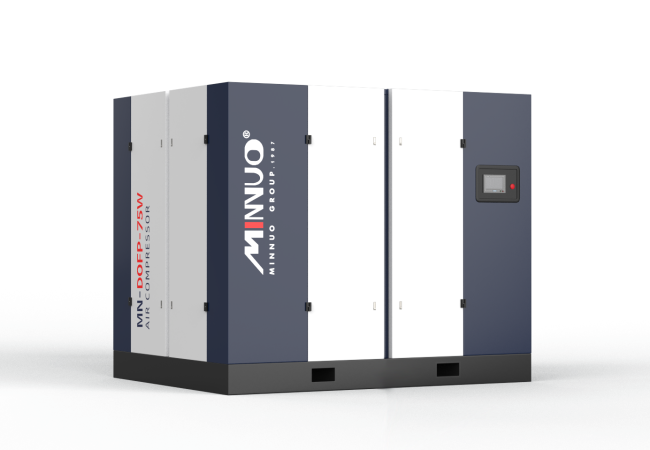
Pain Point 2: High Energy Consumption Ratio – How to Achieve Dual Breakthroughs in “Cost Reduction + Low Carbon”?
Air compressor energy consumption accounts for 10%-15% of total industrial energy consumption. Under the dual pressures of the dual carbon goals and rising energy prices, energy conservation has become a core demand for enterprises. However, many enterprises have fallen into the misunderstanding of “blindly replacing models” and ignored the transformation potential of existing equipment. The practice of a precision component factory in Shenzhen is quite reference-worthy: it replaced 4 old industrial frequency air compressors with 30kw permanent magnet variable frequency models, reducing the total installed power from 148kw to 130kw, saving more than 400,000 kWh of electricity annually and reducing carbon emissions by nearly 200,000 kilograms.
In addition to replacing old equipment with new ones, there are two other energy-saving paths worthy of attention: First, waste heat recovery and utilization, converting the waste heat generated during air compressor operation into production or domestic heat through professional systems, with a comprehensive energy saving rate of up to 40%; second, multi-machine collaborative control, adopting an intelligent cloud platform to realize centralized scheduling of hundreds of devices for large-scale parks or multi-production line scenarios, optimizing operation combinations. Data shows that through scientific energy-saving transformation, the average operation and maintenance cost in the air compressor field can be reduced by 32%.
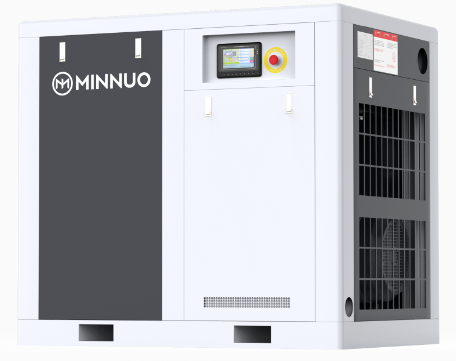
Pain Point 3: Heavy Losses from Sudden Faults – How to Implement Predictive Maintenance?
“Running normally one second, suddenly shutting down the next” – the traditional “post-fault maintenance” model can no longer adapt to the continuous production needs of smart manufacturing. The core causes of air compressor faults are mostly component aging, lubrication failure and pipeline leakage. All these problems have obvious signs before the fault occurs – for example, abnormal noise may indicate bearing wear, and excessive body temperature is probably a cooling system fault. However, traditional manual inspection is difficult to accurately capture these early signals.
The application of edge computing gateways is changing this situation. By deploying local data processing modules, it can realize the parsing and data aggregation of more than 20 industrial protocols, real-time monitoring of key data such as oil temperature and vibration, and quickly judge the health status of equipment through local algorithms. It can also cache data to avoid loss when the network is disconnected. An auto parts enterprise realized centralized cloud monitoring through this solution, reducing the fault response time from several hours to minutes and improving operation and maintenance efficiency by 50%. In addition, regularly replacing original parts and standardizing the maintenance of the lubrication system can also greatly reduce the risk of faults.
2026 Trend: From “Equipment Sales” to “Full-Life-Cycle Services”
With the intensification of industry competition, the business model in the air compressor field is being reconstructed. In 2026, the penetration rate of the “Equipment as a Service (EaaS)” model is expected to reach 25%. Enterprises do not need to invest a huge amount of money in purchasing equipment at one time, but pay according to air consumption. The service provider is responsible for the full-life-cycle operation, maintenance and energy conservation optimization. This model is particularly suitable for small and medium-sized manufacturing enterprises, which can effectively reduce capital pressure and operation and maintenance risks.
Conclusion: As the “power cornerstone” of industrial production, the intelligent and energy-saving transformation of air compressors is no longer a choice but a survival necessity. In 2026, enterprises need to jump out of the traditional “treat the symptom” thinking, start from the whole process of selection, transformation and operation and maintenance, accurately solve core pain points, so that the “power heart” can truly adapt to the rhythm of smart manufacturing and achieve the dual goals of cost reduction, efficiency improvement and low-carbon development.


 Email
Email sales:+86 15366749631