I. Introduction: What Is a Centrifugal Compressor?
A centrifugal compressor is a type of dynamic compressor that converts rotational kinetic energy into gas pressure energy through high-speed rotating impellers. Unlike positive-displacement compressors (e.g., reciprocating/piston compressors), it relies on centrifugal force to accelerate and compress gas—delivering continuous, high-volume airflow that makes it the backbone of large-scale industrial gas supply systems.
Its core advantage lies in high flow rate, low vibration, and long-term continuous operation—capable of handling airflow from hundreds to thousands of cubic meters per minute, far exceeding the capacity of reciprocating compressors. This makes it indispensable for scenarios like petrochemical plants, power stations, and large factory centralized air supply, where stable, large-volume gas is critical.
As a complementary option to reciprocating compressors, centrifugal gas compressor fill the gap for “high flow, medium-low pressure” needs (typically pressure ≤10 MPa), while reciprocating models excel in “small flow, medium-high pressure” scenarios. Together, they cover nearly all industrial compression requirements.
How Does a Centrifugal Compressor Work? (A 3-Step Process)
- Suction & Intake: Air or gas enters the impeller eye at low velocity.
- Energy Transfer (Acceleration): The rotating impeller blades spin the gas, converting mechanical energy into kinetic energy.
- Diffusing & Pressure Rise: As the high-speed gas enters the diffuser, its velocity decreases, and kinetic energy is converted into static pressure (potential energy).
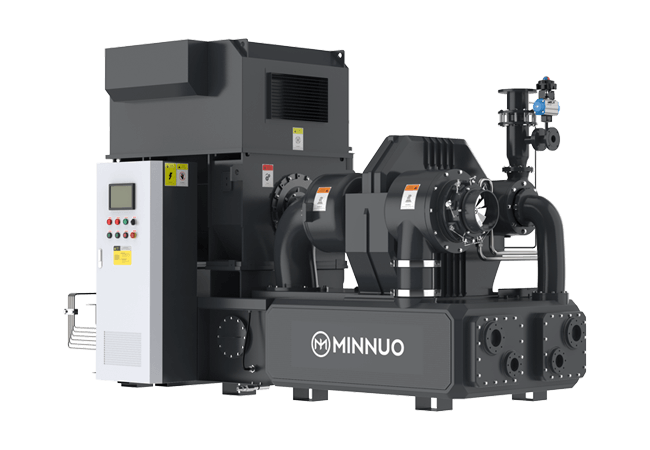
II. How Does a Centrifugal Compressor Work? (Working Principle)
The working principle of a centrifugal compressor is rooted in fluid dynamics—simple to understand once you break down the energy conversion process:
1. Basic Operating Principle
It operates on the “dynamic compression” principle: a motor drives a shaft to spin impellers at high speeds (often thousands to tens of thousands of revolutions per minute). As gas enters the center (eye) of the rotating impeller, the blades accelerate the gas outward, generating centrifugal force that increases the gas’s velocity and pressure. The high-velocity gas then flows into a diffuser (a stationary component surrounding the impeller), where velocity decreases and pressure rises further (converting kinetic energy to pressure energy) before being collected by the volute and discharged to pipelines or storage tanks.
2. Key Components
Drawing on technical insights from industry references, the core components work in tandem to ensure efficient compression:
- Impeller: The “heart” of the compressor—curved blades mounted on a hub, responsible for accelerating gas. Common types include open (no shroud), semi-open (one shroud), and closed (two shrouds) impellers, with closed impellers offering the highest efficiency and most widespread industrial use.
- Diffuser: Converts the kinetic energy of high-speed gas into static pressure. It features fixed vanes or vaneless channels that gradually expand to slow gas flow.
- Volute (Scroll Case): A spiral-shaped casing that collects gas from the diffuser, further increasing pressure through its expanding cross-sectional area, and directs gas to the outlet.
- Shaft & Bearings: The shaft transmits motor power to the impeller; bearings (typically hydrodynamic or rolling-element) reduce friction during high-speed rotation.
- Sealing System: Prevents gas leakage and oil contamination, with common types including labyrinth seals (for non-contact, low-leakage scenarios) and mechanical seals (for higher pressure or purity requirements).
- Inlet Guide Vanes (IGVs): Adjustable vanes at the inlet to control gas flow rate and optimize efficiency across different operating conditions.
3. Working Process
- Gas Intake: Gas is drawn into the impeller’s eye through the inlet duct, guided by inlet guide vanes.
- Acceleration: The rotating impeller’s blades push the gas outward, increasing its velocity and pressure via centrifugal force.
- Pressure Boosting: High-velocity gas enters the diffuser, where velocity decreases and static pressure rises significantly.
- Collection & Discharge: The volute collects the pressurized gas, further boosting pressure as the spiral channel expands, and discharges it to the downstream system.
III. Major Types of Centrifugal Compressors (Single-stage vs. Multi-stage)
Centrifugal compressors are classified by structure, number of stages, and cooling methods to suit diverse industrial needs:
1. By Number of Impeller Stages
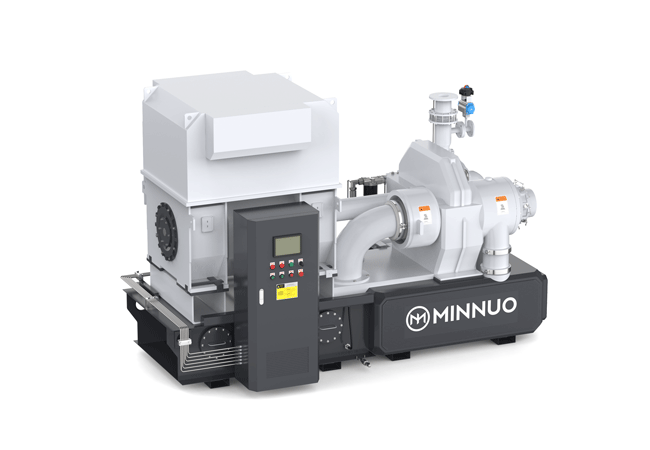
- Single-Stage Centrifugal Compressor: Features one impeller, simple structure, and high rotational speed. It delivers pressure up to ~0.3 MPa and is ideal for low-pressure, high-flow applications like factory ventilation, HVAC systems, and wastewater treatment aeration.
- Multi-Stage Centrifugal Compressor: Multiple impellers are mounted in series on a single shaft. Gas is compressed sequentially by each impeller (with intercoolers between stages to reduce temperature and improve efficiency), enabling pressure up to 10 MPa or higher. It’s widely used in petrochemical processing, natural gas transmission, and power generation.
2. By Casing Design
- Horizontal Split-Case Compressor: The casing is split horizontally along the shaft axis, allowing easy access to internal components (impellers, bearings, seals) for maintenance. It’s preferred for large, multi-stage compressors in heavy industries like oil refining.
- Vertical Compressor: The casing is vertical, minimizing floor space—suitable for compact installations like offshore platforms or small-scale petrochemical plants.
- Integrally Geared Compressor: Uses a gearbox to drive multiple impellers at different speeds (optimized for each stage’s requirements). It offers high flexibility and efficiency for variable flow/pressure needs, common in chemical and process industries.
3. By Cooling Method
- Air-Cooled Centrifugal Compressor: Relies on finned heat exchangers and fans to dissipate heat. It requires no water source, is easy to install, and is suitable for small-to-medium models or water-scarce regions.
- Water-Cooled Centrifugal Compressor: Uses circulating cooling water to remove heat from the casing, bearings, and intercoolers. It provides superior heat dissipation, making it ideal for large, multi-stage compressors operating continuously (e.g., 24/7 power plant applications).
| Feature | Centrifugal Compressor | Reciprocating Compressor |
|---|---|---|
| Flow Rate | High / Continuous | Low to Medium / Pulsating |
| Pressure Range | Low to Medium | Very High |
| Efficiency | Best at full load | High at various loads |
| Maintenance | Low (fewer moving parts) | High (frequent valve/ring checks) |
| Footprint | Compact | Large |
IV. Industrial Applications of Centrifugal Compressors
Thanks to their high flow rate, low vibration, and continuous operation, centrifugal compressors are critical in key industries:
- Petrochemical & Oil/Gas: Crude oil refining (hydrocracking, catalytic reforming), ethylene and propylene production (feedstock gas compression), natural gas gathering and transmission, and LNG (liquefied natural gas) processing.
- Power Generation: Fossil fuel power plants (boiler forced draft and induced draft fans), gas turbine auxiliary compressors, and nuclear power plant gas handling systems.
- Metallurgy: Large steel mills (blast furnace air supply, oxygen enrichment for smelting) and non-ferrous metal processing (continuous casting and rolling gas systems).
- Chemical Industry: Synthetic ammonia and methanol production (syngas compression), fertilizer manufacturing, and industrial gas (oxygen, nitrogen) production for large-scale plants.
- General Industrial: Large manufacturing facilities (centralized air supply for automated production lines), wastewater treatment plants (massive aeration systems to improve water quality), and cement production (kiln air supply).
- Specialized Scenarios: Aerospace wind tunnel testing (high-pressure, high-flow gas simulation), pharmaceutical industry (clean, oil-free gas compression), and semiconductor manufacturing (ultra-pure gas supply).
V.Essential Maintenance & Troubleshooting for Industrial Compressors
Centrifugal compressors feature high-speed rotating components and precise tolerances—proper maintenance is critical to extend service life, reduce downtime, and ensure efficiency:
- Impeller Maintenance: Regularly inspect for wear, corrosion, and fouling (impurities in gas can adhere to blades, disrupting balance and reducing efficiency). Clean fouled impellers with appropriate solvents; replace severely worn or corroded impellers. Conduct dynamic balance testing every 1–2 years to prevent excessive vibration.
- Lubrication System Care: Use high-quality lubricants (e.g., turbine oil) compatible with the compressor’s operating temperature and pressure. Check oil level and quality weekly; replace oil every 2000–4000 operating hours (or per manufacturer recommendations). Clean oil filters and coolers regularly to maintain lubrication efficiency.
- Seal Inspection: Monitor seal leakage (gas or oil). For labyrinth seals, check for wear or damage to the labyrinth teeth; replace mechanical seals if leakage exceeds limits. Ensure seal gas (if used) is clean and at the correct pressure.
- Vibration & Temperature Monitoring: Install vibration and temperature sensors on the shaft, bearings, and casing. Maintain vibration levels ≤2.8 mm/s (RMS) and bearing temperatures ≤85℃; investigate immediately if values exceed thresholds (common causes include misalignment, unbalanced impellers, or bearing wear).
- Inlet Filter & IGV Maintenance: Clean or replace inlet air filters monthly to prevent dust from entering the impeller (causing wear and fouling). Inspect and calibrate inlet guide vanes quarterly to ensure smooth operation and accurate flow control.
- Alignment Check: Verify the coaxiality of the motor and compressor shaft (misalignment causes vibration and bearing damage). Maintain alignment deviation ≤0.05 mm; re-align after maintenance or if vibration increases.
- Intercooler Maintenance: For multi-stage compressors, clean intercooler tubes periodically to remove scale or deposits (improves heat transfer efficiency and reduces compression work). Drain condensed water from intercoolers daily.
Common Centrifugal Compressor Troubleshooting Guide
- High Vibration: Check for impeller unbalance or bearing wear.
- Surge Conditions: Inspect bypass valves and flow control settings.
- Low Discharge Pressure: Check for internal leaks or suction filter clogging.

VI. Pros & Cons of Centrifugal Compressors
Advantages
- High Flow Rate: Delivers far larger airflow than reciprocating compressors, suitable for large-scale industrial needs.
- Continuous, Pulse-Free Discharge: No intermittent compression (unlike piston compressors), ensuring stable downstream gas supply.
- Low Vibration & Noise: Rotating motion (vs. reciprocating motion) generates less vibration and noise, reducing the need for soundproofing or vibration damping.
- High Automation & Reliability: Fewer moving parts (no piston rings or valves), enabling long-term continuous operation (often ≥10,000 hours between overhauls) and easy integration with automatic control systems.
- Easy Oil-Free Operation: Non-contact compression (impeller vs. cylinder) simplifies oil-free design, critical for industries like pharmaceuticals, electronics, and food processing.
Disadvantages
- High Initial Investment: Complex design (precision impellers, gearboxes) and high manufacturing costs make upfront investment higher than reciprocating compressors.
- Not Suitable for Small Flow/High Pressure: Inefficient for small airflow (<100 m³/min) or ultra-high pressure (>10 MPa) applications—reciprocating compressors are more cost-effective here.
- Sensitivity to Gas Composition: Impurities, moisture, or corrosive gases can damage impellers and seals; requires effective gas pre-treatment.
- Narrow Operating Range: Efficiency drops significantly outside the design flow rate; inlet guide vanes or variable-speed drives are needed for variable-load scenarios.
Q1: What are the two types of centrifugal compressor impellers?
A: The two main types are open impellers (for high-speed, high-flow) and enclosed (shrouded) impellers (more common in gas industry for efficiency).
Q2: What is “Surge” in a centrifugal compressor?
A: Surge is a complete breakdown in flow, where the compressor can no longer add enough energy to overcome the system backpressure, causing a violent reversal of flow.
Q3: Where are centrifugal compressors most commonly used?
A: They are widely used in oil and gas refineries, chemical plants, and large-scale HVAC systems.
VII. Conclusion: Is a Centrifugal Compressor Right for You?
Choose a centrifugal compressor if:
- You need high airflow (>100 m³/min) and medium-low pressure (≤10 MPa).
- Continuous, pulse-free gas supply and low vibration/noise are critical (e.g., 24/7 industrial production lines).
- You require oil-free gas or operate in industries like petrochemicals, power generation, or metallurgy.
Opt for a single-stage model for low-pressure, high-flow general use; a multi-stage model for medium-high pressure needs; and an integrally geared model for variable operating conditions. For small flow, high pressure, or budget-limited scenarios, a reciprocating/piston compressor is more suitable.
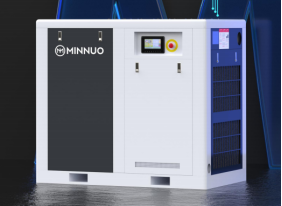
If you want to learn more about centrifugal compressor models, technical details, or need personalized selection advice, feel free to contact MINNUO’s online technical team for free support.
Whether powering a massive petrochemical plant or a large wastewater treatment facility, a well-chosen centrifugal compressor is a cornerstone of efficient, scalable industrial operations.

 Email
Email sales:+86 15366749631