In the grand stage of modern industry, screw air compressors are like a powerful beating heart, injecting a steady stream of power into numerous production links. With the rapid development of science and technology, screw air compressors are constantly undergoing technological innovations, and how to select the right type has also become an important issue for enterprises. Below, we will gain a comprehensive understanding of the technological innovations and selection strategies for screw air compressors.
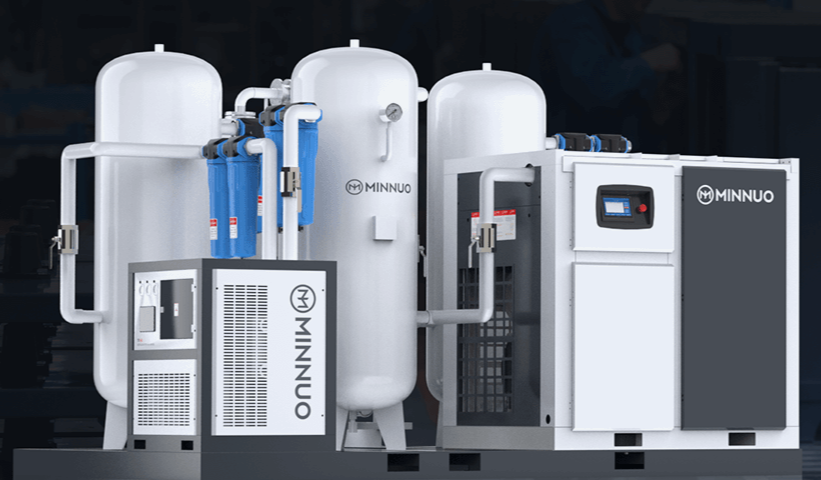
Basic Principles and Application Fields of Screw Air Compressors
A screw air compressor is mainly composed of a pair of intermeshing screw rotors, a casing, bearings, seals and other components. Its working principle is based on positive displacement compression: through the rotation of the male and female rotors, air is sucked in, compressed and discharged during the change of the inter-tooth volume. When the rotors rotate, the inter-tooth volume gradually increases to draw in air; as the rotors continue to rotate, the inter-tooth volume decreases to compress the air; finally, the compressed air is discharged from the exhaust port.
This unique working method endows screw air compressors with the advantages of high efficiency, stability and reliability, making them widely used in various industrial fields. In the manufacturing industry, they provide power for pneumatic tools and automated production lines; in the chemical industry, they are used in processes such as gas transportation and chemical reactions; in the food and beverage industry, they supply clean compressed air for packaging equipment and fermentation processes. For example, in the production line of an automobile manufacturing enterprise, a large number of tools such as pneumatic wrenches and spray guns rely on screw air compressors for power, ensuring the efficient operation of production.
Technological Innovation: The Key to Enhancing Performance and Efficiency
In recent years, screw air compressors have achieved significant technological innovations.
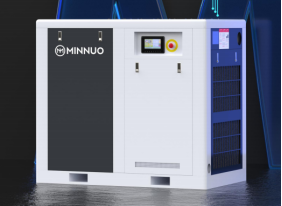
First is the optimization of rotor profiles. The new rotor profile design can reduce leakage and improve compression efficiency. For instance, the air compressors of Minnuo adopt asymmetric-profile rotors, which increase efficiency by 10%-15% compared with traditional profiles. This optimization not only reduces energy consumption, but also improves the output pressure and flow stability of the equipment.
Second, the application of intelligent control systems is also a major highlight. Equipped with advanced sensors and controllers, air compressors can monitor their operating status in real time and automatically adjust operating parameters according to actual needs. For example, when the air consumption on the production line decreases, the air compressor can automatically reduce its speed to cut energy consumption; when the air consumption increases, it can quickly return to full-load operation. After an electronic manufacturing enterprise introduced screw air compressors with intelligent control, its annual power consumption decreased by more than 20%.
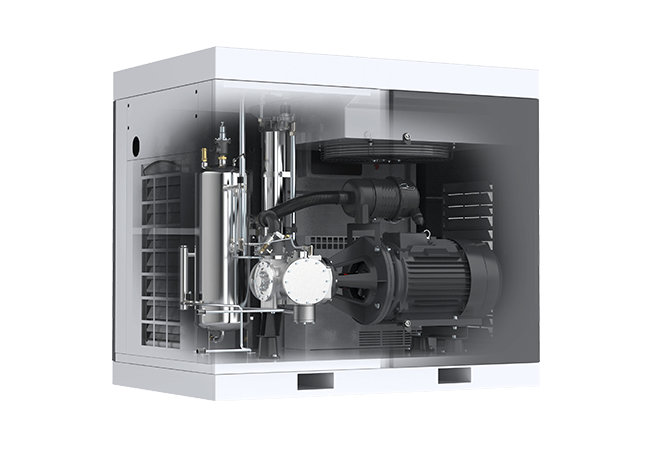
In addition, the continuous development of energy-saving technologies has also brought new breakthroughs to screw air compressors. The adoption of permanent magnet frequency conversion technology enables precise adjustment of motor speed according to load changes, maximizing energy savings. At the same time, the design of an efficient cooling system reduces the temperature during the compression process, improves compression efficiency and extends the service life of the equipment.
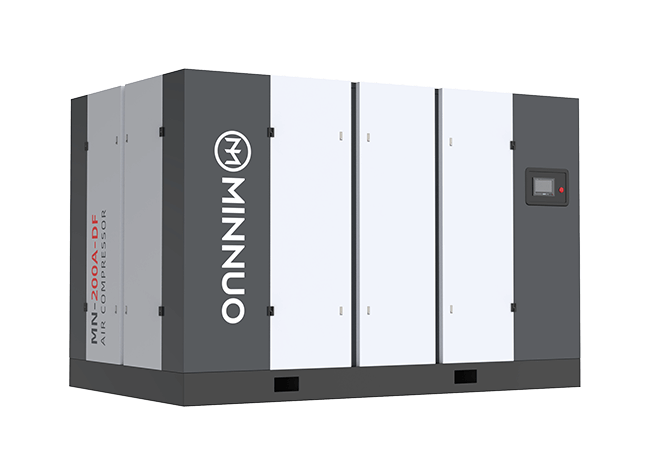
Key Factors Affecting Selection
When selecting a screw air compressor, it is necessary to comprehensively consider multiple key factors.
First is air volume demand. Enterprises should accurately calculate the required compressed air volume based on their own production scale and the number and power of air-consuming equipment. If the selected air volume is too small, the equipment will fail to meet production needs and affect production efficiency; if the selected air volume is too large, it will cause energy waste and increase equipment investment costs. For example, a small hardware processing plant calculates that it needs an air volume of 3m³/min based on the use of pneumatic tools on its production line, so it should select an air compressor with an air volume close to or slightly larger than this value.
Pressure is also one of the important considerations. Different air-consuming equipment has different pressure requirements for compressed air, and the common pressure range is generally between 0.7-1.3MPa. When selecting, it is necessary to ensure that the discharge pressure of the air compressor can meet the requirements of the production process. For example, the fermentation process of a pharmaceutical enterprise requires 0.8MPa of compressed air, so an air compressor with a discharge pressure of 0.8MPa or slightly higher should be selected.
In addition, factors such as equipment reliability, maintenance costs and noise levels cannot be ignored. Equipment with high reliability can reduce downtime and ensure the continuity of production; lower maintenance costs can reduce the operating costs of enterprises; and low-noise air compressors help improve the working environment.
Selection Steps and Methods
Step 1: Conduct a detailed demand analysis. Enterprises should conduct a comprehensive review of their own production processes and air-consuming equipment, and determine the required parameters such as air volume, pressure and air quality. Accurate information can be obtained by counting historical air consumption data and consulting equipment suppliers.
Step 2: Screen suppliers. Select suppliers with good reputation, rich experience and strong technical strength, such as Minnuo Evaluation can be conducted by referring to industry materials, consulting peers and visiting suppliers’ production bases. For example, you can visit the production workshops of multiple suppliers to understand their production processes and quality control systems.
Step 3: Compare different product models. Based on the results of demand analysis, screen out several air compressor models that meet the requirements, and compare their differences in performance parameters, price, after-sales service and other aspects. You can ask suppliers to provide product samples, test reports and other materials for detailed comparison.
Step 4: Conduct on-site testing or trial use. If conditions permit, you can ask the supplier to provide a prototype for on-site testing or trial use. Through actual operation, observe whether the equipment’s performance, stability, noise level and other aspects meet the requirements. When selecting, a machinery manufacturing enterprise conducted a one-week trial on two candidate air compressors and finally chose the one with better performance.
Maintenance and Management: Ensuring Long-Term Stable Operation
Proper maintenance and management are crucial to ensuring the long-term stable operation of screw air compressors.
Regular maintenance is essential. Generally speaking, the air compressor needs to undergo maintenance work such as cleaning, oil replacement and filter replacement after a certain period of operation. For example, air filters need to be cleaned or replaced every 500-1000 hours of operation; lubricating oil needs to be replaced every 2000-3000 hours of operation.
Daily inspections are also very important. Operators should regularly check the operating status of the equipment, including whether parameters such as temperature, pressure and vibration are normal. Once an abnormality is found, measures should be taken in a timely manner. During a daily inspection, an operator of a textile enterprise found that the temperature of the air compressor was too high, so he shut down the machine for inspection in time, avoiding equipment damage.
At the same time, establish complete equipment files and maintenance records. Recording information such as equipment operation time, maintenance status and fault repairs helps to grasp the equipment status in a timely manner and provides a basis for equipment maintenance and management.
As the core equipment of industrial power, the technological innovation of screw air compressors continues to promote the development of industrial production. When selecting equipment, enterprises should fully consider various factors, follow scientific selection steps and methods, and do a good job in equipment maintenance and management to ensure that air compressors provide stable and efficient power support for enterprise production.


 Email
Email sales:+86 15366749631