An air compressor that runs continuously but fails to reach its cut-out pressure is a clear sign of a system failure. This problem means the compressor cannot keep up with air demand due to either excessive air loss or an inability to produce enough air.
Ignoring it wastes significant electricity, strains the motor, and halts your operations. Where should you start? Based on aggregated field data from MINNUO’s service team, over 60% of “no pressure” cases are caused by air leaks. Faulty check valves account for another ~20%, with internal pump or motor issues making up the remainder. This means focusing first on leak detection and valve checks can resolve the majority of problems quickly.
This guide provides a systematic, step-by-step diagnostic path to identify the root cause—from simple air leaks to major internal failures—and outlines the solutions to get your system back to full pressure.
Step 1: Initial Safety & Observation Check
- Power Down: Shut off and lock out the compressor. Release all air pressure from the tank.
- Listen & Look: When it was running, did it sound normal? Unusual knocking, hissing, or a change in sound pitch are critical clues.
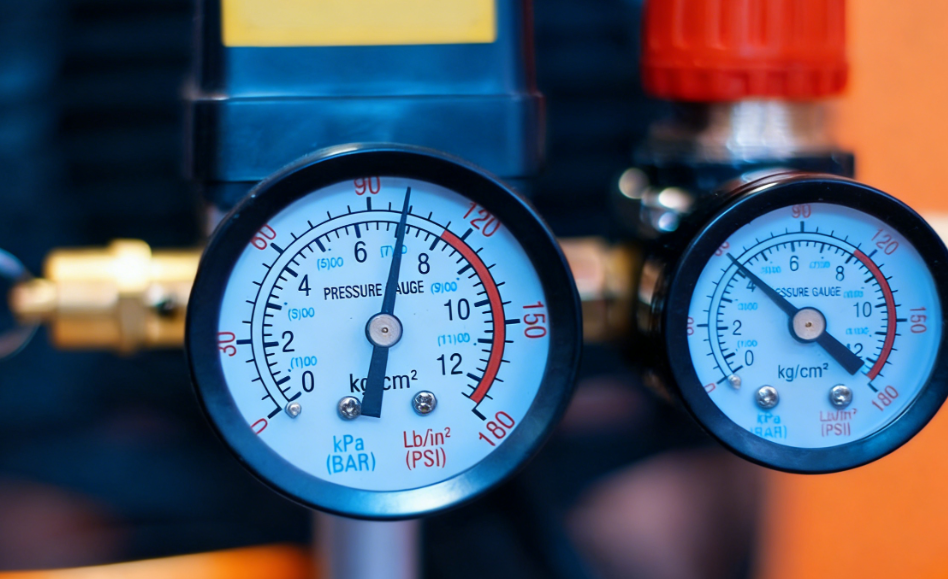
- Check the Obvious: Is the tank drain valve or a downstream valve accidentally left open? Is the pressure gauge stuck or broken?
Step 2: Systematic Diagnosis – Follow This Flowchart
Start with the simplest and most common issues first.
📌
Compressor Runs, No/Low Pressure
│
├─► Can you hear a LOUD, constant HISSING? ──► Major Air Leak (Go to Cause 1)
│
├─► Does the motor sound strained or DIFFERENT than usual? ──► Mechanical/Pump Issue (Go to Causes 4 & 5)
│
└─► Does it sound normal but just never shut off? ──►
│
├─► First, test for LEAKS (Cause 1)
│
├─► Then, check the INTAKE SYSTEM (Cause 2)
│
└─► Finally, inspect the PRESSURE VALVES (Cause 3)
The 5 Most Common Causes & How to Fix Them
Cause 1: Significant Air Leaks (The Most Common Culprit)
The compressor is producing air, but it’s escaping faster than it can be stored.
- Symptoms: Audible hissing, pressure drops rapidly when the compressor stops.
- Where to Check:
- Tank Drain Valve: Ensure it’s fully closed. If old, it may be stuck open or damaged.
- Pressure Release Valve: The small valve on the pressure switch that “unloads” the pump at shutdown. If it’s stuck open, it vents air constantly.
- Pipe Fittings & Hoses: Check every connection downstream from the tank outlet.
- Tool Quick-Couplers: These are frequent leak sources.
- The Fix:
- For Precision: Use an ultrasonic leak detector. This tool picks up the high-frequency hiss of leaks, making it easy to pinpoint even tiny ones in noisy environments.
- For DIY: Apply a soapy water solution with a spray bottle to all fittings, valves, and connections. Look for growing bubbles.
- Replace faulty drain valves, pressure release valves, and worn couplers.
- Tighten or reseal pipe fittings.
Cause 2: Faulty Intake System (The Pump Can’t Breathe)
The compressor can’t draw in enough air to compress.
- Symptoms: Motor sounds normal but labored; low air output.
- Where to Check:
- Intake Air Filter: A clogged air filter is a prime suspect. Remove and inspect it.
- Intake Valve/Unloader (on piston compressors): This valve must open to let air in on the downstroke. If stuck closed or broken, air intake is blocked.
- Intake Muffler: Can become clogged with debris.
- The Fix:
- Clean or replace the intake air filter.
- For suspected intake valve issues, disassemble and clean the valve assembly. Replace if damaged.
Cause 3: Failed Check Valve or Tank Valve
This one-way valve prevents high-pressure air in the tank from flowing back into the pump when the compressor stops. If it fails, air escapes back into the pump.
- Symptoms: Loud “burst” of air from the intake filter when the compressor shuts off (this is normal), but followed by a prolonged backflow hiss (this is not). Pressure may also bleed down quickly after shutdown.
- How to Diagnose:
- Shut off the compressor and release tank pressure.
- Disconnect the pipe between the pump head and the tank.
- Start the compressor briefly. If you feel strong airflow from the pump but none/no air going into the tank opening, the check valve is likely stuck closed. If air flows back from the tank side when off, it’s stuck open.
- The Fix: Replace the check valve. It’s a critical safety and function component.
Cause 4: Worn or Damaged Pump Components (Piston Compressors)
Internal wear reduces the pump’s ability to compress air.
- Symptoms: Reduced airflow, possible knocking sounds, oil in the air lines, excessive crankcase pressure.
- Common Failures:
- Worn/Damaged Piston Rings: Lose compression, allowing air to blow by.
- Leaking Valves (Discharge/Reed Valves): Won’t seal properly, allowing air to escape back into the cylinder.
- Damaged Cylinder Wall: Scored from lack of lubrication.
- The Fix: Requires a pump overhaul by a technician. Rings, valves, and sometimes cylinders must be replaced.
Cause 5: Pump Failure (Screw Compressors)
In screw compressors, loss of pressure is often due to severe internal wear or failure.
- Symptoms: Low pressure accompanied by high current draw, excessive noise (grinding/knocking), and very hot discharge air.
- Common Causes:
- Worn Rotor Bearings: Cause the male and female rotors to lose proper clearance.
- Worn Rotor Profiles: Cannot effectively trap and compress air.
- Failed Air/Oil Separator: Allows excessive oil carry-over, but can also affect pressure.
- The Fix: Immediate professional service required. This is a major repair involving rotor replacement or a full airend rebuild.
What to Do If Simple Fixes Don’t Work
If you’ve checked for leaks, replaced the filter, and the check valve seems okay, but the problem persists, it’s time to call a professional. Continuing to run a compressor with internal pump damage will quickly lead to complete motor or pump failure.
FAQ: Air Compressor Not Building Pressure
Q1: My compressor builds pressure very slowly. Is this the same problem?
A1: Yes, it’s a milder form of the same issue. The causes are identical (minor leak, slightly clogged filter, beginning pump wear) but less severe. Follow the same diagnostic steps.
Q2: Could the pressure switch be the problem?
A2: Unlikely to prevent pressure build-up entirely. A faulty pressure switch usually causes failure to start or stop, not a failure to build pressure. However, a stuck “unloader” mechanism on the switch (which vents pump pressure at startup) can mimic a leak if it fails open.
Q3: Is it safe to keep using the compressor if it reaches a lower pressure than before?
A3: No. Running a compressor that cannot reach its designed cut-out pressure means it will run continuously. This causes overheating, excessive moisture in the air (as it runs hot), and will burn out the motor due to lack of cooling off cycles.
Q4: How can I prevent these issues?
A4: Consistent maintenance is key.
- Daily: Drain condensate from the tank.
- Monthly: Check for leaks.
- As Scheduled: Change intake air filters and compressor oil based on runtime hours (not calendar time).
Conclusion: Methodical Troubleshooting Saves Time & Money
A compressor that won’t build pressure demands immediate attention. By following a logical diagnostic path—starting with air leaks and intake blockages before moving to mechanical failures—you can often solve the problem yourself. For internal pump or motor issues, professional intervention is a necessary investment to protect your larger asset.
Unable to isolate the issue after checking for leaks and valves? Contact the MINNUO support team. Our technicians can help you diagnose the problem over the phone or schedule a service visit to perform a pump performance test and get your compressed air supply back to full capacity.
 Email
Email sales:+86 15366749631