Purchasing an industrial air compressor is a major capital decision. Yet, the most costly mistake isn’t choosing the wrong brand—it’s choosing the wrong size. Getting the size wrong doesn’t just lead to minor inefficiencies; it triggers a chain reaction of equipment stress, energy waste, production downtime, and unexpected expenses that can dwarf the initial cost of the machine itself.
This guide answers the critical question: what actually happens if you buy a compressor that’s too small or too large? We’ll detail the concrete consequences of each scenario and, most importantly, provide a clear, three-step framework to help you determine the correct size for your needs, ensuring your investment delivers reliability and value for years to come.
The High Cost of Getting It Wrong
Before diving into specifics, understand that both undersizing and oversizing are expensive errors. There is no “safe” direction to err. The goal is precision.
Scenario 1: The Consequences of an UNDERSIZED Compressor
An undersized compressor is one that cannot meet your plant’s actual maximum air demand. It’s constantly playing catch-up.
1. Chronic Pressure Drop & Production Stoppages
- What Happens: When demand exceeds the compressor’s output, system pressure falls. Tools and machines at the end of the line will stall, operate slowly, or produce defective work.
- The Real Cost: Direct loss of productive capacity. This is the most immediate and painful cost—you cannot run your factory at full speed.
2. Premature Component Failure from Continuous Operation
- What Happens: The compressor is forced to run at 100% load, 100% of the time, with no cooling-off period. This leads to excessive heat buildup.
- The Real Cost: Turbochargers, airends, motors, and valves wear out years ahead of schedule. A compressor designed for a 15-year life may fail in 5-7 years. The cost of a major rebuild or replacement is monumental.
3. Soaring Maintenance Costs
- What Happens: Oil breaks down faster under constant high heat. Filters clog quicker. Everything is under maximum stress.
- The Real Cost: Your maintenance intervals shrink dramatically. You’ll be changing oil, filters, and separators far more often, and facing unplanned breakdowns.
4. Compromised Air Quality
- What Happens: A hot, overworked compressor and aftercooler cannot effectively condense and remove moisture. Your air treatment system (dryers, filters) becomes overwhelmed.
- The Real Cost: Wet, oily air enters your pipes, causing corrosion and damaging pneumatic equipment and end products. You may need to invest in larger air treatment equipment.
Summary: An undersized compressor turns your air system into a bottleneck, strangling production, accelerating wear, and inflating operating costs.
Scenario 2: The Consequences of an OVERSIZED Compressor
An oversized compressor seems like “safe” overkill, but it creates a different set of expensive problems, primarily centered on control inefficiency.
1. Catastrophic Energy Waste from “Short Cycling”
- What Happens (Load/Unload Control): The large compressor quickly fills the system to pressure and unloads. But it continues to run unloaded, consuming 20-40% of full-load power while producing ZERO air. It then loads again for a very short burst. This rapid, inefficient cycling repeats endlessly.
- The Real Cost: You pay for massive amounts of electricity that do no useful work. This can waste 30-50% of the compressor’s energy consumption.
2. Excessive Mechanical Wear from Start/Stop Cycles
- What Happens (Start/Stop Control): If set to start/stop, the oversized unit will constantly start and stop. Each start puts enormous electrical and mechanical stress on the motor, coupling, and drive system.
- The Real Cost: Reduced motor life, failed starters, and increased risk of catastrophic bearing failure. Maintenance costs rise sharply.
3. Poor Moisture Control
- What Happens: An oversized compressor has very short run times. It never reaches optimal, stable operating temperature. This means the aftercooler and dryer don’t get a consistent, warm air flow to work effectively.
- The Real Cost: The system never properly “heats up” to drive off condensation, leading to wet air in your lines and all the associated problems.
4. Wasted Capital and Footprint
- What Happens: You paid for capacity you will never use.
- The Real Cost: Higher initial purchase price, higher installation costs (larger electrical feeds), and valuable floor space is occupied unnecessarily.
Summary: An oversized compressor is a profoundly inefficient energy sink that wastes money every minute it runs, while also suffering from its own form of stress and poor air quality.
The Solution: A 3-Step Method for Right-Sizing Your Compressor
To avoid both pitfalls, follow this systematic approach.
Step 1: Calculate Your Actual Air Demand (CFM or m³/min)
Do NOT simply add up the nameplate CFM of all your tools. That’s the “simultaneous use” fallacy.
- Do THIS: Create a load profile. List every air-consuming device and estimate:
- Its actual average consumption (often much lower than nameplate).
- Its duty cycle (percentage of time it’s actually cycling/using air).
- Multiply: Consumption x Duty Cycle for each device.
- Add a reasonable diversity factor (e.g., not all tools run at peak simultaneously).
- Use a Data Logger: For existing systems, the only accurate method is to install a flow meter/data logger for 7-10 days to capture your real-world, fluctuating demand.
Step 2: Define Your Required Pressure and Consider the Future
- Pressure (PSI/bar): Determine the highest pressure required by any single tool, then add 15-20 PSI (1-1.5 bar) to account for pressure losses through dryers, filters, and piping. This is your target discharge pressure.
- Future Expansion: Add a safety margin of 15-25% to your calculated CFM for future growth. This margin should be based on a realistic business plan, not guesswork.

Step 3: Match Technology to Your Demand Profile
Now, choose a compressor control strategy that fits your newly calculated demand:
- Steady, Consistent Demand (≥80% load): A well-sized fixed-speed compressor can be efficient.
- Fluctuating Demand (30-80% typical): A Variable Speed Drive (VSD) compressor is almost always the most efficient and appropriate choice. It adjusts output perfectly to demand, eliminating the penalties of both over- and undersizing.
- Multiple Compressors: For large systems, a compressed air management system controlling multiple units (e.g., one fixed-speed base-load + one VSD trim compressor) provides ultimate efficiency and redundancy.
Conclusion: Size is the Foundation of Performance
The size of your air compressor is the single most important determinant of its lifetime cost, reliability, and effectiveness. There is no compensation for getting it wrong.
Investing time in a proper demand analysis—using real data, not estimates—is the highest-return activity you can undertake before a purchase. It protects you from the twin disasters of stalled production and runaway energy bills.
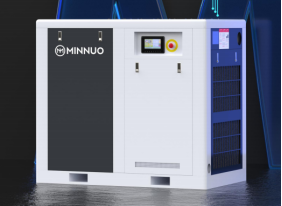
If your current system suffers from pressure drops or short cycling, a Compressed Air System Audit is the essential first step to diagnose sizing issues and quantify the savings potential of a correction. At MINNUO, our analysis begins with precise data logging to build your true load profile. We then model different compressor solutions, providing a clear financial projection of how the right-sized system will perform, ensuring your next compressor is an asset, not a liability.

 Email
Email sales:+86 15366749631