Compressed air exiting your compressor is too hot and saturated with moisture for immediate use. Without treatment, this heat and water will corrode piping, damage tools, and destroy downstream equipment like dryers and filters. The aftercooler is the dedicated device engineered to solve this primary problem immediately at the source.
This guide provides a comprehensive technical breakdown of the industrial aftercooler. We will explain its integrated cooling and separation functions, compare air-cooled and water-cooled designs, detail selection criteria, and outline best practices for integration and maintenance to ensure your entire compressed air system is protected from the start.
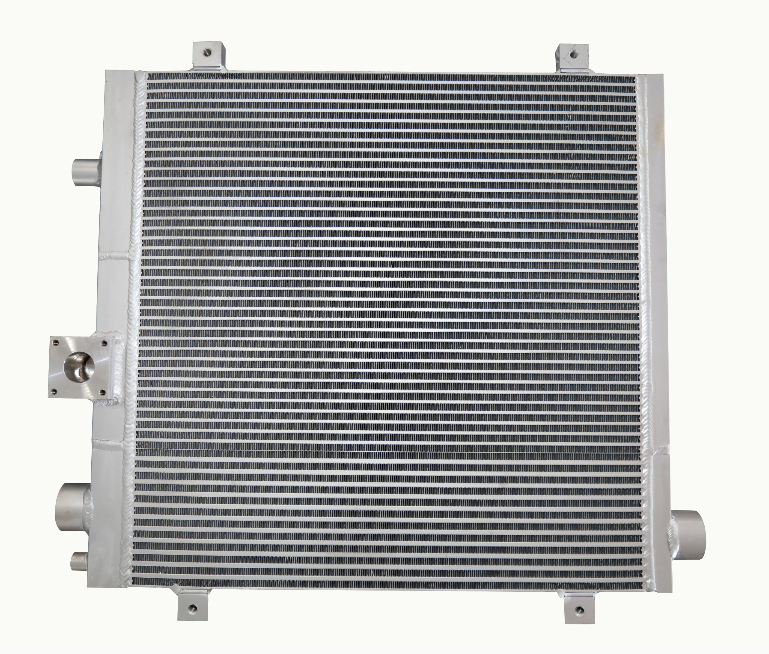
Core Function: Removing Heat and Condensate at the Source
To understand the aftercooler‘s role, you must first understand the problem it solves. Air compression generates intense heat, and hot air holds a vast amount of water vapor.
- Typical Discharge Temperature: 70°C to 100°C (160°F to 212°F) or higher from screw and piston compressors.
- The Consequence: As this air cools in your pipes, the vapor condenses into liquid, causing corrosion and equipment failure.
The aftercooler addresses this in one integrated unit:
- Cooling: Its heat exchanger rapidly reduces air temperature to within 10-15°C (20-30°F) of the cooling medium temperature.
- Bulk Liquid Separation: A built-in separation chamber (cyclonic or baffle design) removes the majority of the newly condensed liquid water and oil droplets, which are then drained automatically.
This process is not optional; it’s foundational. For every 5.5°C (10°F) of cooling, you can remove about 50% more water vapor before the air reaches the dryer, drastically reducing the dryer’s energy load.
Part 1: Types of Aftercoolers – Air-Cooled vs. Water-Cooled
The choice between air and water cooling is the primary decision point, driven by efficiency needs, environment, and cost.
Air-Cooled Aftercoolers
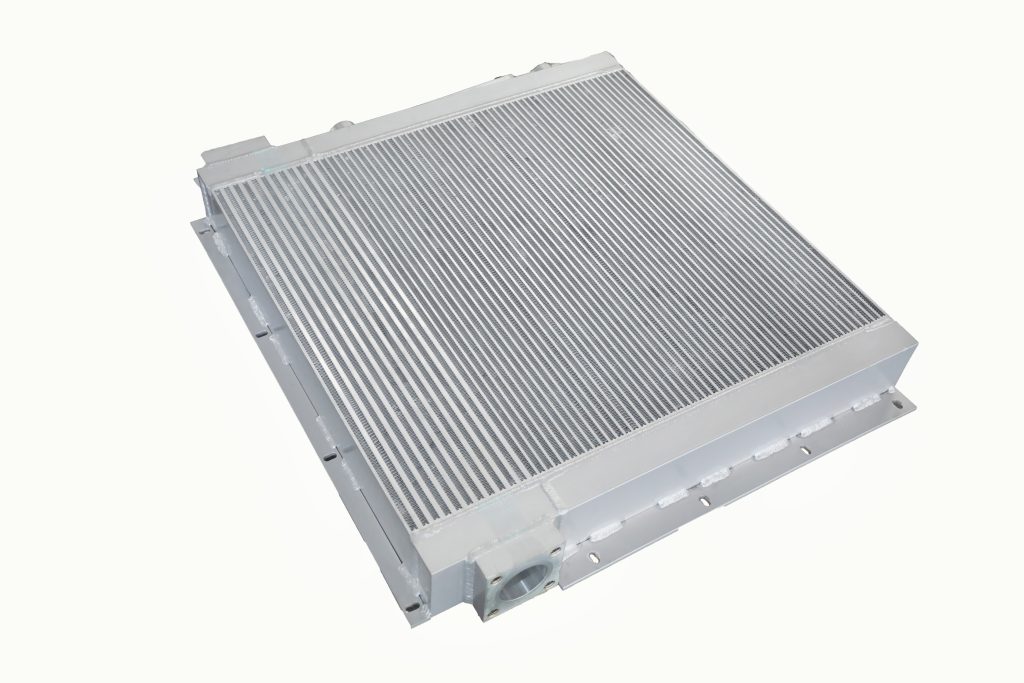
- How They Work: Ambient air is driven by a fan across a finned tube bundle carrying the hot compressed air.
- Pros: Lower operating cost (no water), simpler installation, minimal maintenance (cleaning fins).
- Cons: Cooling capacity limited by ambient air temperature; less effective in hot environments; larger footprint.
- Best For: Most applications with ambient temperatures consistently below 35°C (95°F), moderate compressor sizes, and where water is scarce.
Water-Cooled Aftercoolers
- How They Work: Cooling water circulates around tubes carrying the hot air in a shell-and-tube heat exchanger.
- Pros: Achieves a lower, more stable outlet temperature independent of ambient air; more compact.
- Cons: Higher operating cost (water, treatment, pumping); risk of scaling/fouling; requires water supply and treatment.
- Best For: Large systems, hot climates, applications requiring very low air temperatures, or where space is constrained.
Key Metric: Approach Temperature
This is the difference between the cooled air outlet temperature and the inlet temperature of the cooling medium. A lower approach indicates a larger, more efficient heat exchanger.
Part 2: Internal Separation Technologies
The separator chamber inside the aftercooler uses specific methods to remove condensate:
| Technology | Mechanism | Efficiency | Typical Application |
| Cyclonic / Centrifugal | Air spins in a vortex, flinging droplets to the walls by centrifugal force. | Good for large droplets (>5-10 µm). | Standard, cost-effective bulk removal. |
| Baffle / Impingement | Air changes direction rapidly, causing droplets to impinge on and collect on baffles. | Moderate. | Simple designs for general duty. |
Part 3: Selection and Integration Guidelines
Selecting the right aftercooler requires matching it to your system’s demands.
- Flow Capacity (CFM/m³/min): Must meet the compressor’s maximum discharge flow, not just its average output.
- Operating Pressure: Must be rated for your system’s maximum pressure.
- Approach Temperature: Specify based on your required final air temperature and dryer type.
- The Non-Negotiable: Automatic Drain. Every aftercooler must be equipped with a zero-loss automatic drain on its sump. A manual drain will fail, causing liquid carryover.
System Integration Order:
Air Compressor → Aftercooler → (Wet Receiver Tank) → Pre-Filter → Air Dryer → …
A Wet Receiver Tank placed after the aftercooler provides additional cooling, secondary liquid separation via gravity, and system buffering.
Part 4: Maintenance and Troubleshooting
Proper maintenance is simple but critical.
- Air-Cooled: Clean fins regularly. Service the fan motor as needed.
- Water-Cooled: Implement water treatment to prevent scaling. Clean tubes periodically.
- Universal: Test the automatic drain valve daily. This is the single most important maintenance task.
Common Problem: Liquid Carryover Downstream
If liquid appears after the aftercooler, check:
- Is the automatic drain functioning?
- Is the unit undersized for current conditions?
- For oil-injected compressors, is an additional coalescing filter needed to capture fine aerosols?
Conclusion: An Investment in System Integrity
The aftercooler is not an optional accessory; it is a fundamental component of a reliable and efficient compressed air system. By making the deliberate choice to install a correctly sized and properly maintained aftercooler, you directly protect your downstream investment, reduce the energy burden on your dryer, and prevent the primary cause of pipeline corrosion.
Its function is singular and critical: to remove the bulk heat and condensate generated by compression, setting the stage for all subsequent air treatment processes to succeed.
For a system-specific analysis and aftercooler specification, begin with a Compressed Air System Audit. At MINNUO, our engineers assess the thermal and moisture load from your compressor to recommend and supply an aftercooler solution that guarantees optimal performance and protection for your unique operating environment.
 Email
Email sales:+86 15366749631