An unplanned air compressor breakdown is more than an inconvenience; it’s a direct attack on your plant’s productivity and profitability. The cost isn’t just a repair bill—it’s lost production, wasted labor, missed deadlines, and damaged product quality. While preventive maintenance (changing filters and oil on a schedule) reduces risk, it operates on assumptions, not actual conditions.
Predictive maintenance (PdM) represents a fundamental shift: from time-based guesses to data-driven certainty. By continuously monitoring the vital signs of your compressor, you can identify degrading components weeks or months before they fail, allowing you to schedule repairs at your convenience and avoid catastrophic downtime.
This guide explains the three core technologies of predictive maintenance, how to implement them on your compressors, and how to transform raw data into actionable insights that keep your air—and your production—flowing uninterrupted.
Part 1: The Three Pillars of Predictive Maintenance
Predictive maintenance doesn’t rely on a single metric. It cross-references multiple data streams to build a confident picture of machine health.
1. Vibration Analysis: Listening to the Machine’s Heartbeat
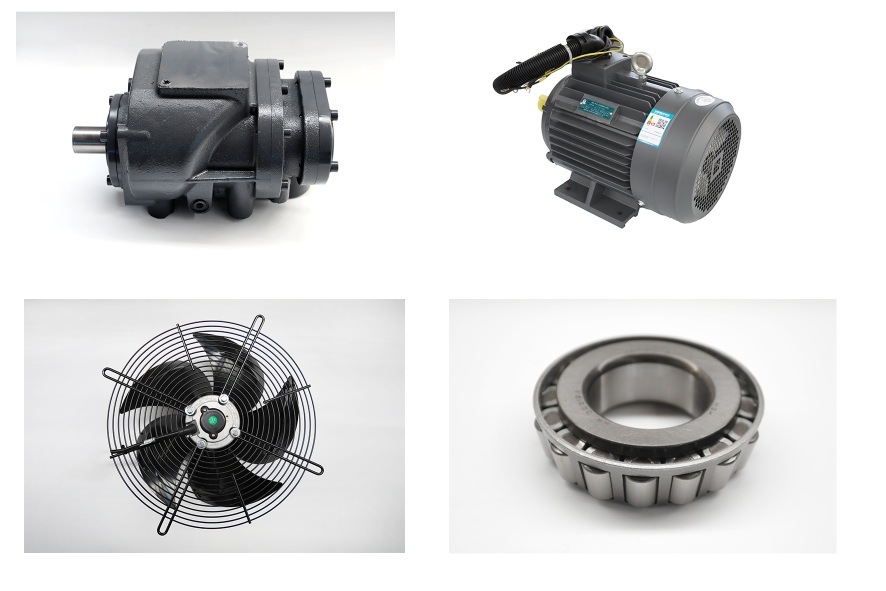
Every rotating component—motor, pump, crankshaft, fan—emits a unique vibration signature when healthy. As components wear (bearings, imbalance, misalignment), this signature changes in predictable ways.
- What it Predicts: Bearing fatigue, imbalance, misalignment, looseness, gear mesh issues.
- Key Metric: Velocity (mm/s RMS) is commonly used for general machine health monitoring up to mid-range frequencies. Acceleration and displacement provide additional detail.
- The Insight: A trending increase in overall vibration levels or the emergence of specific high-frequency harmonics signals developing faults long before temperature rises or noise becomes audible.
2. Thermal Monitoring: Seeing the Invisible Heat
Friction from wear, electrical resistance from loose connections, and failing cooling systems all manifest as abnormal heat.
- What it Predicts: Bearing overheating, winding insulation failure in motors, blocked coolers/aftercoolers, poor electrical contacts, lubricant breakdown.
- Tools:
- Infrared Thermography (IRT): Ideal for periodic scans of electrical panels, connections, and large surface areas.
- Resistance Temperature Detectors (RTDs): Best for continuous, precise monitoring of critical points like bearing housings or discharge air temperature.
- The Insight: Temperature differentials (ΔT) are more telling than absolute temperature. A steadily increasing ΔT across an oil cooler indicates fouling. A hot spot on a motor phase suggests a failing connection.
3. Operational Performance Analysis: Decoding the Machine’s Behavior
The compressor’s own control system generates a wealth of data about its efficiency and internal condition.
- What it Predicts: Valve leakage, declining volumetric efficiency, filter blockage, internal air/oil leaks, dryer or separator issues.
- Key Parameters to Trend:
- Specific Power (kW/CFM): A gradual increase signals declining efficiency.
- Load/Unload or Star/Delta Cycle Times: Shortening cycle times at constant demand can indicate increased internal leakage.
- Pressure Drop: Across filters and separators.
- Motor Current & Power Factor: Abnormal draws can indicate mechanical or electrical issues.
- The Insight: Machines don’t lie. Deviations from their established “healthy” operational baselines are the earliest warnings of performance degradation.
Part 2: Building Your Monitoring System – Three Implementation Paths
You don’t need a fully automated plant to start. PdM can be scaled to your needs and budget.
| Path | Method | Cost | Data Quality & Continuity | Best For |
| Path A: Manual & Periodic | Technicians use portable vibration analyzers, IR cameras, and data loggers during monthly/quarterly routes. | Low Capital | Snapshot in time. Relies on technician skill. Misses failures between checks. | Small facilities, proving PdM value before larger investment. |
| Path B: Permanent Sensors on Critical Assets | Install fixed vibration sensors, RTDs, and additional meters on key compressors. Data is logged locally or sent to a gateway. | Medium Capital | Continuous, consistent, high-quality data. Enables true trend analysis. | Mid to large plants with critical compressors where downtime cost is high. |
| Path C: Integrated Smart Compressor & Cloud Platform | Purchase compressors with built-in advanced sensors and connectivity. Data flows to a manufacturer’s cloud for automated analysis. | High Capital (embedded in asset cost) | Seamless, comprehensive, with expert-algorithm-driven alerts. | New installations or replacements where maximum uptime is paramount. |
Recommendation: For most plants aiming for serious reliability, Path B offers the optimal balance. It provides the continuous data needed for true prediction on your most critical assets without being locked into a single OEM’s ecosystem.
Part 3: From Data to Decisions – Setting Intelligent Alerts
Collecting data is pointless without action. The goal is to move from reactive alarms to proactive alerts.
- Establish a Baseline: After installing sensors, operate the compressor under normal load for at least 2-4 weeks. This period’s data becomes the “healthy” baseline.
- Set Alert and Alarm Thresholds:
- Alert (Yellow): A deviation from baseline (e.g., vibration increase of 25%, temperature ΔT increase of 10°C). This signals: “Schedule an investigation during the next planned maintenance window.”
- Alarm (Red): A severe deviation or absolute limit breach (e.g., vibration exceeding ISO severity charts, temperature near safe maximum). This signals: “Investigate immediately and plan corrective action.”
- Key Parameter Checklist & Threshold Guide:
| Parameter | Sensor Type | Alert Suggestion | Indicates Possible |
| Bearing Vibration | Accelerometer | > 25% increase from baseline | Bearing wear, lubrication issue, imbalance |
| Discharge Air Temp | RTD | > 10°C above baseline/design | Cooler fouling, high ambient, internal friction |
| Oil Temperature ΔT | Two RTDs | ΔT increasing trend | Oil cooler blockage, oil degradation, high load |
| Specific Power | Power Meter | > 5% increase from baseline | Valve leakage, internal wear, poor system demand |
| Motor Current (Load) | Clamp Meter | Unbalanced phases > 10% | Electrical fault, voltage imbalance, mechanical binding |
Part 4: Closing the Loop – The Predictive Maintenance Workflow
Data must trigger a defined process. Here’s a streamlined workflow:
- Alert Generated: The monitoring software detects a parameter exceeding its alert threshold.
- Diagnosis: A maintenance technician reviews the trend data and performs a targeted inspection (e.g., listens with a stethoscope near the alerted bearing, checks filter gauges).
- Prognosis & Planning: The team diagnoses the root cause and forecasts Remaining Useful Life (RUL). They then schedule the repair with production during the next planned outage or low-demand period.
- Repair & Verification: The repair is executed. Post-repair, sensor data is monitored to confirm a return to baseline health.
- Knowledge Capture: The event—from alert to repair—is documented in your CMMS, refining future diagnostics and RUL predictions.
Conclusion: Reliability as a Managed Asset
Predictive maintenance transforms your air compressor from a mysterious black box into a transparent, manageable asset. It shifts your maintenance culture from reactive fear to proactive confidence.
The initial investment in sensors and training is quickly offset by the elimination of just one major unplanned shutdown. More importantly, it provides peace of mind, operational stability, and a quantifiable competitive advantage through superior equipment availability.
The journey begins with a single step: monitoring one critical parameter on your most important compressor. At MINNUO, our approach starts with a Compressed System Health Assessment. We identify the key failure modes for your specific equipment and operational context, and design a phased monitoring strategy that delivers immediate insight and builds towards full predictive capability, ensuring your compressed air system is a pillar of reliability, not a point of failure.

 Email
Email sales:+86 15366749631